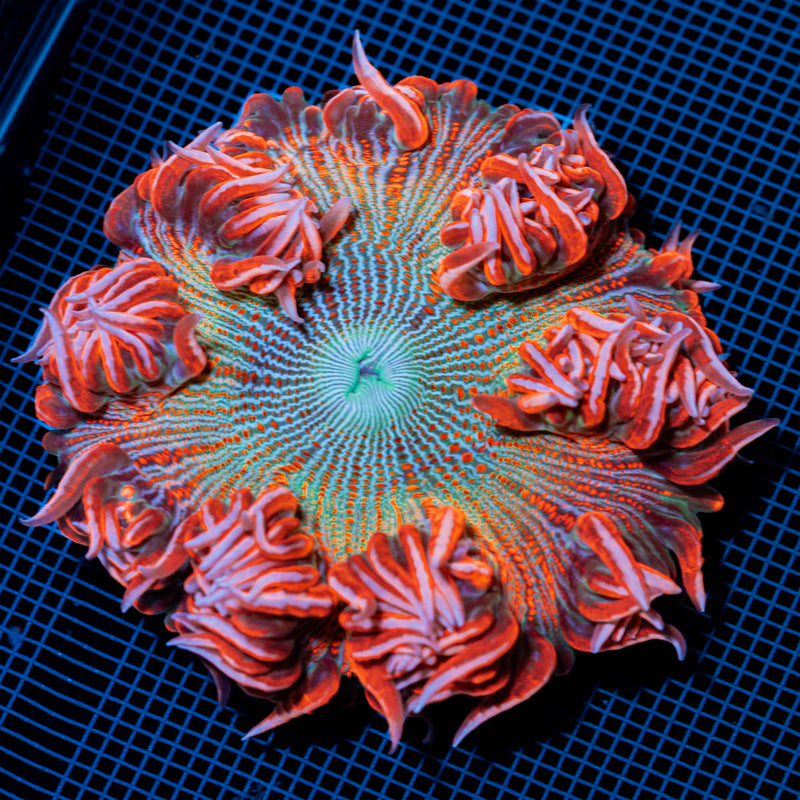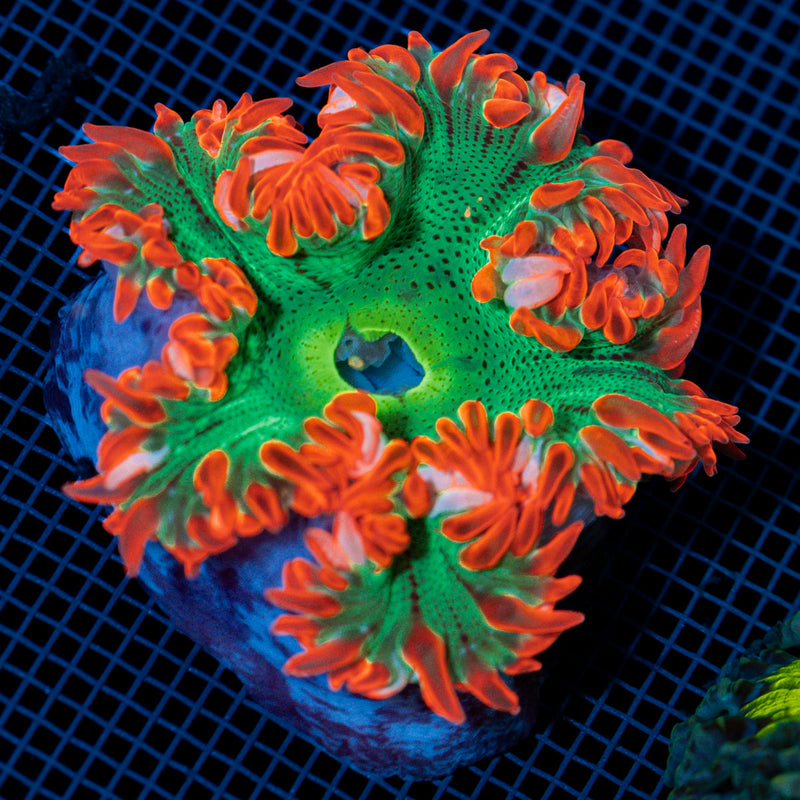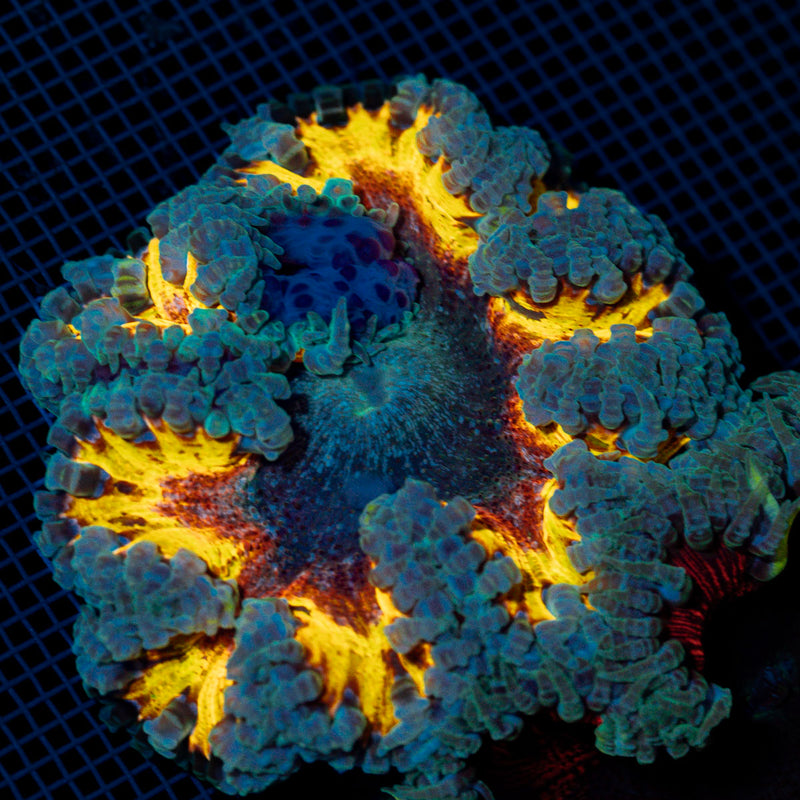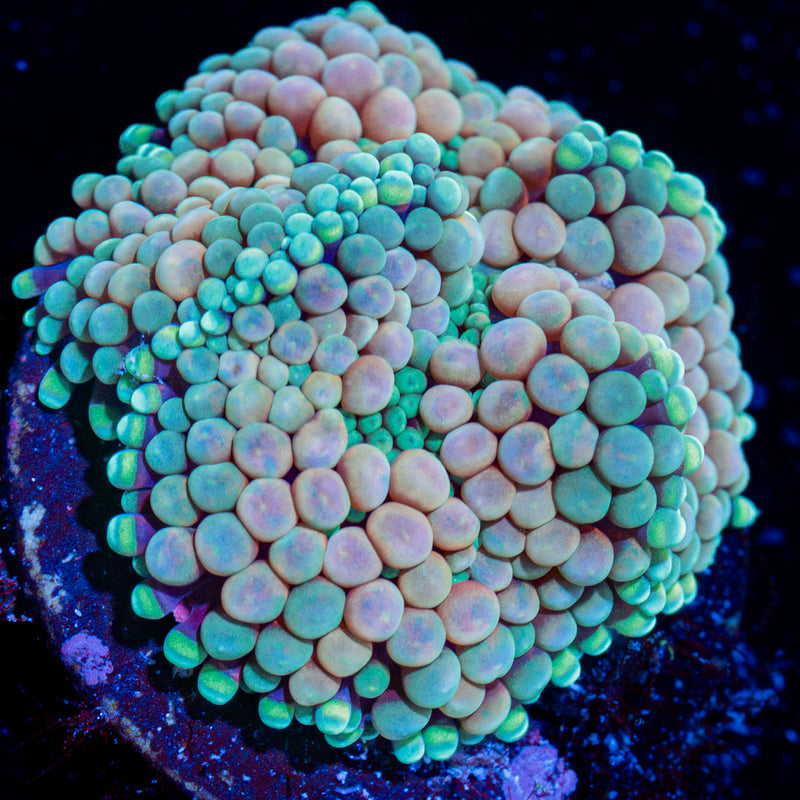
A first SPS frag is often the moment a reef tank starts to feel truly alive. The fine branches, glowing plates, and dense coralite texture bring a polished reef look that is hard to match. But hardy SPS corals for beginners are not corals that tolerate neglect. They are corals that give a newer SPS keeper more room to learn while building the stable conditions small-polyp stony corals need.
The goal is not to fill a new tank with demanding Acropora on day one. Start with colorful, aquacultured pieces that have a reputation for adapting well, then let their growth tell you that your light, flow, and water chemistry are moving in the right direction.
What Makes an SPS Coral Beginner-Friendly?
SPS corals build hard skeletons and generally appreciate brighter light, active water movement, and steady chemistry. Their reputation for difficulty comes less from one impossible care requirement than from their sensitivity to sudden change. A sharp alkalinity swing, an unstable salinity level, or a major lighting adjustment can cause stress quickly.
A beginner-friendly SPS coral is usually fast-growing, adaptable to a useful range of reef lighting, and less likely to decline from a small placement mistake. Aquacultured frags are especially valuable here. Having grown in captivity, they are accustomed to aquarium life and often recover and encrust more predictably than freshly collected colonies.
That does not mean every tank is ready for SPS after its first cycle. A reef with consistently stable temperature and salinity, reliable alkalinity, measurable nutrients, and established biological filtration is a far better starting point than a young tank that changes week to week. Many hobbyists find that waiting several months pays off in healthier corals and fewer expensive lessons.
7 Hardy SPS Corals for Beginners
1. Montipora digitata
Montipora digitata is one of the classic first branching SPS corals. Its upright fingers create height and motion without requiring the intense light or exacting flow often associated with Acropora. Green, orange, purple, and red varieties can add striking color to the upper half of a reefscape.
Give digitata moderate to high light and varied flow that keeps detritus from settling between branches. It tends to grow quickly once settled, making it an encouraging coral for tracking progress. Leave room around it, though. A happy frag can become a branching colony faster than expected.
2. Montipora capricornis
Montipora capricornis, often called plating monti, forms whorled shelves that can become a dramatic focal point. Its growth pattern is one reason it is so popular: a small frag can develop into layered plates that catch the light beautifully.
Place it where it has open space to expand outward and upward. Moderate to high light is a good starting range, but acclimate it gradually to brighter LEDs. Its plates can shade corals below, so think ahead before mounting it permanently on the rockwork.
3. Birdsnest Coral
Birdsnest corals, usually Seriatopora species, offer a delicate branching look with more forgiving care than their fine structure suggests. Pink, neon green, and purple forms can look stunning against a darker rockscape, especially when their thin branches fill out into a compact colony.
They prefer moderate to strong, indirect flow. The key is movement from several directions rather than a harsh powerhead blast that keeps the polyps pinned down. Birdsnest can react poorly to abrupt parameter changes, but in a stable reef it is often a rewarding and fast-growing introduction to branching SPS.
4. Stylophora
Stylophora has thicker, blunter branches than birdsnest and a sturdy, bushy profile. It is frequently recommended to hobbyists who want an SPS look without beginning with a high-end Acropora. Healthy specimens often show excellent polyp extension, giving the colony a soft, animated appearance under reef lighting.
Stylophora is generally comfortable with moderate to high light and strong but diffused flow. Its chunkier branching form also makes it easier to place and less prone to breakage while you are learning how to mount and maintain coral frags.
5. Pocillopora
Pocillopora brings texture in a compact package. Its branches are covered in small, raised coralites that create a plush, almost cauliflower-like appearance, and common color forms include green, pink, and shades of tan with bright polyp contrast.
This coral handles a broad range of conditions when acclimated carefully, which makes it a practical choice for a reef that is stable but still developing. One trade-off: some Pocillopora can release larvae and appear in unexpected places in an established aquarium. That can be a fun surprise for some keepers and an unwelcome maintenance project for others.
6. Green Slimer Acropora
Not every Acropora belongs on a beginner list, but the familiar Green Slimer, commonly Acropora yongei, has earned a place as a sensible first Acro for a well-established reef. Its vivid green branches and glowing polyps deliver the classic Acropora look without immediately sending you into the most demanding end of SPS keeping.
Save this one for after a Montipora or birdsnest frag has shown steady growth. It still needs strong light, energetic random flow, and stable alkalinity. If your system is consuming alkalinity predictably and you are testing regularly, a Green Slimer can be an exciting next step.
7. Cyphastrea
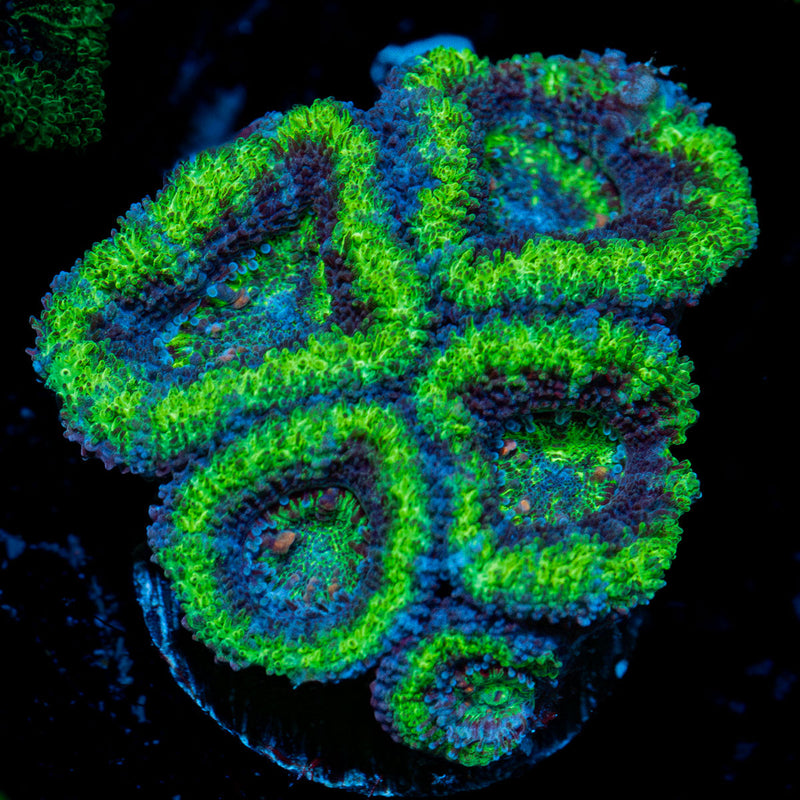
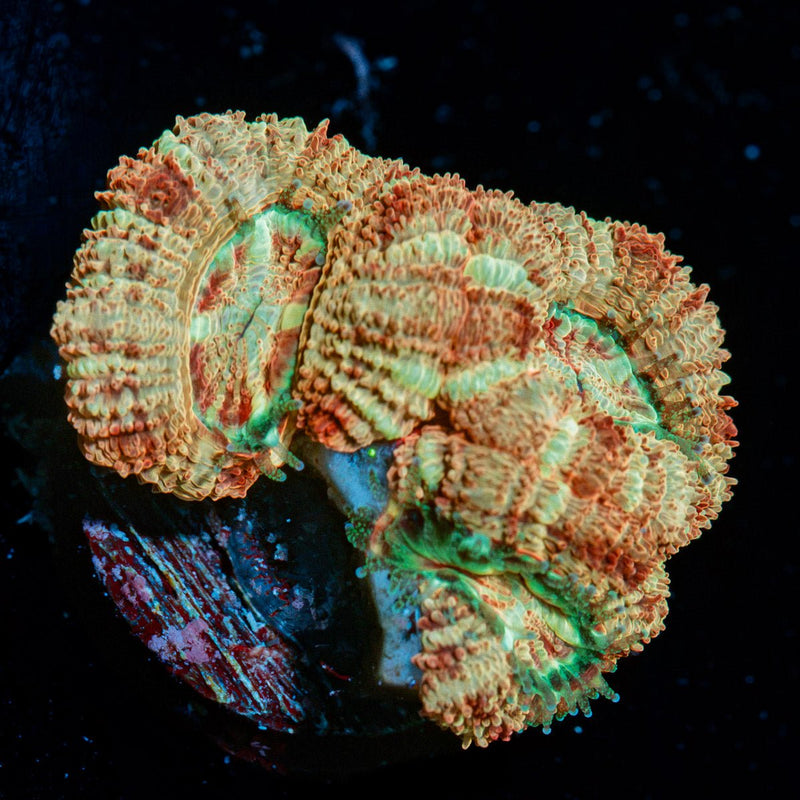
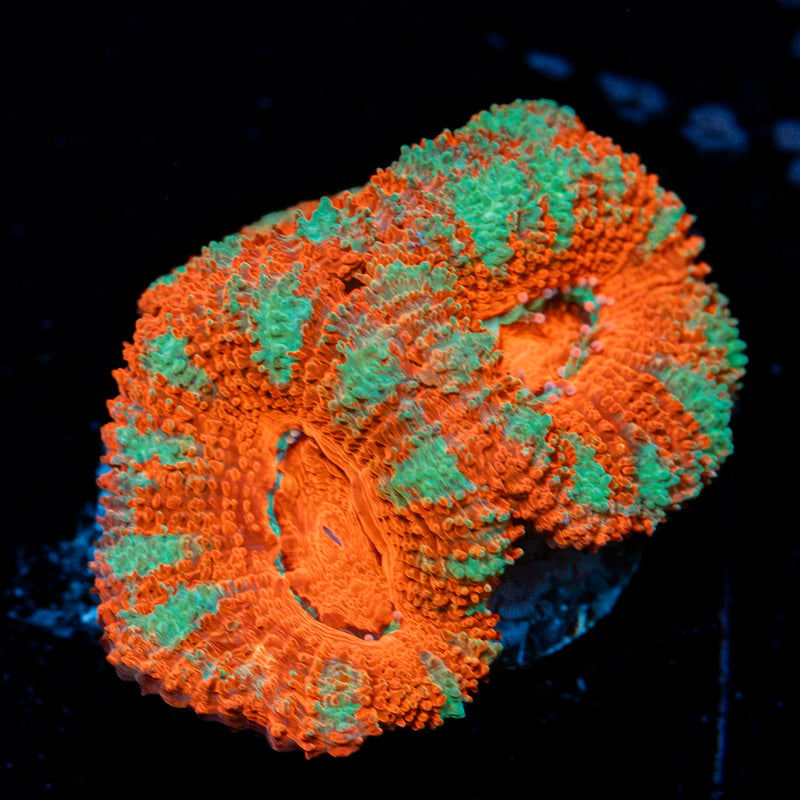
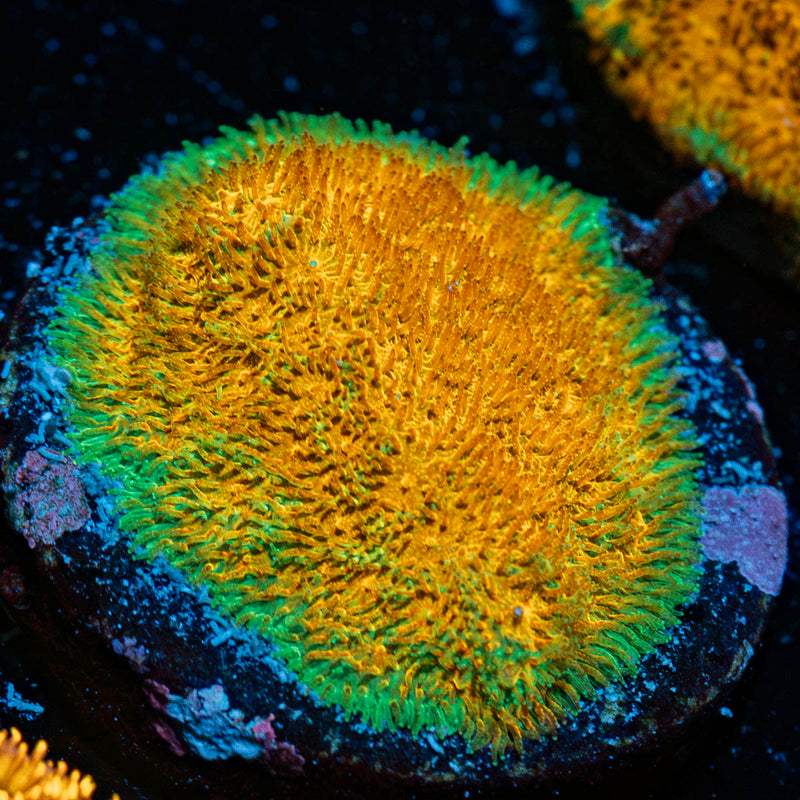
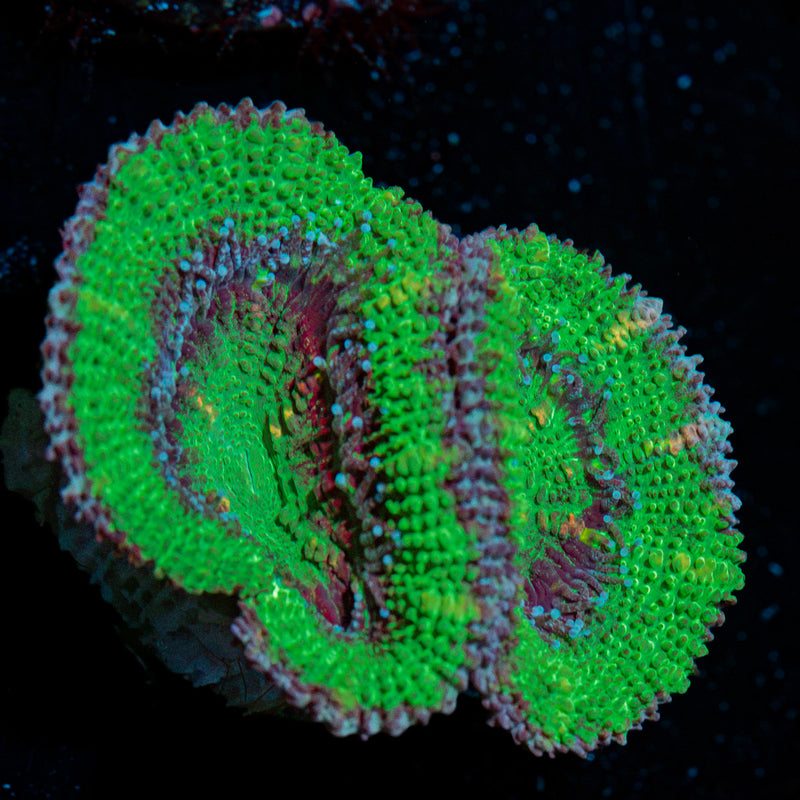
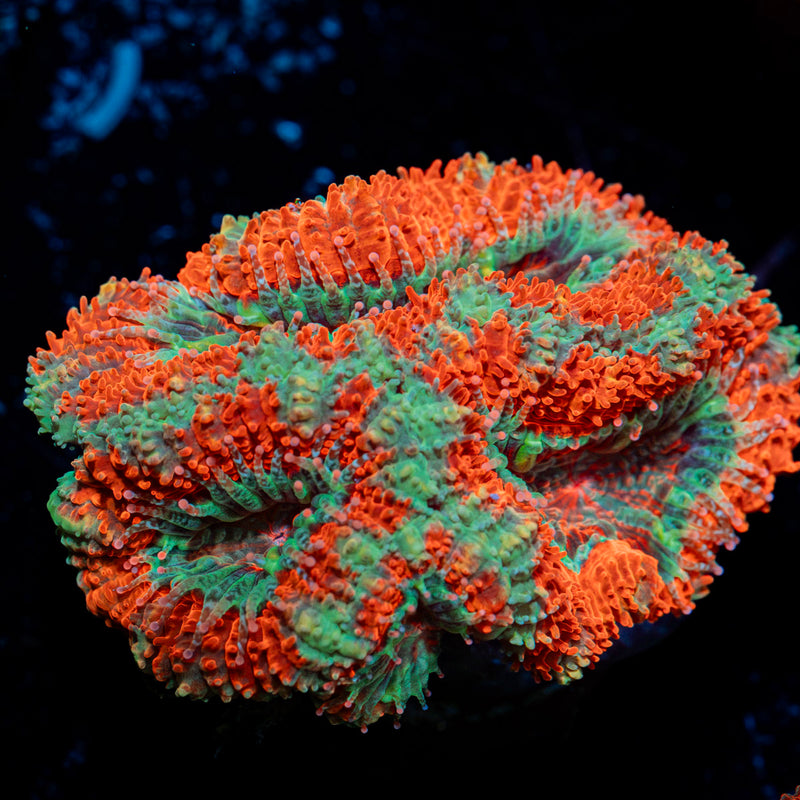
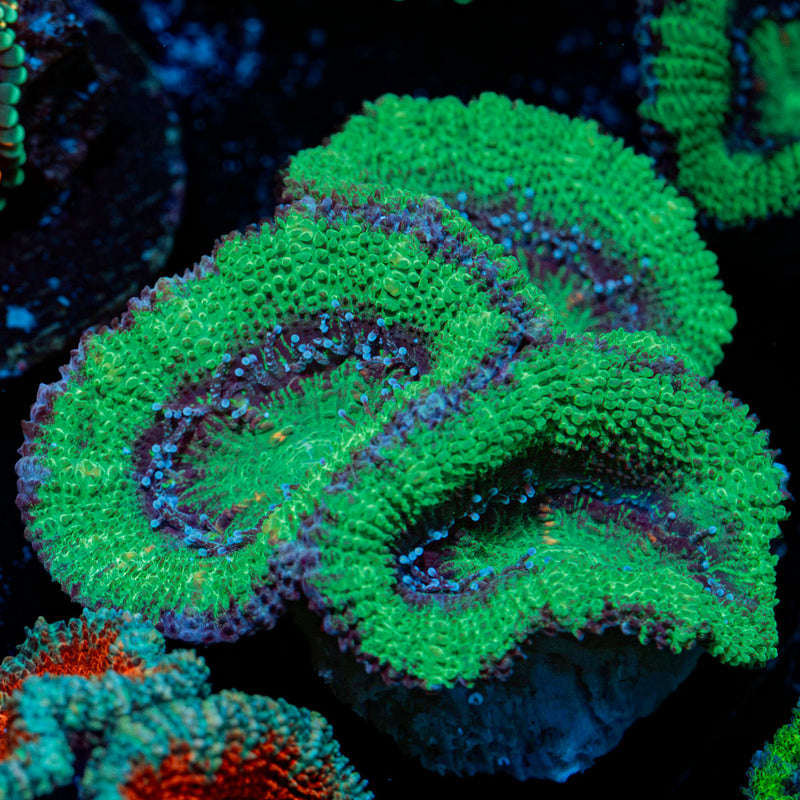
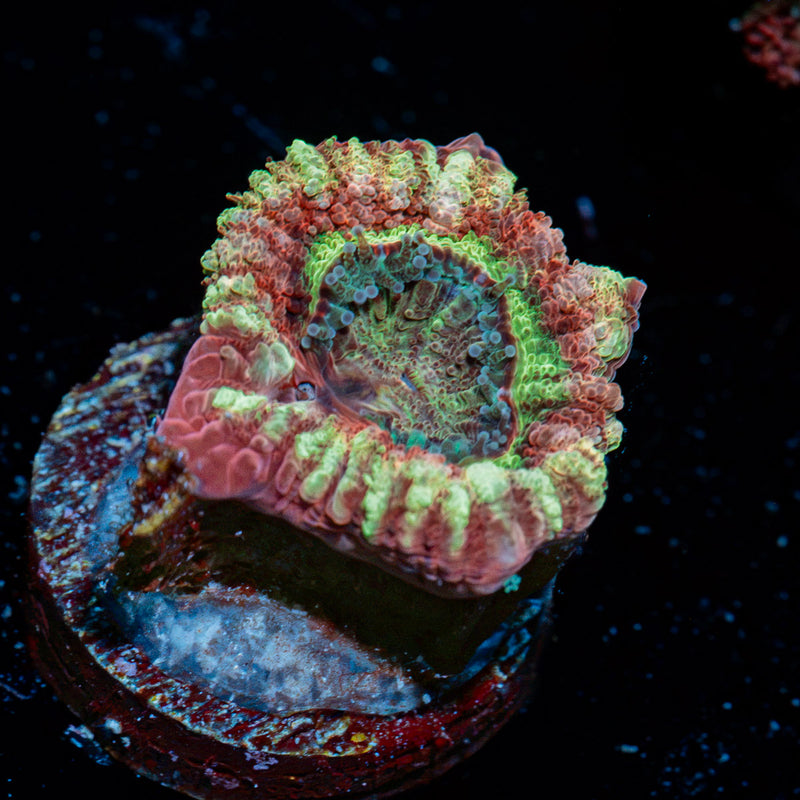
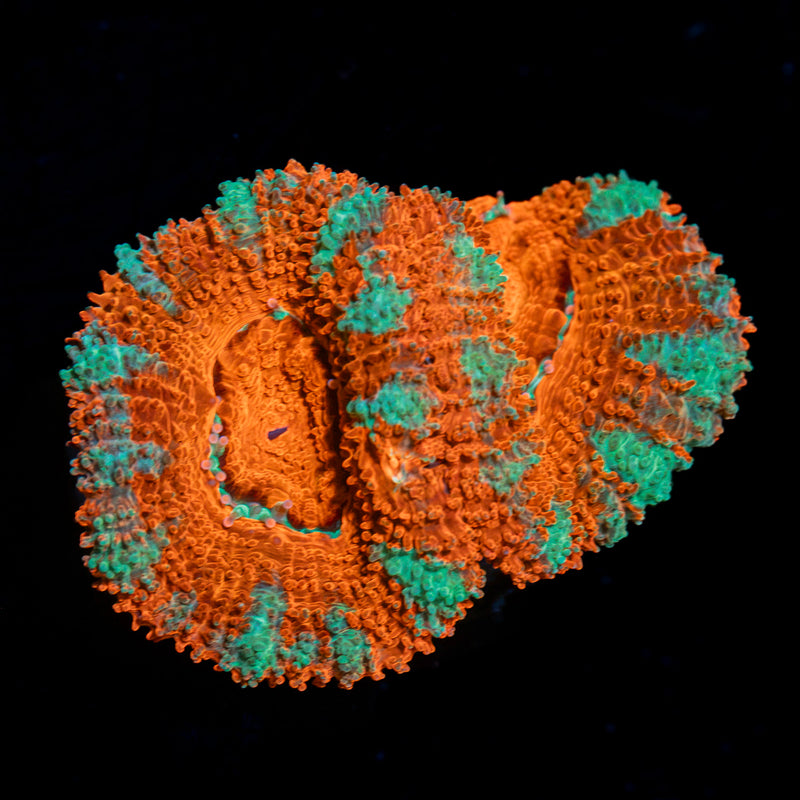
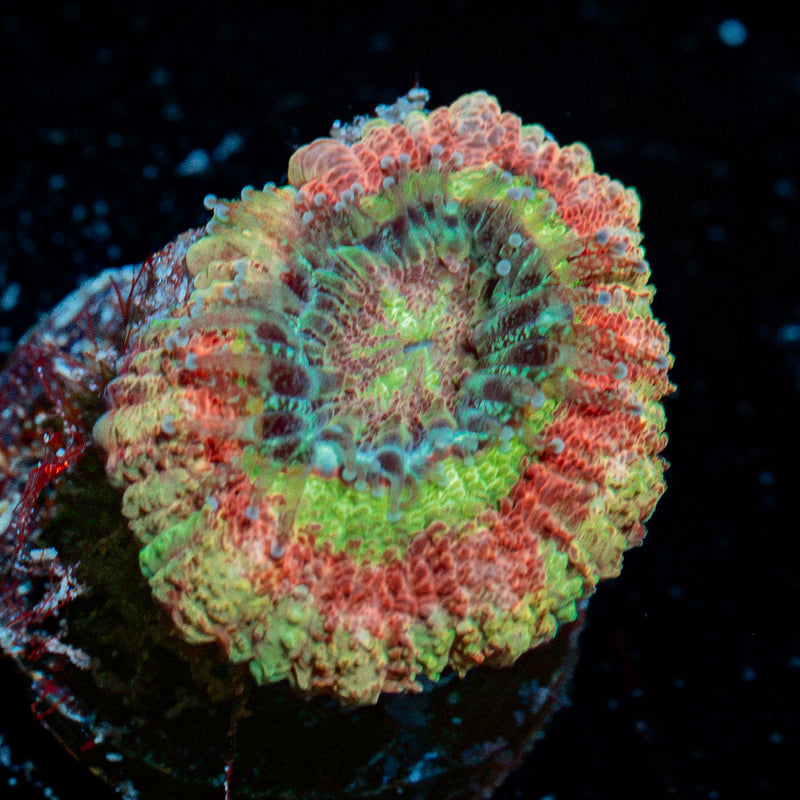
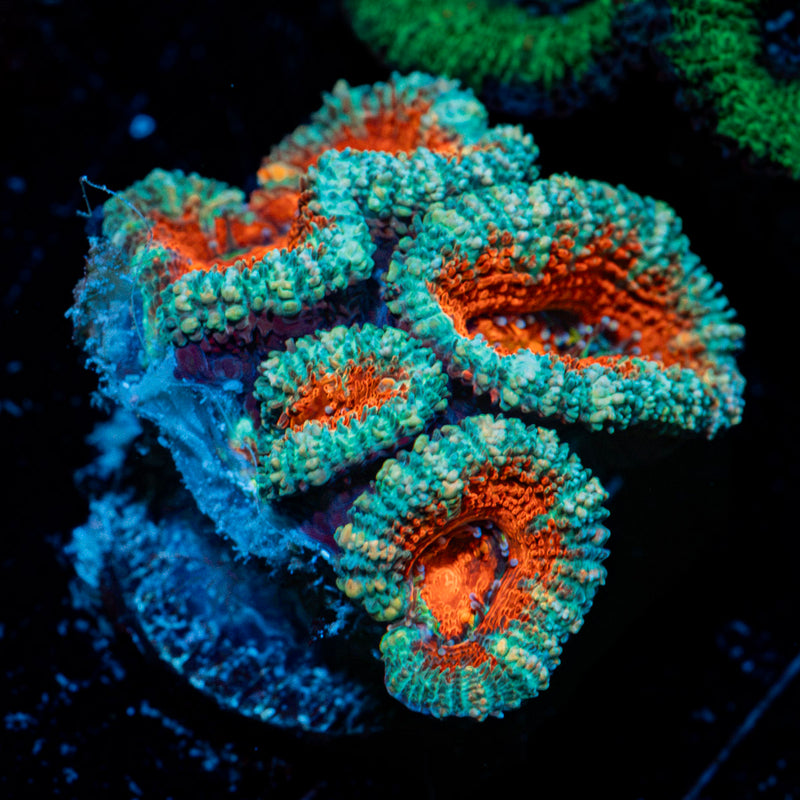
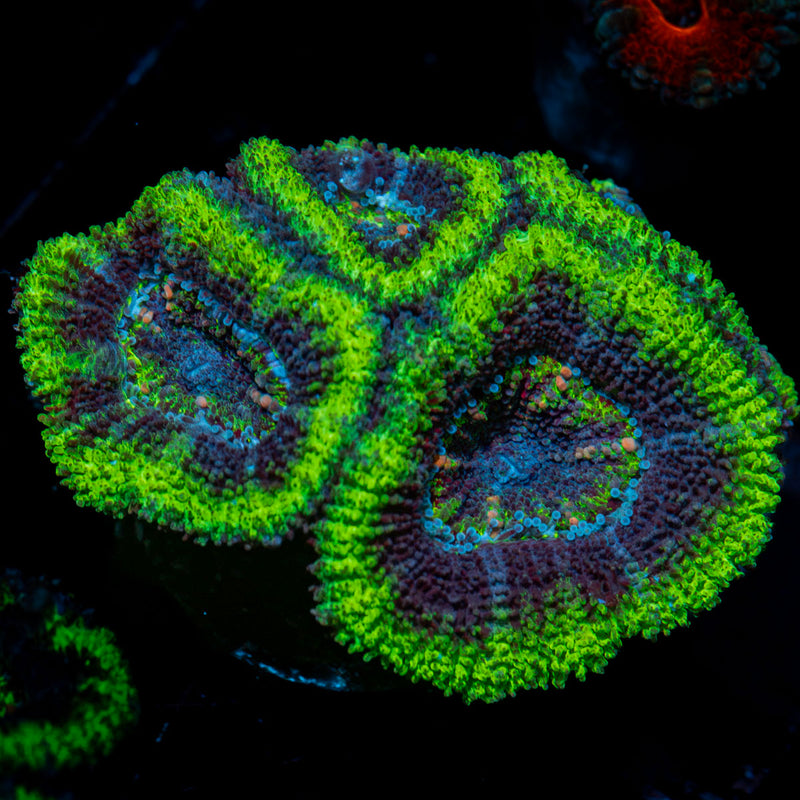
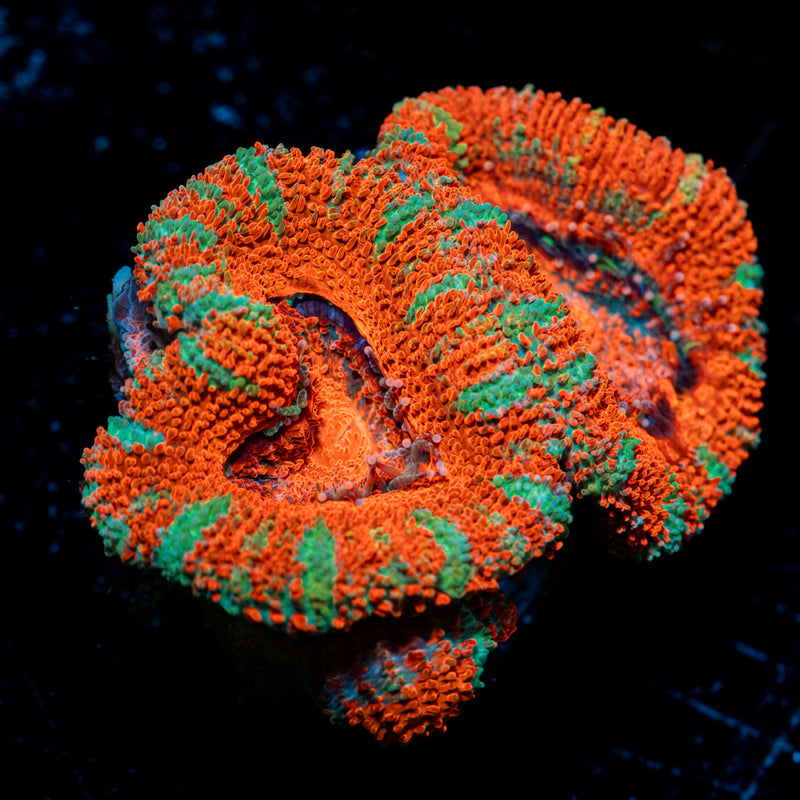
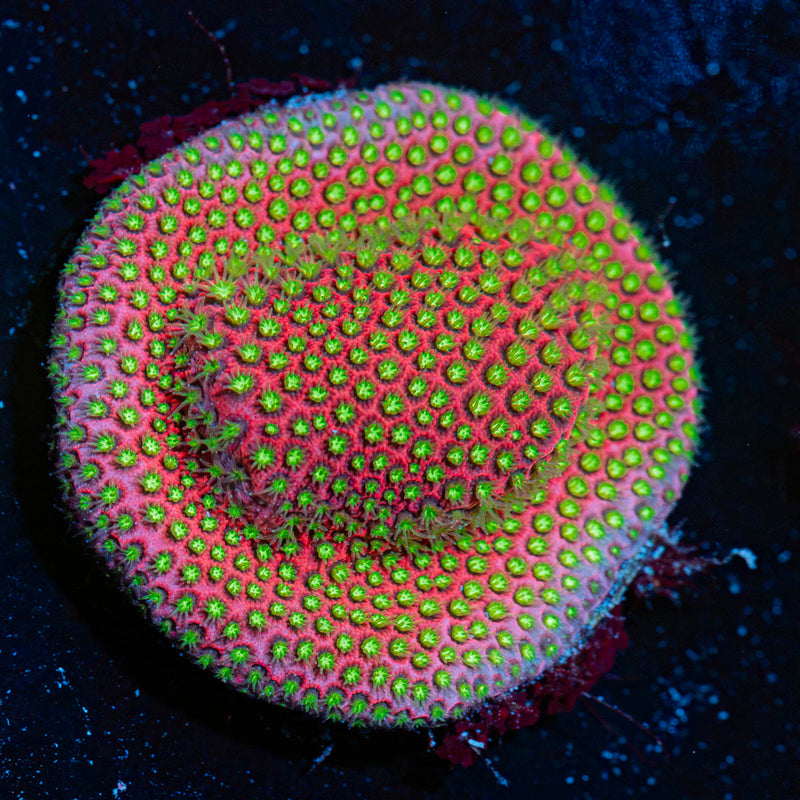
Cyphastrea is an encrusting SPS coral that proves beginner-friendly does not have to mean plain. These living jewels grow across rock in rich shades of teal, orange, red, and green, often with contrasting polyps that pop under blue reef lighting.
Unlike many corals on this list, Cyphastrea generally does well in lower to moderate light and gentler flow. That flexibility makes it useful for adding SPS texture to areas where a plating monti or branching coral would not be the right fit. Give it a dedicated patch of rock because it can slowly spread beyond a small frag plug.
Build the Conditions Before Adding SPS
Light and flow get much of the attention, but consistency is the real foundation. Keep temperature steady, maintain salinity near natural seawater levels, and avoid treating alkalinity as an occasional number. As calcifying corals grow, they use alkalinity and calcium every day. Test often enough to identify a trend, then adjust dosing gradually rather than chasing a single reading.
Nitrate and phosphate should not be stripped to zero. SPS corals benefit from available nutrients, and a pale, stalled colony in ultra-clean water is not necessarily a lighting problem. The ideal range depends on the system, but stable, detectable nutrients are usually more useful than constant attempts to force perfectly low numbers.
Start frags lower or farther from the strongest light than their final position. A coral can be moved upward over a few weeks as it adjusts. For flow, look for polyps and branches gently moving from changing directions. Constant direct pressure from one pump can damage tissue, while dead spots invite detritus to collect.
Placement and Acclimation Make a Difference
When your frag arrives, inspect it carefully and follow a thoughtful acclimation routine. Match temperature, avoid exposing tissue to air longer than necessary, and give the coral time to settle before making repeated changes. Mount it securely so it cannot tumble, because a fallen frag can be shaded, damaged, or sting nearby corals.
Resist the temptation to judge success in 24 hours. SPS corals may stay slightly muted while they adapt, then begin extending polyps and laying down new encrusting growth at the base. Fresh growth margins, consistent color, and gradual branch development are better signs than expecting an instant color explosion.
A thoughtfully selected first SPS frag should feel exciting, not intimidating. Start with a healthy aquacultured Montipora, Stylophora, or birdsnest, give it stable conditions, and let it become the colorful proof that your reef is ready for the next living jewel. Riptide Aquaculture's curated SPS selections make it easier to choose a coral that fits both your current tank and the reef you are building toward.