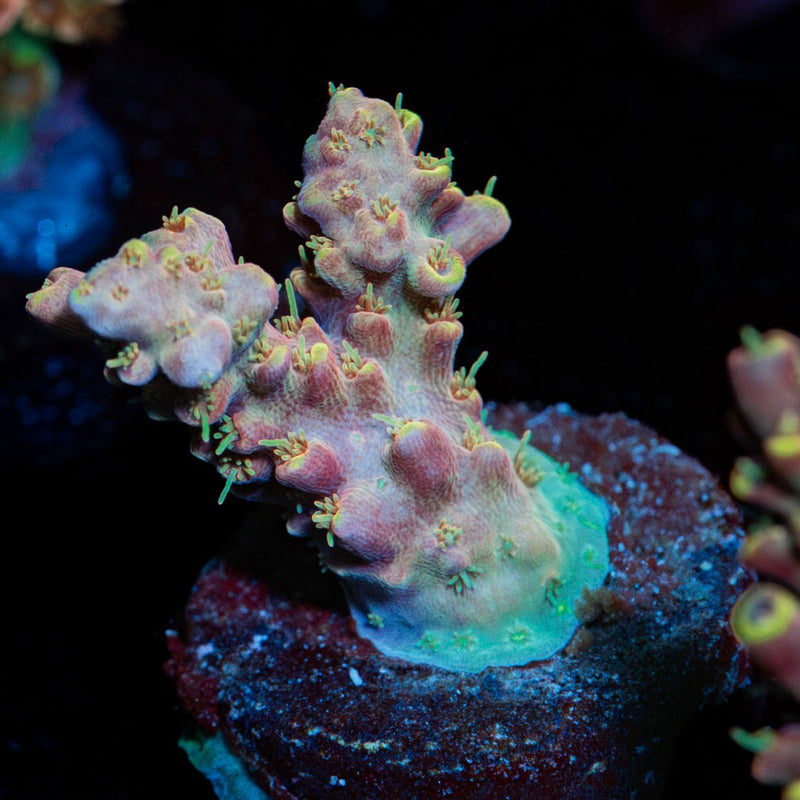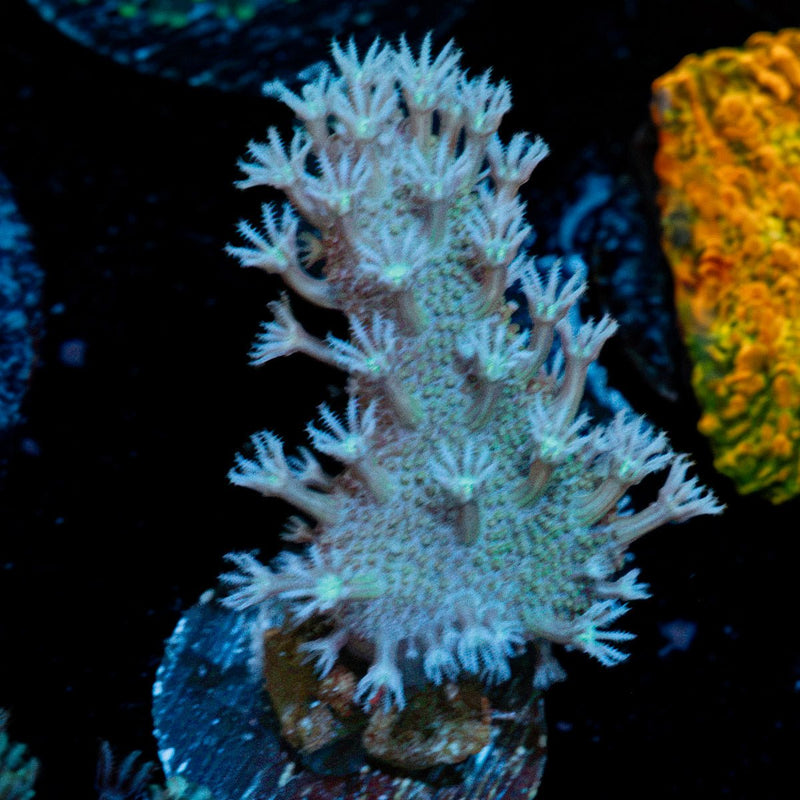
A glowing Acropora frag can look like a tiny living jewel under the seller’s lights, then seem less electric after a few weeks in a new reef. That shift is frustrating, but it is not automatically a sign that the coral is failing. The best acropora color retention tips focus on helping the coral settle into stable conditions where its pigments can develop, rather than trying to force color with one dramatic adjustment.
Acropora color is a response to light, nutrition, water chemistry, flow, and genetics. Some pieces naturally lean toward pastel tones, while others hold deep blues, hot pinks, fluorescent greens, or rich reds. Your job is not to make every frag look identical to its WYSIWYG photo. It is to provide consistent conditions that let each aquacultured Acropora show its healthiest, most vibrant potential.
Acropora Color Retention Tips Start With Stability
For SPS corals, stability is what separates a colorful, steadily growing colony from a coral that looks pale, brown, or stressed. Acropora can tolerate a range of successful reef parameters, but they react poorly when those parameters swing quickly.
Keep salinity steady around 1.025 to 1.026 specific gravity, and avoid correcting it aggressively after evaporation or a missed top-off. Aim for a stable temperature in the upper 70s, with as little daily variation as your system allows. Alkalinity deserves especially close attention because rapid changes can cause faded tips, tissue stress, and stalled growth even when the test result looks acceptable on paper.
Many thriving Acropora tanks operate around 7.5 to 9 dKH. The exact number matters less than maintaining it consistently. If your reef consumes alkalinity quickly, smaller and more frequent dosing is usually safer than occasional large corrections. Check calcium and magnesium as well, since they support skeletal growth and help keep alkalinity management predictable.
Do not chase a new number every time you see a slightly lighter coral. Before making changes, test, record results, and look for a pattern over several days. A stable reef gives coral pigments time to respond.
Match Light Intensity to the Coral’s Acclimation
Light is often the first suspect when Acropora lose color, and it should be. Too little light can lead to browning as zooxanthellae density increases. Too much light too quickly can bleach pigments, fade delicate pastels, or create bright tissue with poor polyp extension. Both problems can look like “lost color,” but they require different solutions.
Most Acropora thrive under moderate to high PAR once acclimated, often in the 250 to 400 PAR range. Some established colonies can handle more, while freshly shipped frags and sensitive varieties may need a gentler start. Fixture type, spectrum, mounting height, rockwork, water clarity, and even the placement of neighboring corals all influence the PAR a frag actually receives.
A PAR meter is one of the most useful tools for serious SPS keepers because it replaces guesses with a map of your reef. If you do not have one, acclimate conservatively. Begin a new frag lower in the tank or use your light’s acclimation setting, then gradually move it upward over several weeks as it shows healthy tissue, polyp extension, and encrusting growth.
Blue-heavy reef lighting can make fluorescent colors pop, but appearance and coral health are not exactly the same thing. A coral may look incredible under deep blue evening viewing lights while still needing a balanced daytime spectrum and appropriate intensity for long-term performance. Keep your lighting schedule consistent, and avoid changing intensity and spectrum at the same time.
Let New Frags Settle Before Judging Their Color
Shipping, dipping, mounting, and entering a new microbial environment all place stress on a frag. A newly introduced Acropora may darken, lighten, or temporarily lose a specific hue while it adjusts. Give it several weeks of steady care before making a major call on placement.
Healthy signs matter more than instant color. Look for intact tissue, consistent polyp extension for that variety, clean base tissue, and fresh encrusting around the plug. Those are excellent early signals that a colorful future is on the way.
Feed the Reef Without Overfeeding It
Nutrients are one of the most nuanced parts of Acropora color retention. Ultra-low nutrients can produce very pale coral, especially when light is intense. Excess nitrate and phosphate can encourage browning, nuisance algae, and reduced water quality. The sweet spot depends on the tank, its filtration, fish load, and the coral varieties you keep.
A practical target for many Acropora systems is measurable nitrate and phosphate rather than zeros. Many hobbyists find success with nitrate in the low single digits to low teens and phosphate in a low but detectable range. What matters most is avoiding sharp swings. A reef that moves from nearly zero nitrate to high nitrate in a few days is far more stressful than a reef holding a slightly higher but stable level.
Fish feeding is often the most natural way to support coral nutrition. A well-fed fish population contributes dissolved and particulate nutrients that SPS can use. Target feeding coral foods can also help, but more food is not automatically better. If you increase feeding, monitor nutrient trends, algae growth, and the coral’s response before adding more.
When nutrients are bottomed out, reduce export carefully rather than making an abrupt change. You might slightly shorten aggressive filtration, feed fish a bit more, or adjust dosing in a controlled way. If nutrients are climbing, look at feeding amounts, detritus accumulation, old filter media, and the capacity of your export method before reaching for a fast chemical fix.
Give Acropora Strong, Varied Flow
Acropora are built for moving water. Their branching structure traps mucus, waste, and detritus if flow is too weak, which can dull color and irritate tissue. Strong flow helps deliver oxygen and nutrients while keeping the coral’s surface clean.
The goal is not a constant blast aimed at one side of a frag. Instead, create broad, turbulent, changing flow that moves polyps and reaches around branches. Random or alternating flow patterns are especially helpful as colonies become larger and more complex.
Watch the coral, not just the pump setting. Tissue that is constantly folded over, blasted white, or unable to extend normally may be receiving too direct a stream. On the other hand, detritus collecting at the base, weak movement, or recurring algae near the frag can point to insufficient flow. Repositioning a powerhead or changing a coral’s angle may solve the issue without changing your entire system.
Choose Placement With Growth in Mind
A tiny Acropora frag will not stay tiny. When choosing a spot, think about the colony it may become and how nearby corals will affect it. A fast-growing branch can shade itself, shadow a lower coral, or enter a zone with very different flow as it expands.
Leave enough space to prevent contact with stinging LPS corals, sweeper tentacles, or aggressive neighbors. Keep an eye on encrusting bases too. A frag may look isolated on day one but grow into a territorial conflict months later. Planning for space protects tissue and preserves the clean, colorful presentation that makes SPS displays so striking.
If you are adding several new pieces, avoid changing placement, lighting, dosing, and feeding all at once. Add corals in stages when possible. That gives the biological filter time to adjust and makes it easier to identify the cause if a coral reacts poorly.
Protect Color by Preventing Pests and Stress
No lighting schedule can compensate for pests, disease, or repeated chemical irritation. Inspect every new frag closely before it enters the display. Look for bite marks, eggs, damaged tissue, unusual flatworms, and pests around the plug or undersides of branches. A dedicated acclimation and dip process adds a little time up front, but it can protect an entire SPS collection.
Keep hands, tools, and equipment free of contaminants. Avoid spraying household cleaners near an open aquarium, and be cautious with rusty magnets, failing pumps, and unexplained stray voltage. Regular maintenance also matters: clean pumps maintain flow, clean light fixtures deliver more predictable intensity, and clean testing equipment improves the decisions you make.
Color loss can be a useful early warning sign. If multiple Acropora suddenly fade, test temperature, salinity, alkalinity, nitrate, and phosphate before assuming the lights are to blame. If only one coral changes, examine its placement, tissue condition, pest risk, and recent interactions with neighboring corals.
Patience Is Part of the Color Plan
The most rewarding SPS reefs are built through consistency, observation, and small intentional adjustments. A premium aquacultured Acropora may arrive as a stunning frag, but the real satisfaction comes when it encrusts, branches, and develops the look that is uniquely yours under your reef’s conditions.
Keep a simple log of test results, light changes, feeding adjustments, and new additions. Photos taken under the same settings every few weeks are even more useful than memory. They reveal whether a coral is truly fading, steadily improving, or simply changing its expression as it matures.
Give your Acropora clean water, stable chemistry, purposeful flow, and enough time to settle. With patient care, those vivid tips, glowing polyps, and saturated branches have every opportunity to become the showpieces your reef was built around.
Products from the article