A bare rockscape can feel like it is taking forever to become the colorful reef you pictured. The good news is that several hardy, vibrant species can change that quickly. If you are wondering what corals grow fastest in tanks, start by separating fast spreaders from fast branchers: some corals carpet rock, while others build height and movement.
The best choice depends on your tank's lighting, flow, nutrient level, and how much future pruning you are willing to do. A coral that grows rapidly is exciting, but it also needs room to grow without crowding its neighbors. Choose with the finished reef in mind, not just the empty space you see today.
What Corals Grow Fastest in Tanks?
For most reef keepers, fast-growing soft corals lead the pack. Green star polyps, Xenia, many zoanthids, leather corals, and some mushrooms can spread or divide at an impressive pace in stable systems. They are often forgiving choices for newer reef tanks because they generally tolerate moderate light and a wider range of flow than demanding SPS corals.
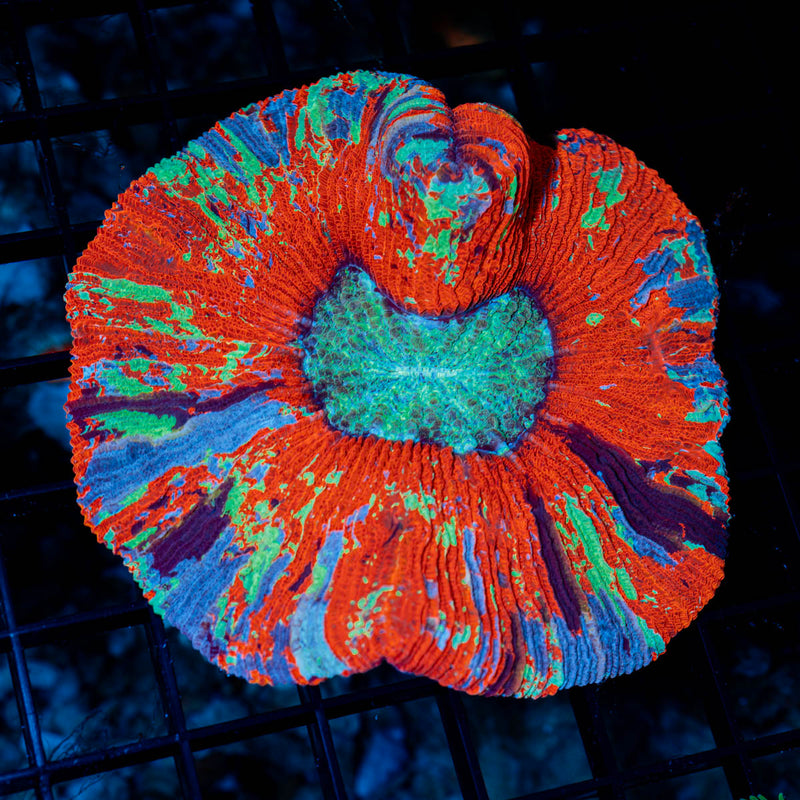
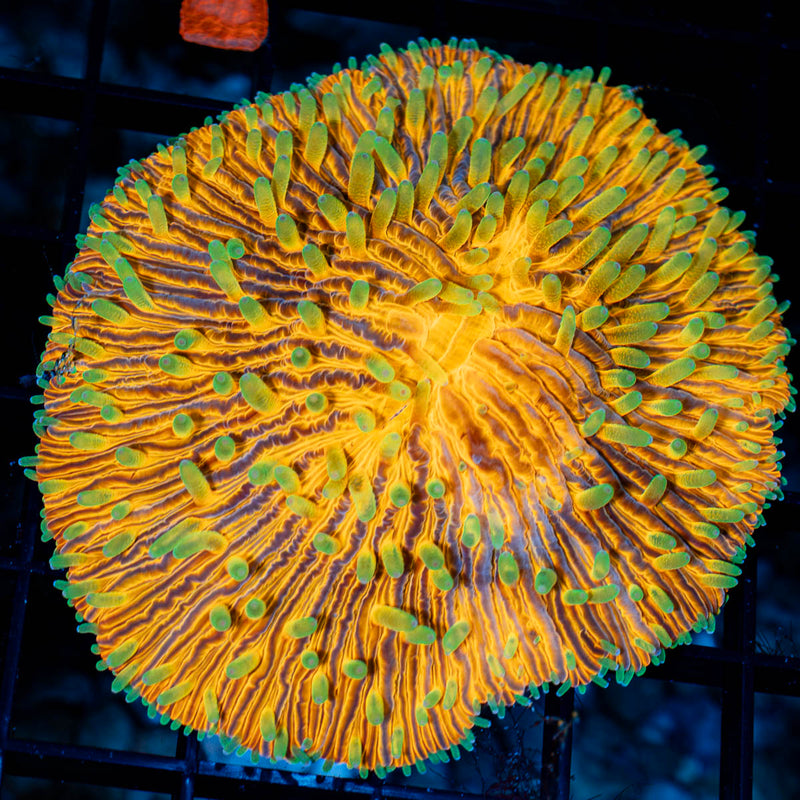
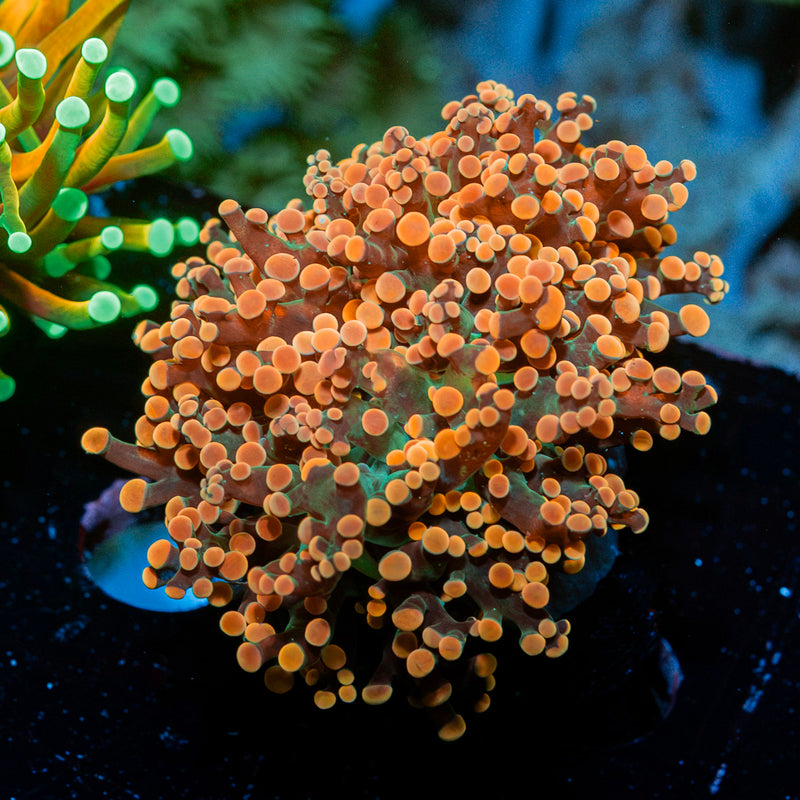
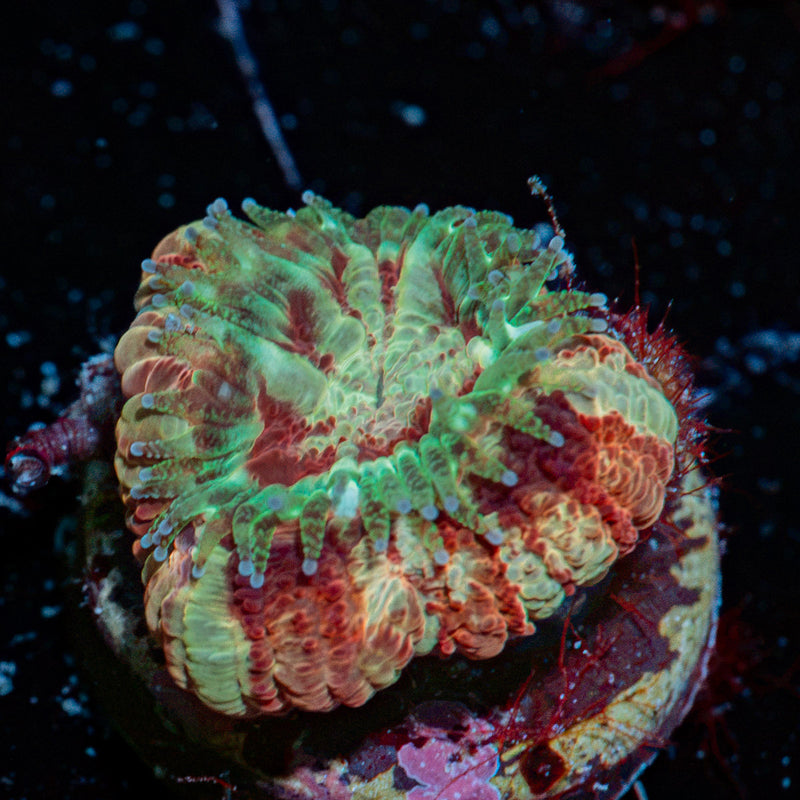
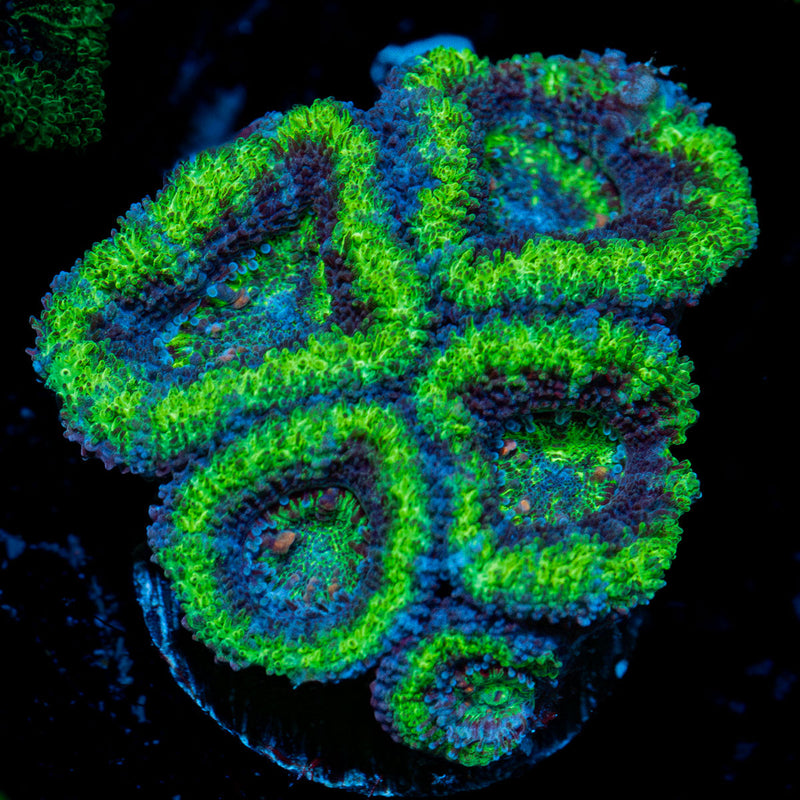
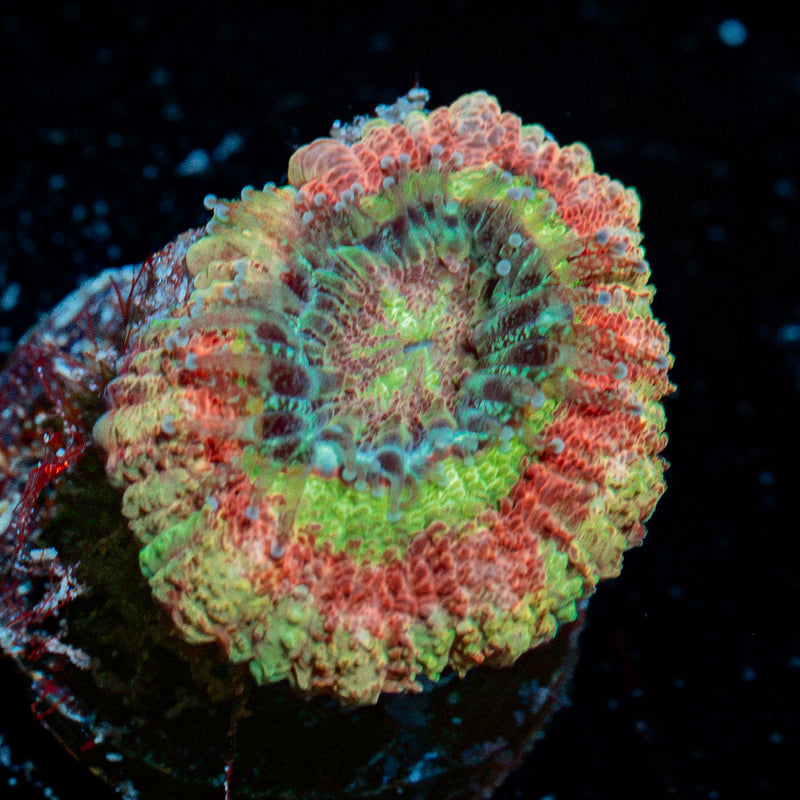
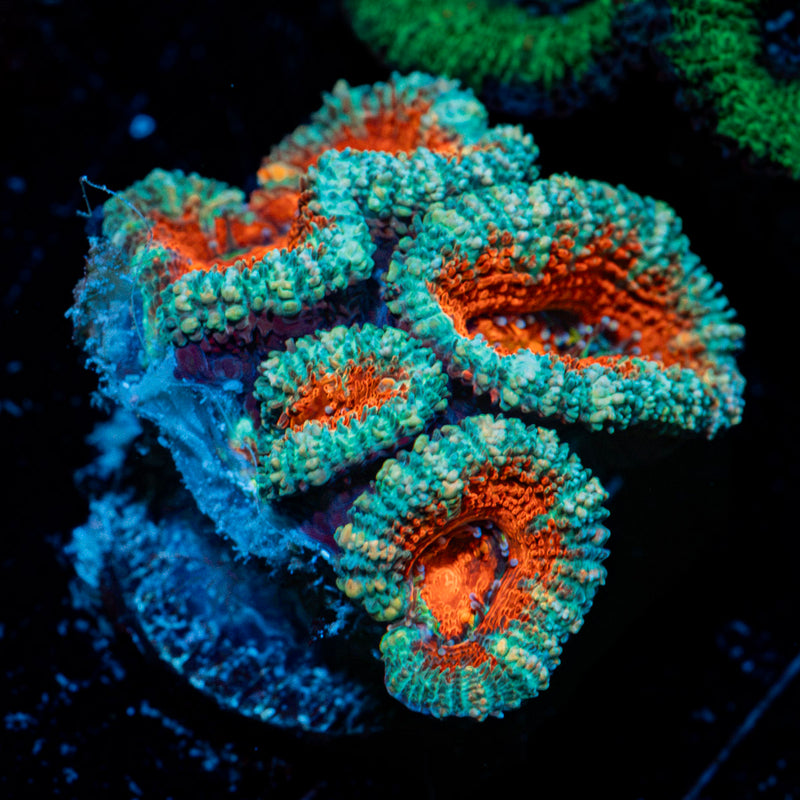
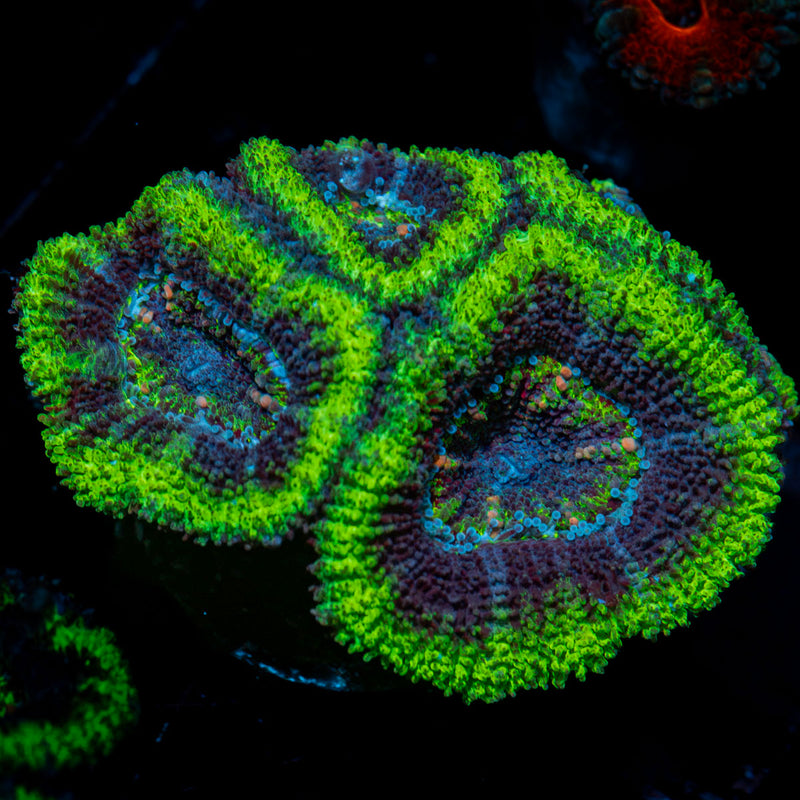
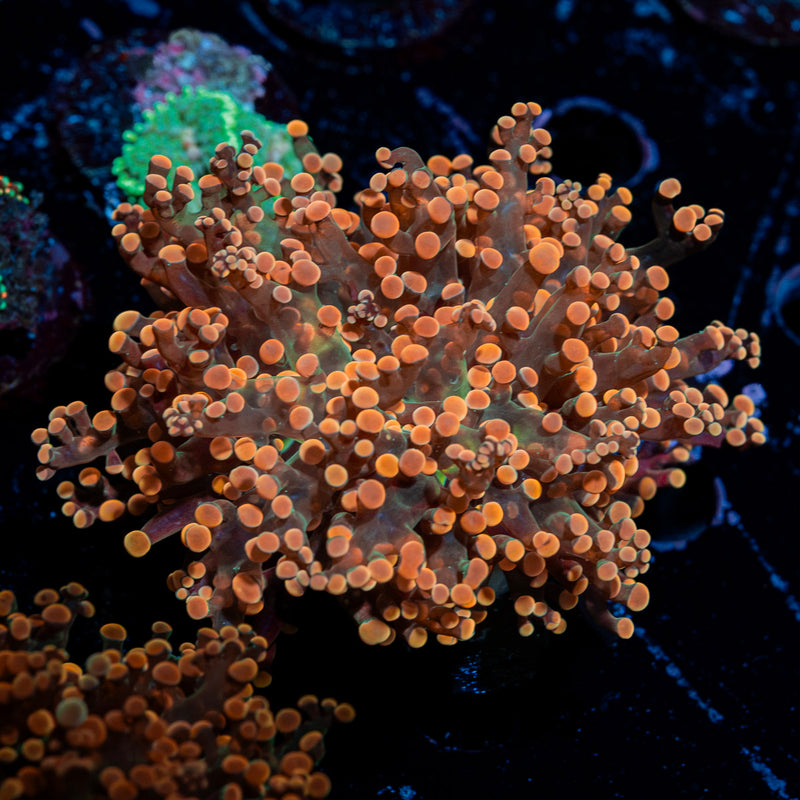
Fast-growing LPS corals, including branching hammer coral, frogspawn, candy cane coral, and certain acans, offer a different kind of progress. They may not cover a rock as quickly as green star polyps, but healthy colonies develop new heads and fuller branching structure that creates a dramatic display.
SPS corals can also grow very quickly, particularly Montipora, birdsnest, and stylophora. Their growth is more dependent on high, stable water quality, appropriate lighting, and strong, varied flow. In a mature, well-tuned reef, they can turn a carefully placed frag into an impressive colony surprisingly fast.
Green Star Polyps: Fast Coverage With Big Personality
Green star polyps, often called GSP, are one of the quickest corals for covering a dedicated rock or aquarium back wall. Their bright green polyps sway in the current, creating the soft, grassy movement many reef keepers want in a display.
The trade-off is simple: GSP does not always stop where you want it to stop. Keep it on an isolated island rock surrounded by sand or give it a specific section of the back glass. Letting it reach your main rockwork can mean regular trimming around slower-growing corals.
Xenia: The Classic Fast Grower
Pulsing Xenia is famous for fast propagation. In nutrient-rich, stable tanks, it can quickly spread across rockwork and form a beautiful, constantly moving colony. Its rhythmic pulsing makes it a lively choice for a lower-light or mixed reef area.
Xenia is also one of the most divisive corals in the hobby. Some tanks grow it so aggressively that it becomes a maintenance project, while other systems struggle to keep it thriving. If you love the look, start with a small piece on its own rock and treat expansion as part of the plan.
Zoanthids: Colorful Mats That Fill In Rockwork
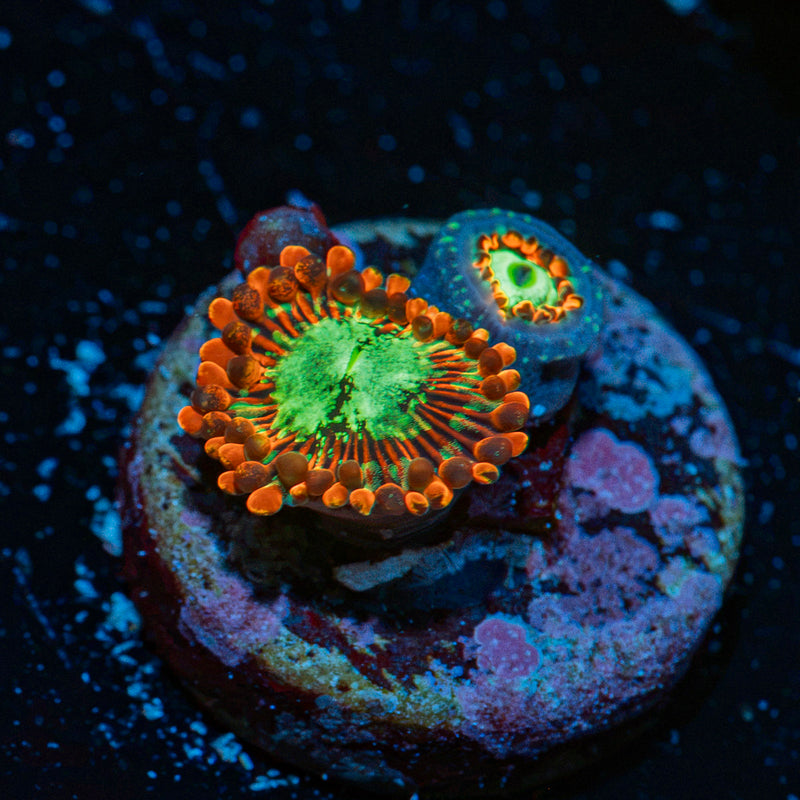
Zoanthids grow by producing new polyps from a spreading mat, making them a favorite for frag racks, zoa gardens, and lower portions of the aquascape. They come in an enormous range of colors and patterns, from neon greens to fiery orange, rich red, and multicolor combinations.
Their growth rate varies by variety. Some premium morphs grow slowly despite their striking color, while common, hardy varieties can multiply steadily under moderate light and flow. Give them enough space to form a colony, but inspect nearby corals as the mat expands.
Leather Corals: Fast, Forgiving, and Full of Motion
Toadstool leathers, finger leathers, and Kenya tree corals are reliable growers with a soft, natural look. A healthy leather coral can become a centerpiece, developing a broad cap or branching silhouette that adds height without the rigid appearance of stony coral.
Kenya trees deserve the same planning as GSP and Xenia. They can drop small branches that settle elsewhere and grow into new colonies. Toadstools are usually easier to contain, making them a more controlled choice for reef keepers who want soft-coral movement without constant spreading.
Fast-Growing LPS Corals for a Fuller Reef
LPS corals are a great middle ground for hobbyists who want visible growth, fleshy color, and less demanding care than many SPS species. They still need stable salinity, alkalinity, calcium, and magnesium, but they can be wonderfully rewarding in a well-maintained mixed reef.
Branching Hammers and Frogspawn
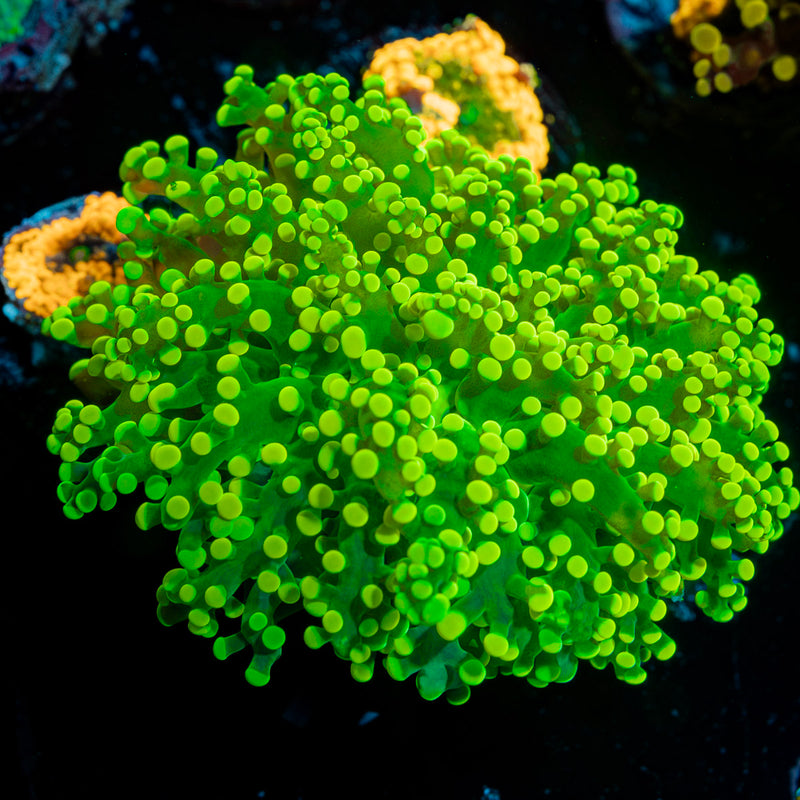
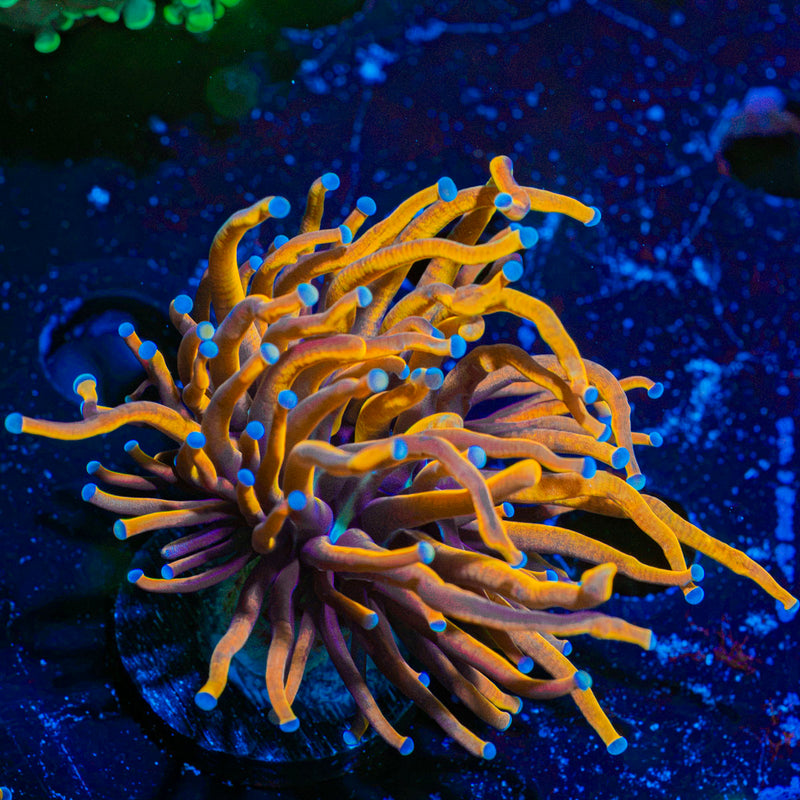
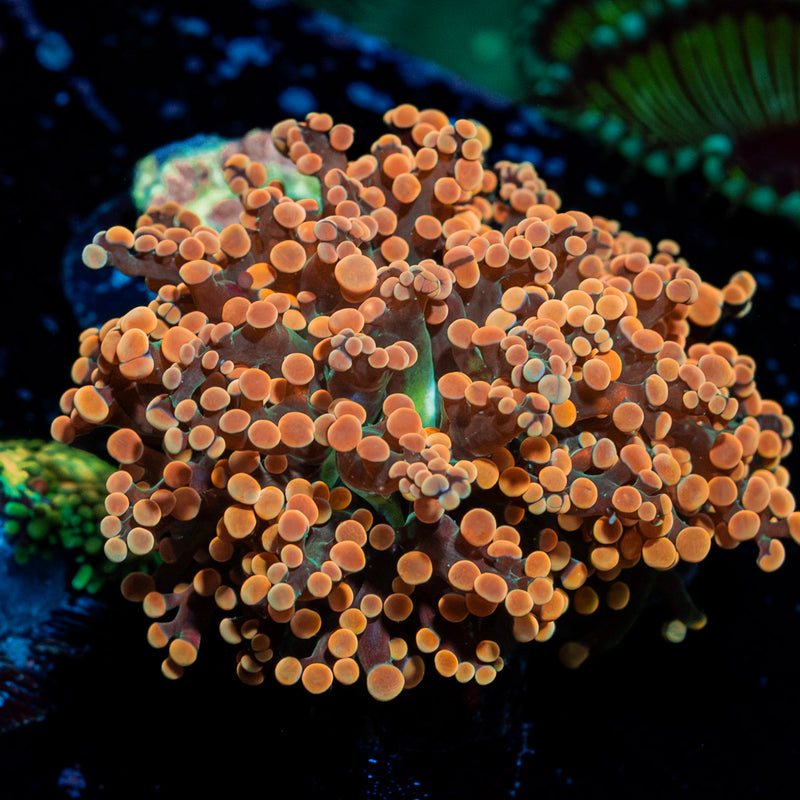
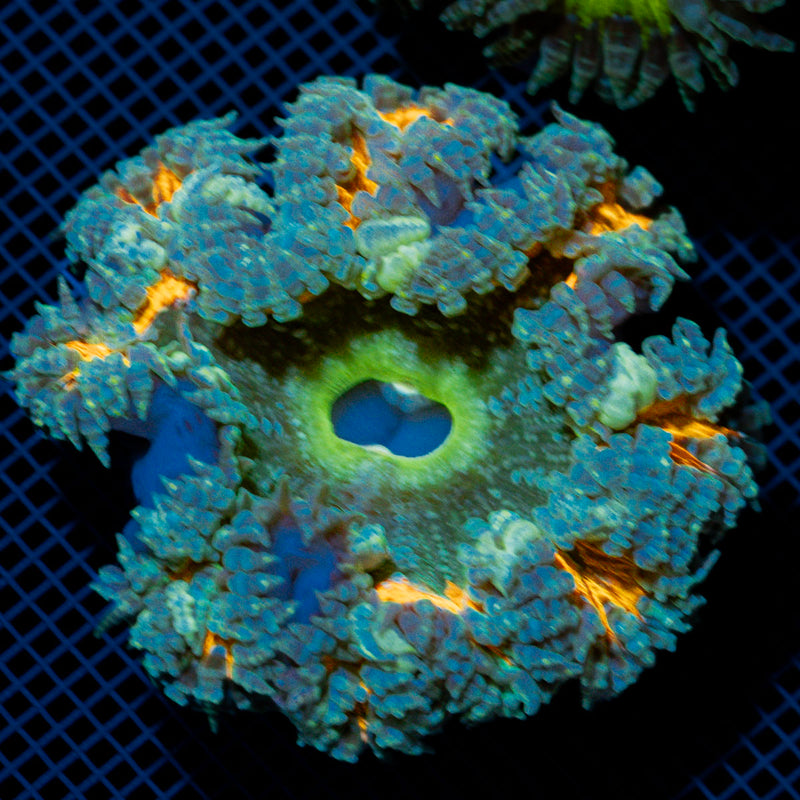
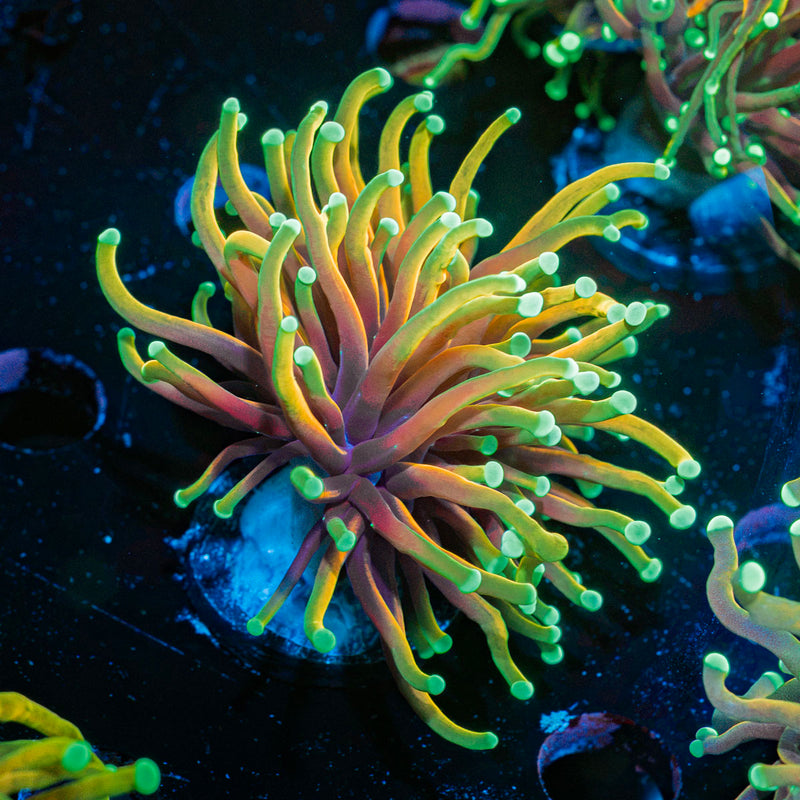
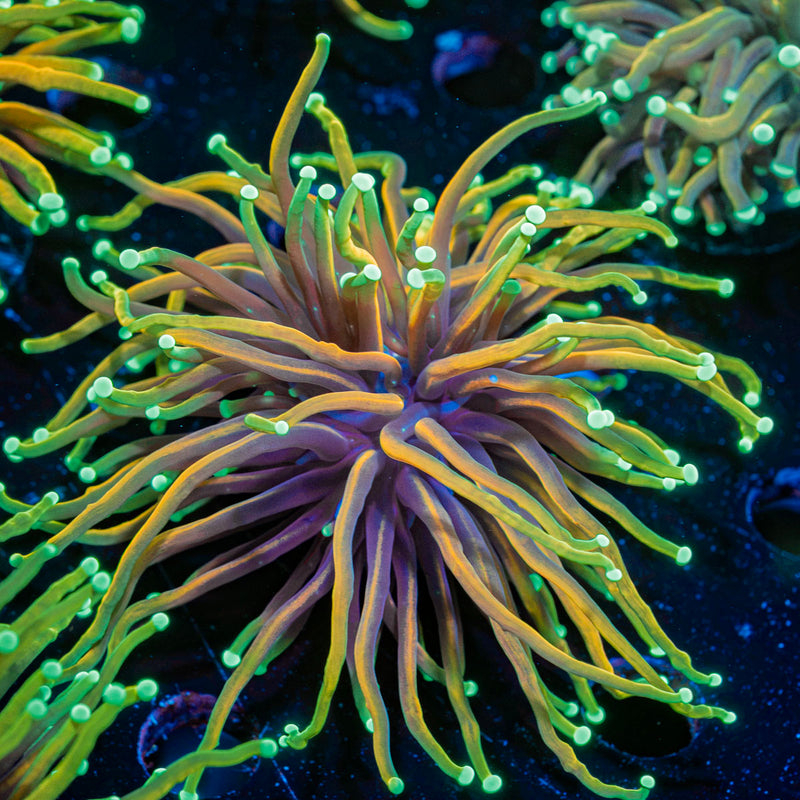
Branching hammer corals and frogspawn create new heads as they mature, gradually building a lush, flowing colony. Their tentacles bring movement and color to the mid-level areas of an aquascape, especially under blue-forward reef lighting.
Give Euphyllia room. Their sweeper tentacles can sting nearby corals, and a colony that seems small today may need several inches of open space later. Gentle to moderate, indirect flow is usually ideal: enough to keep tentacles waving, not enough to whip or retract them.
Candy Cane Coral
Candy cane coral, also called trumpet coral, is a practical fast-growing LPS choice. Under stable conditions, individual heads can split consistently and form dense, rounded colonies. Its generally manageable temperament and straightforward placement make it especially appealing for newer reef keepers.
Moderate light, gentle to moderate flow, and occasional target feeding can support good growth. As with every coral, feeding is a supplement rather than a substitute for stable parameters and appropriate lighting.
Acans and Mushrooms
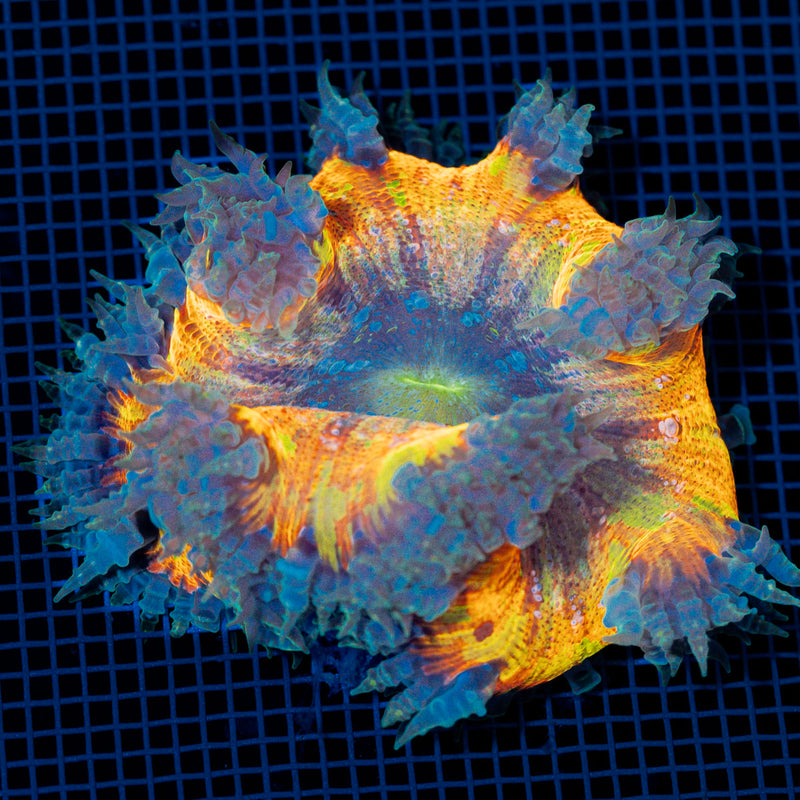
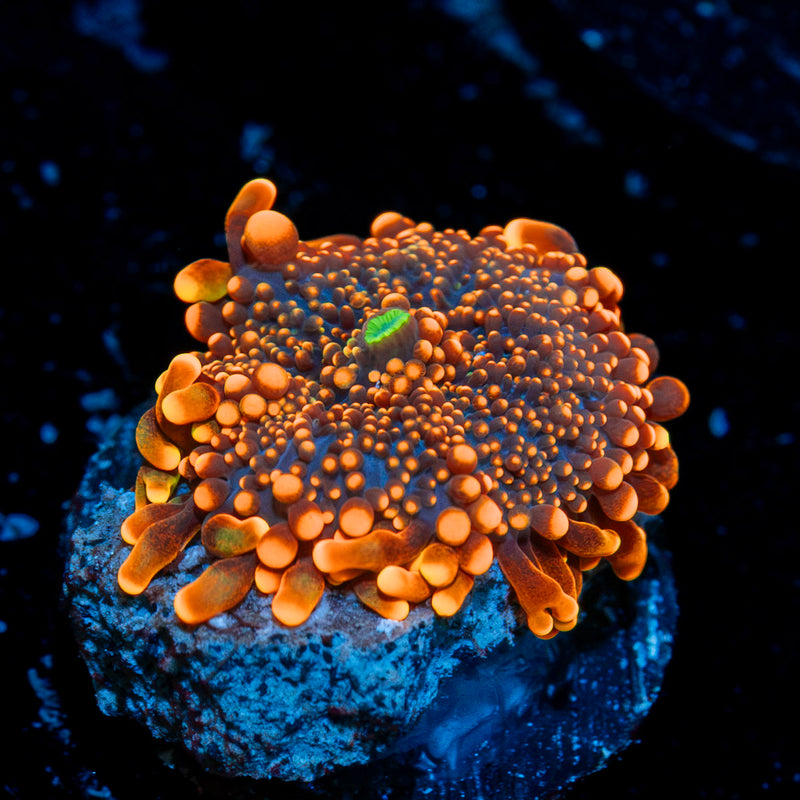
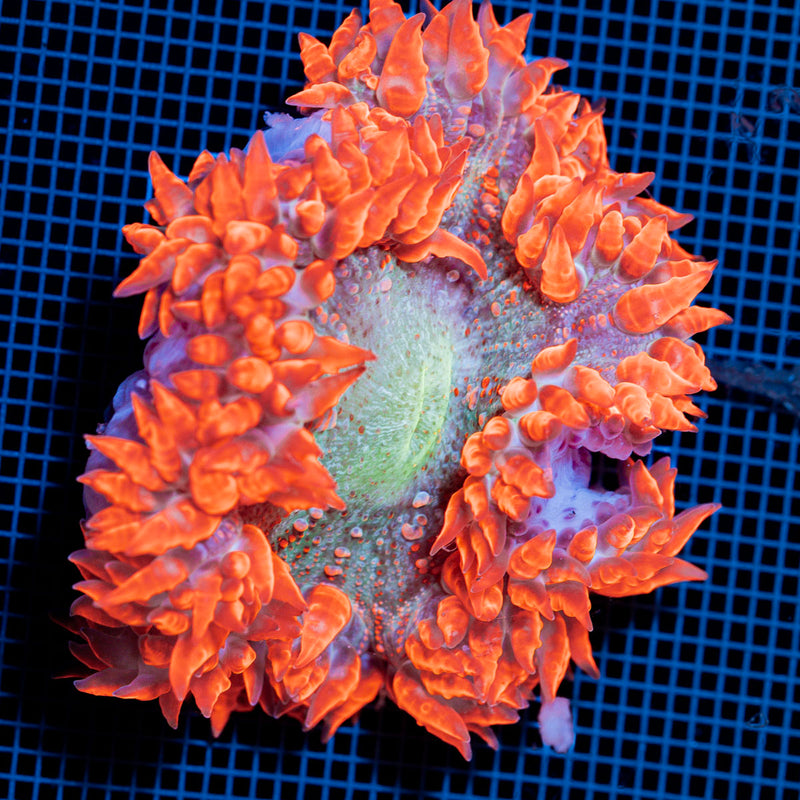
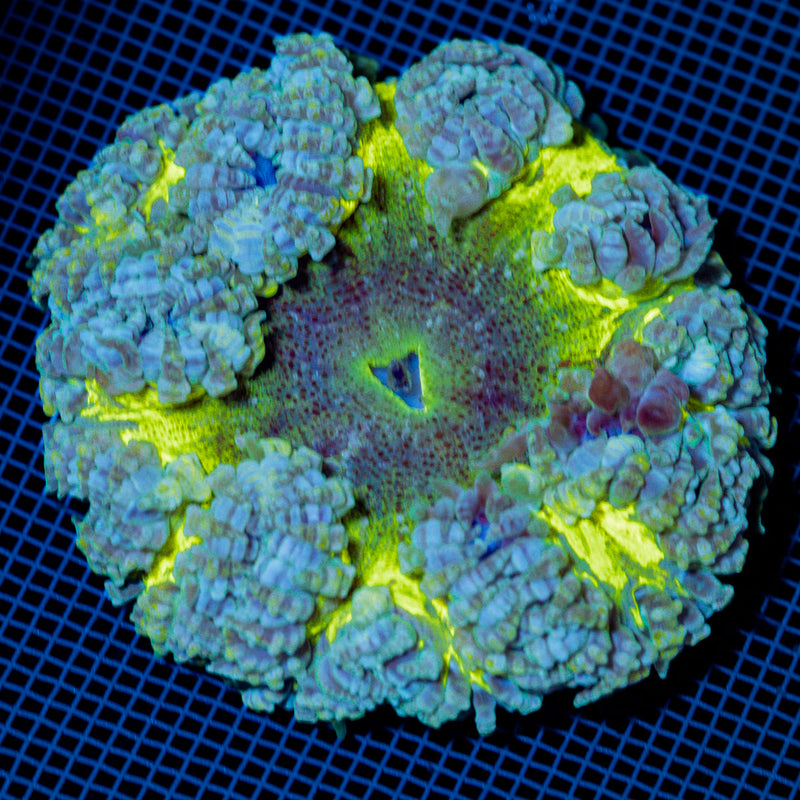
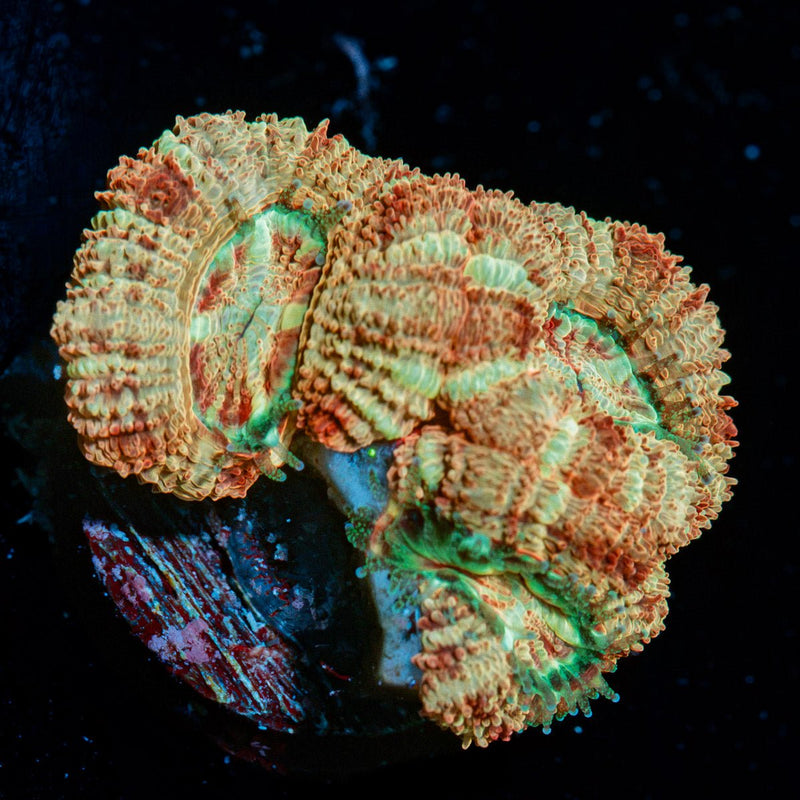
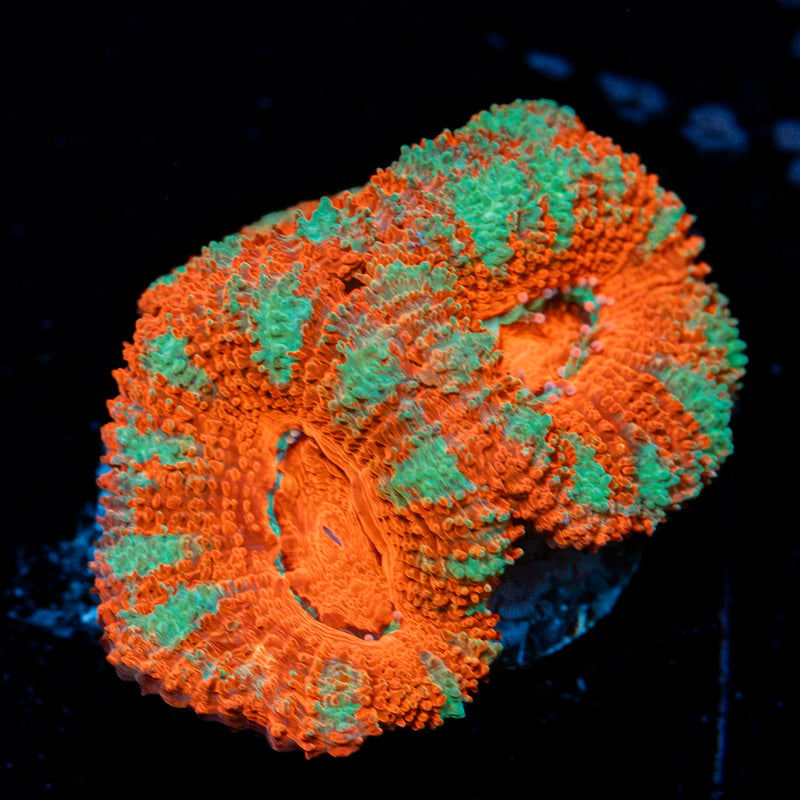
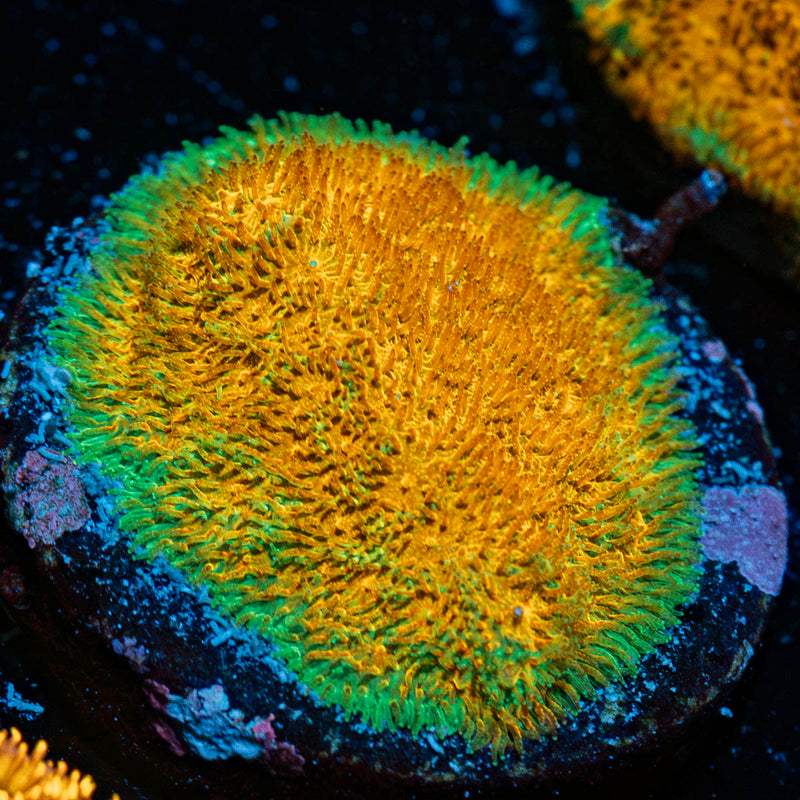
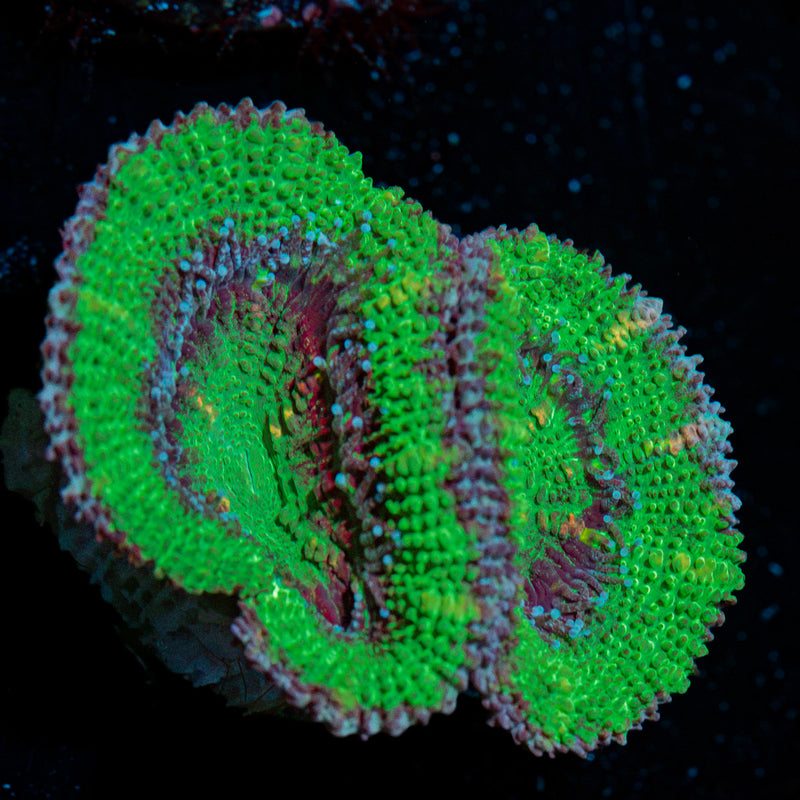
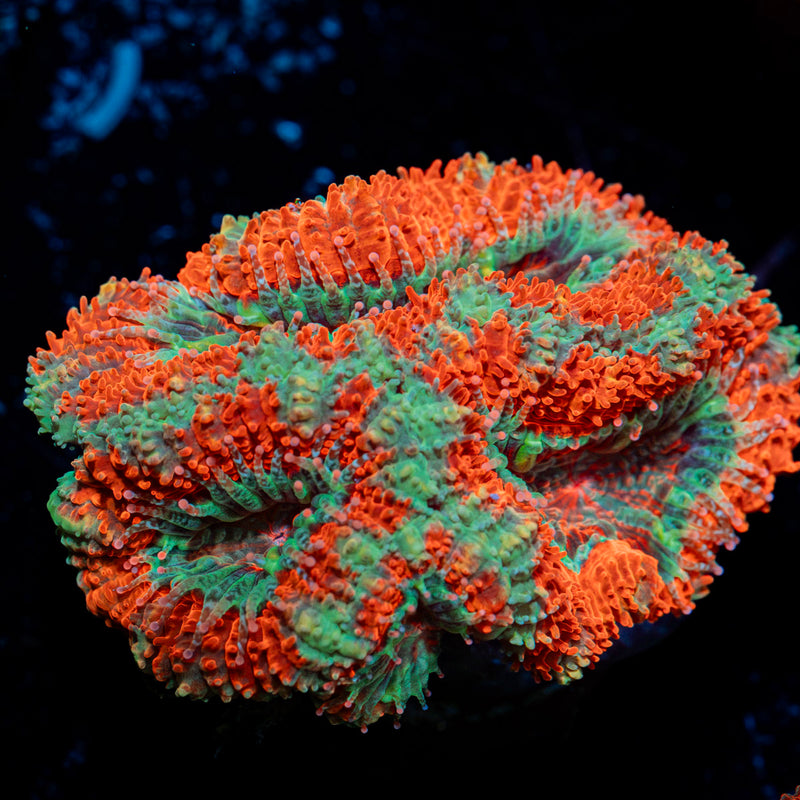
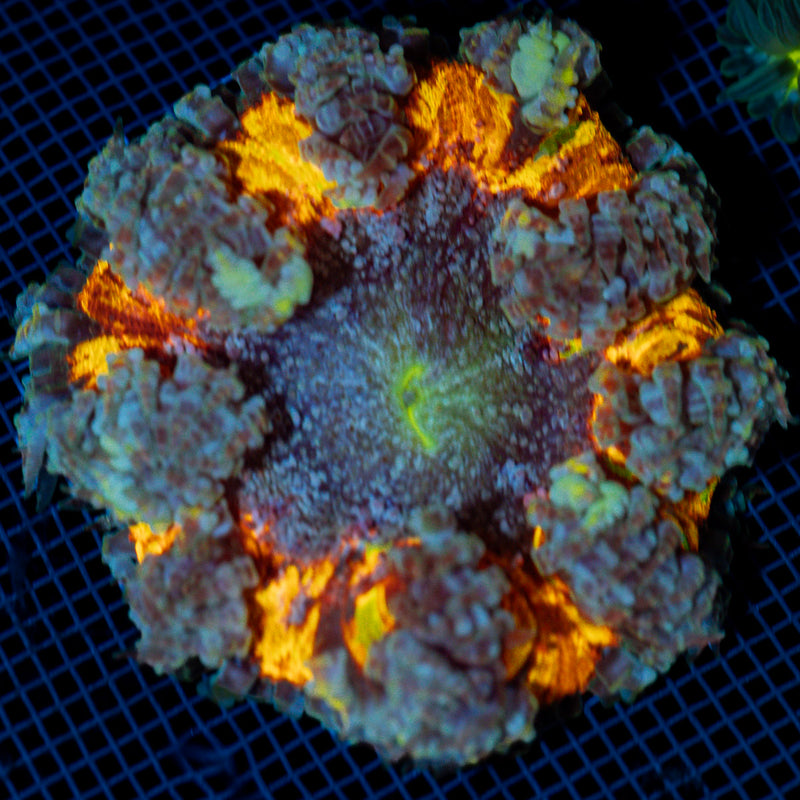
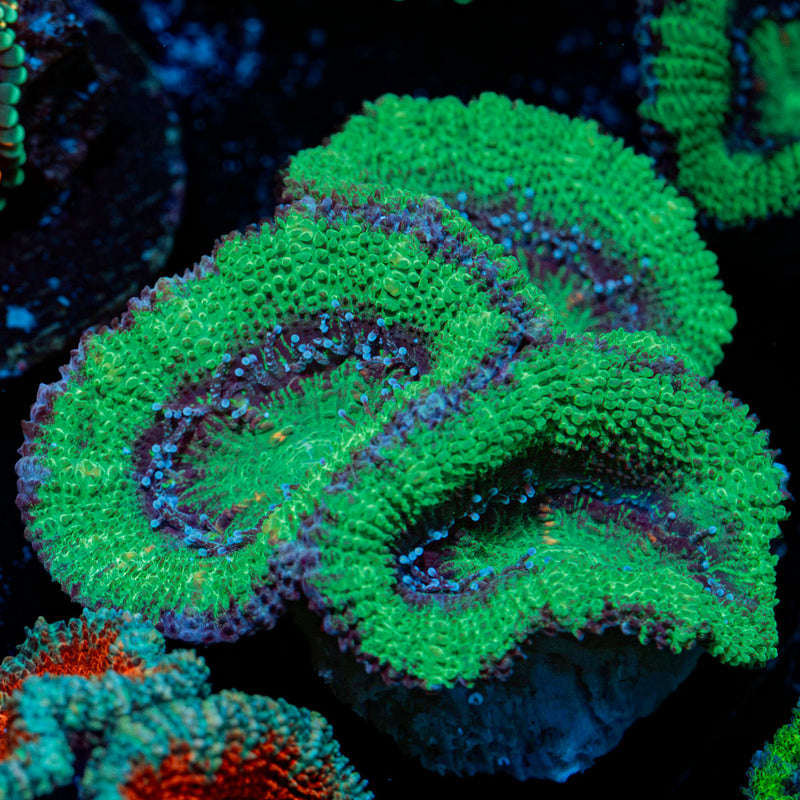
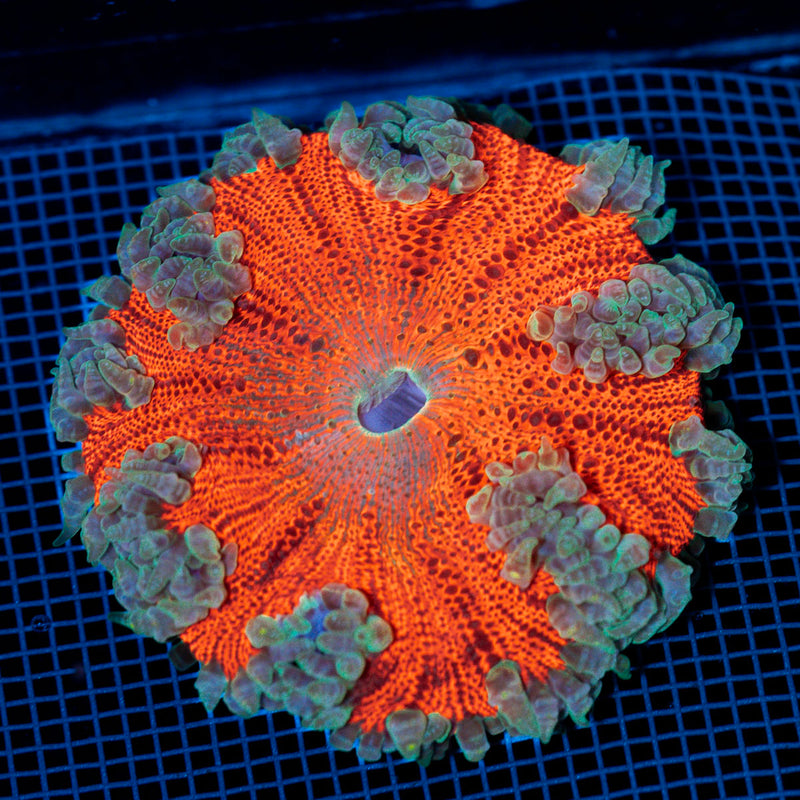
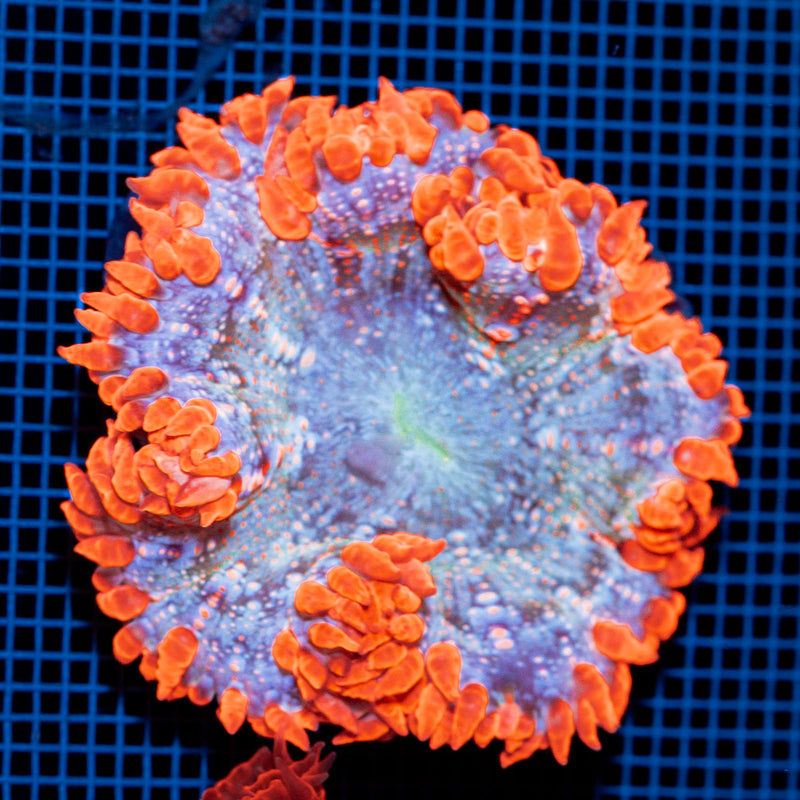
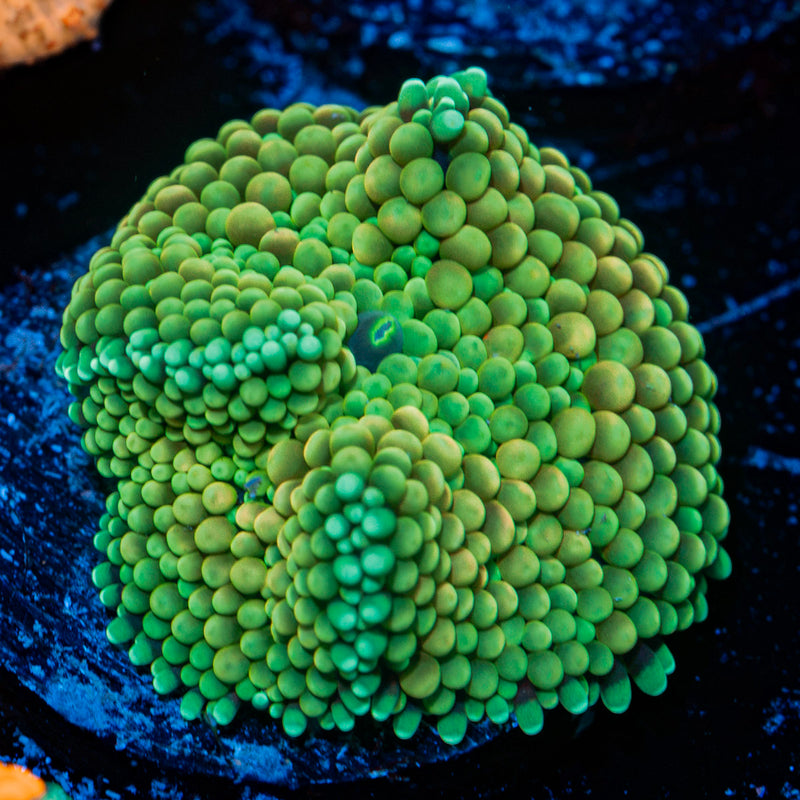
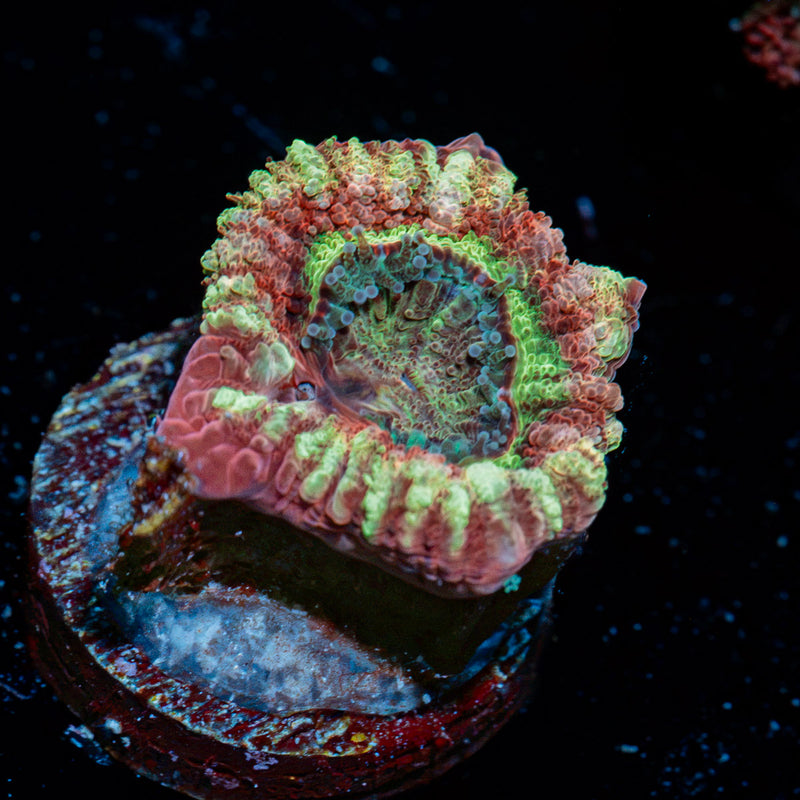
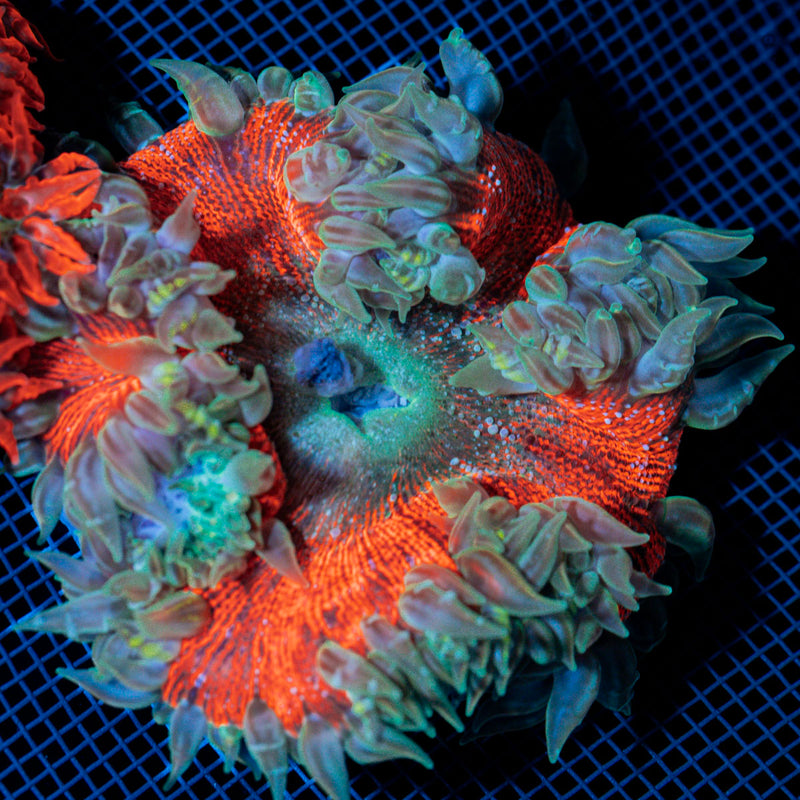
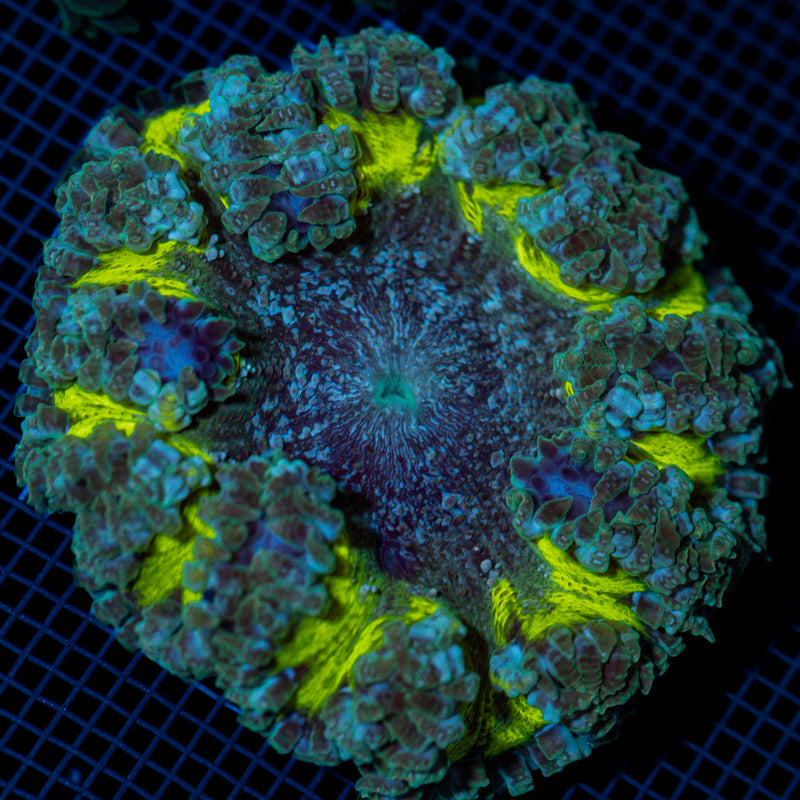
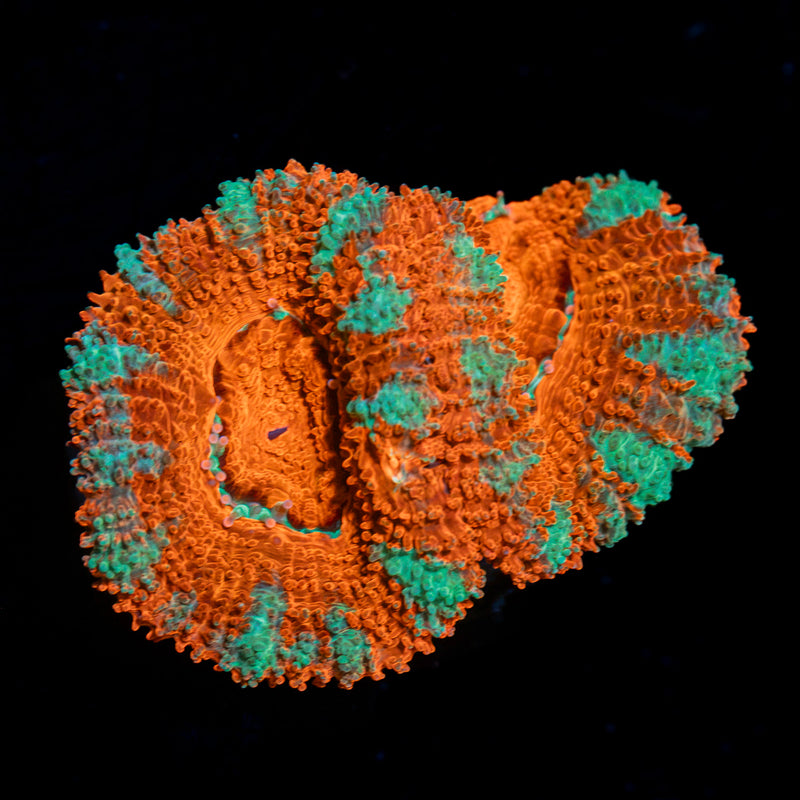
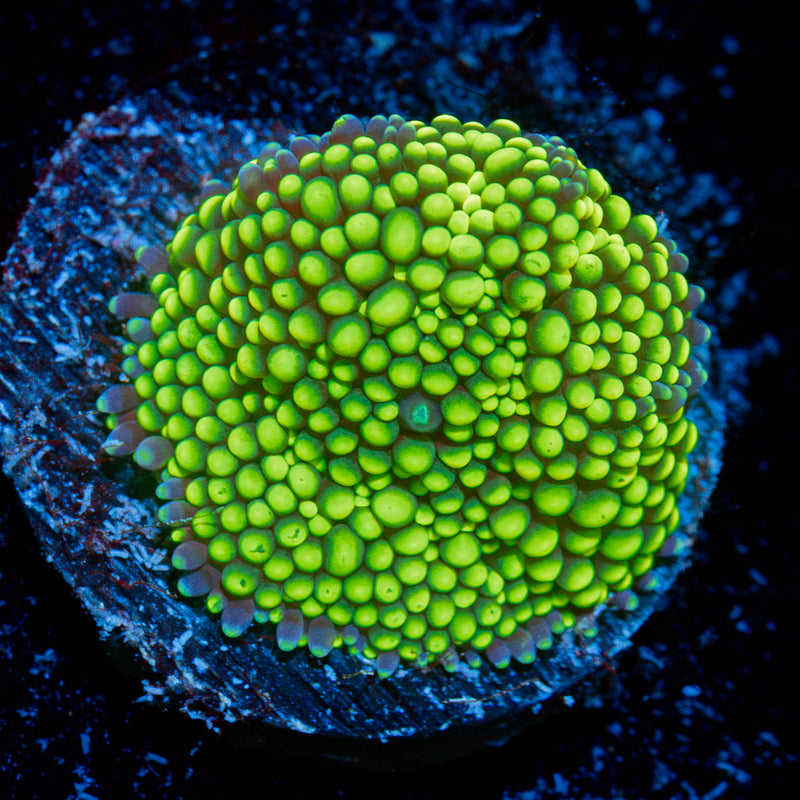
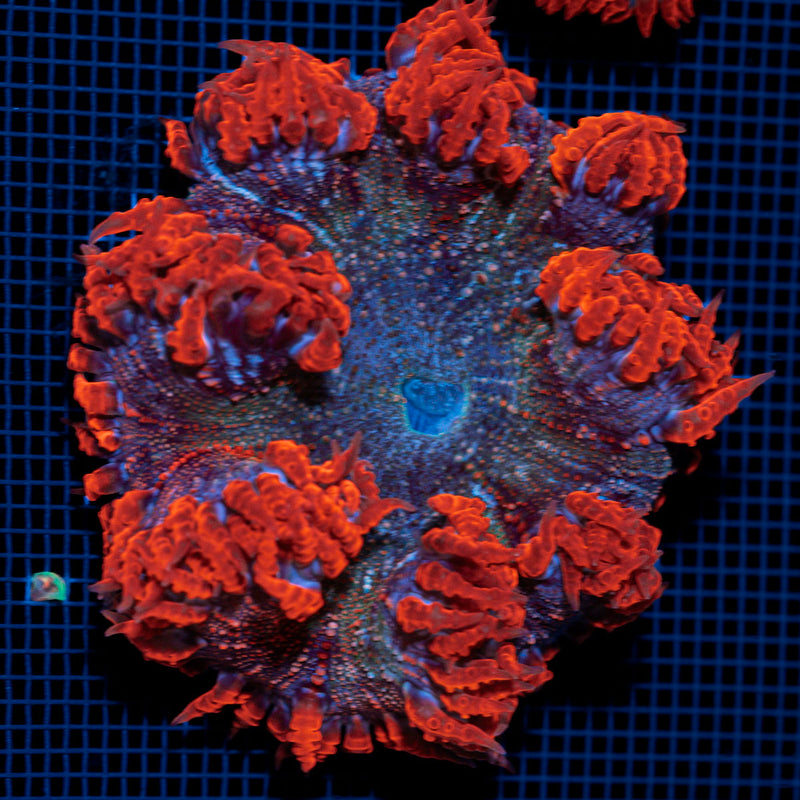
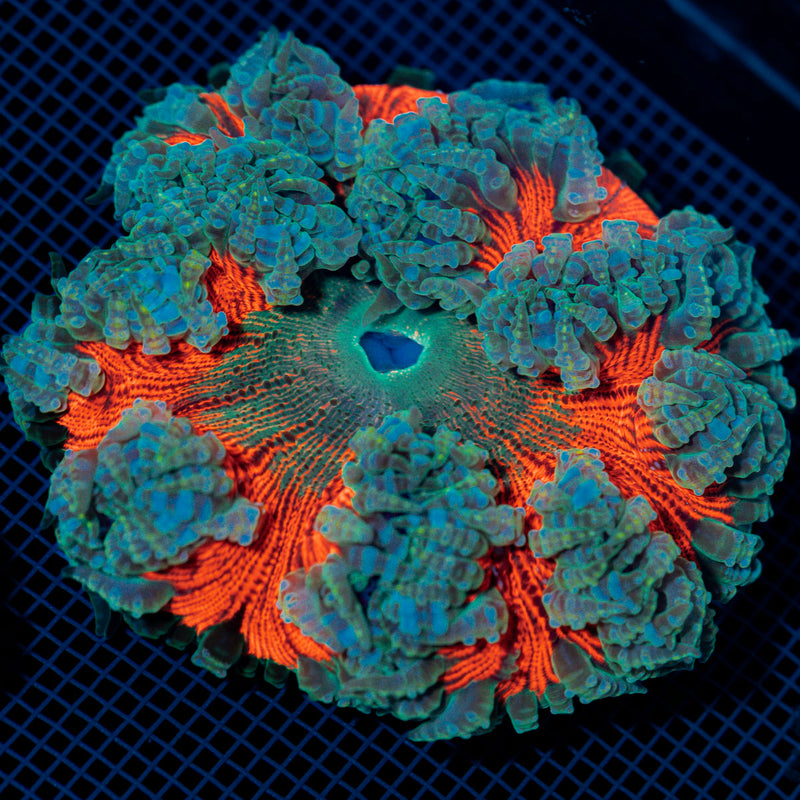
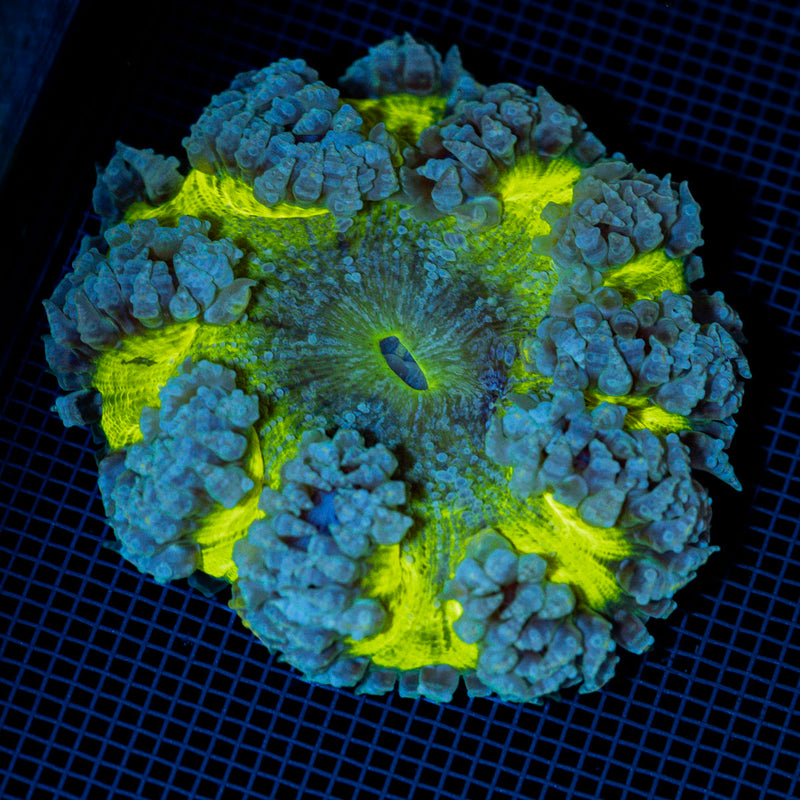
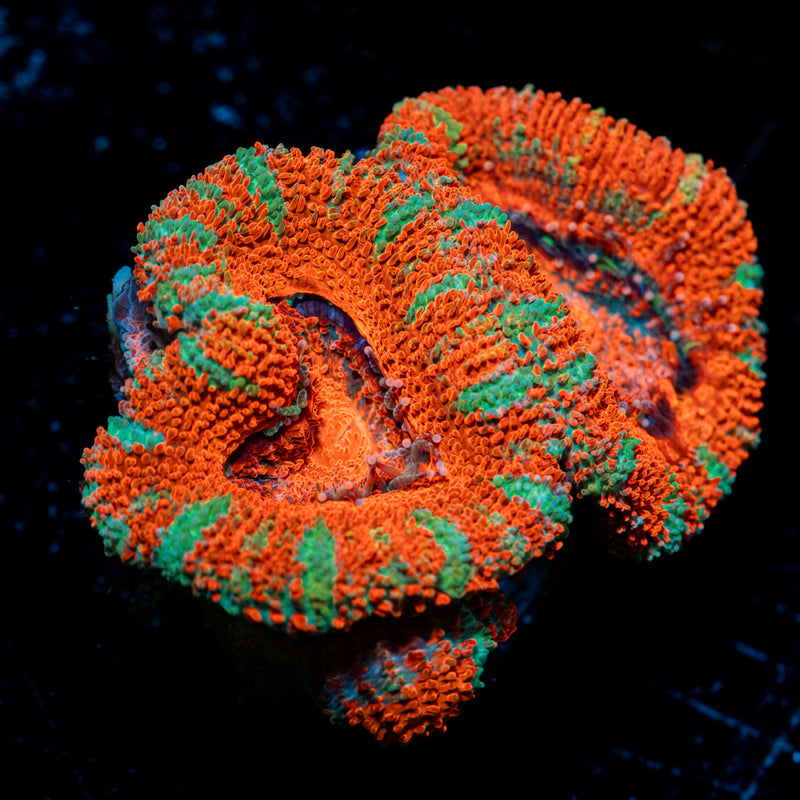
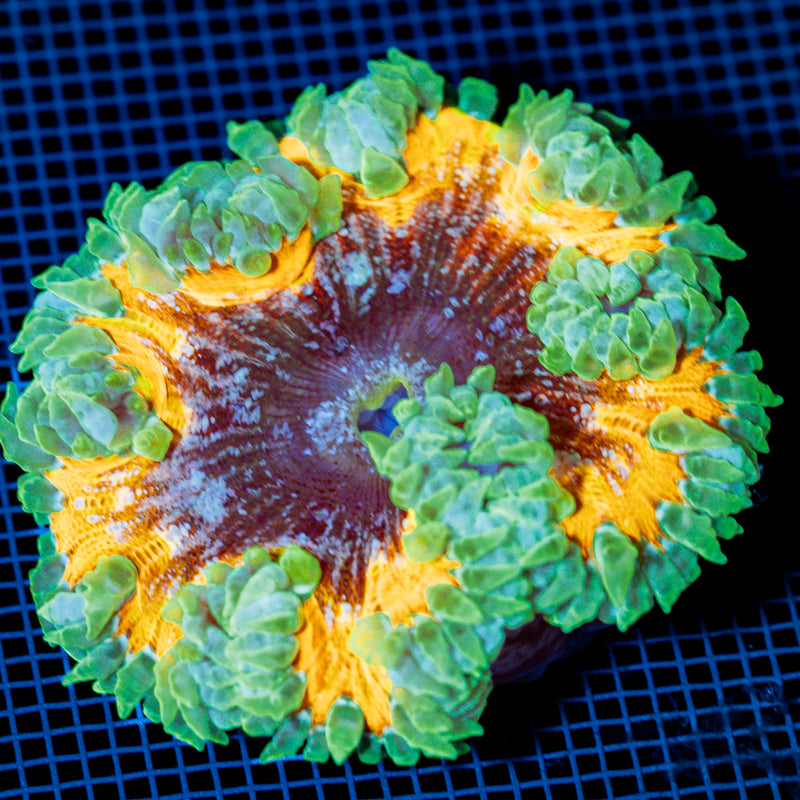
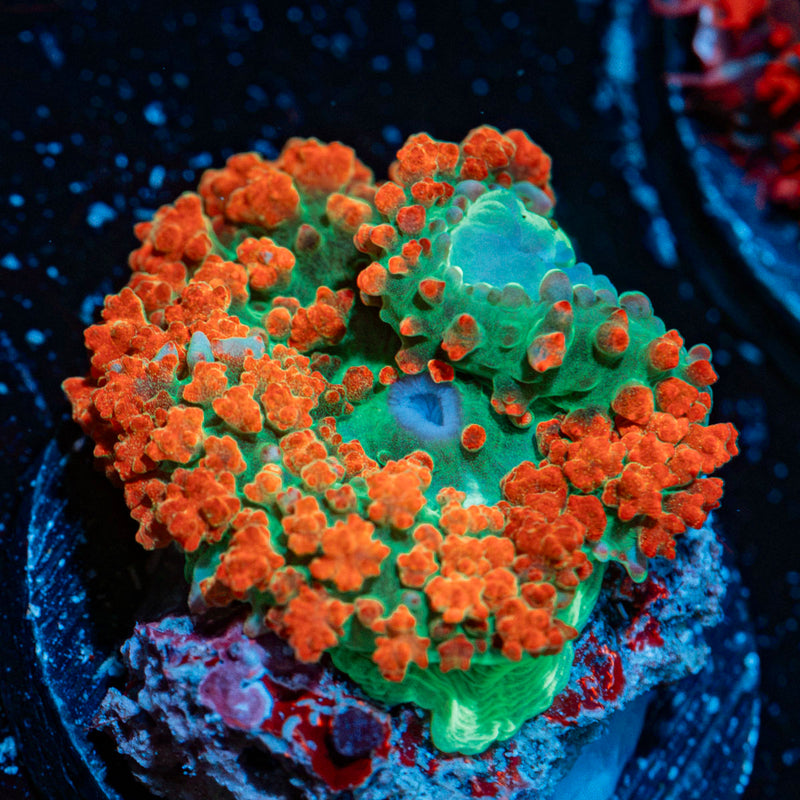
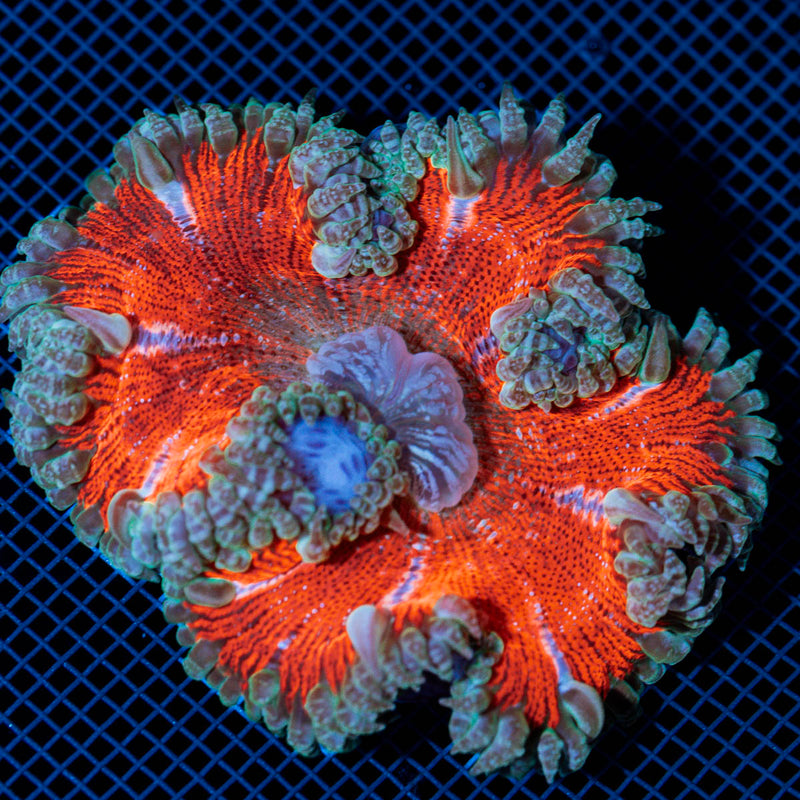
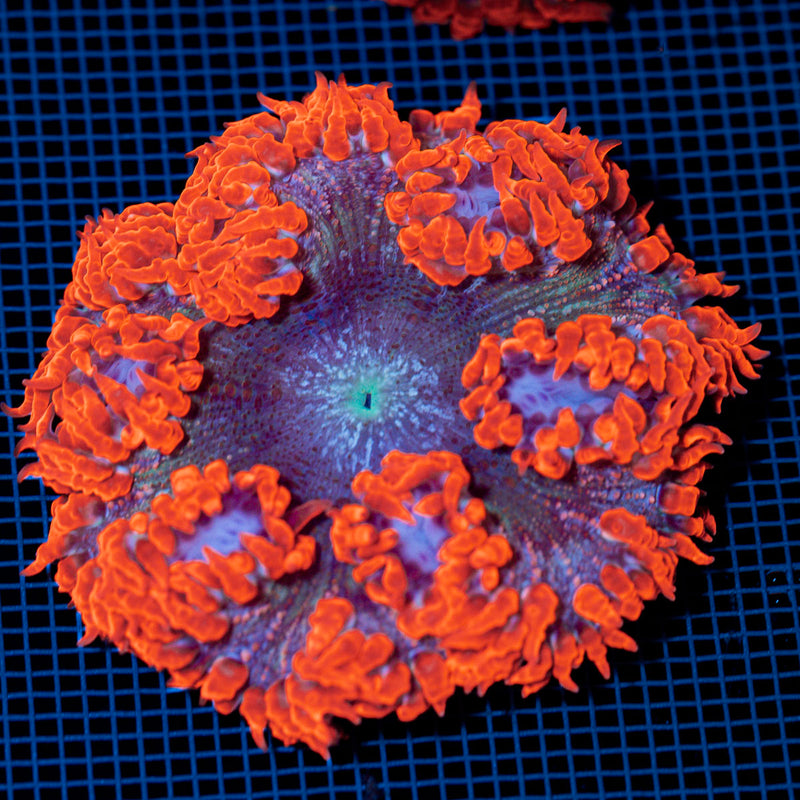
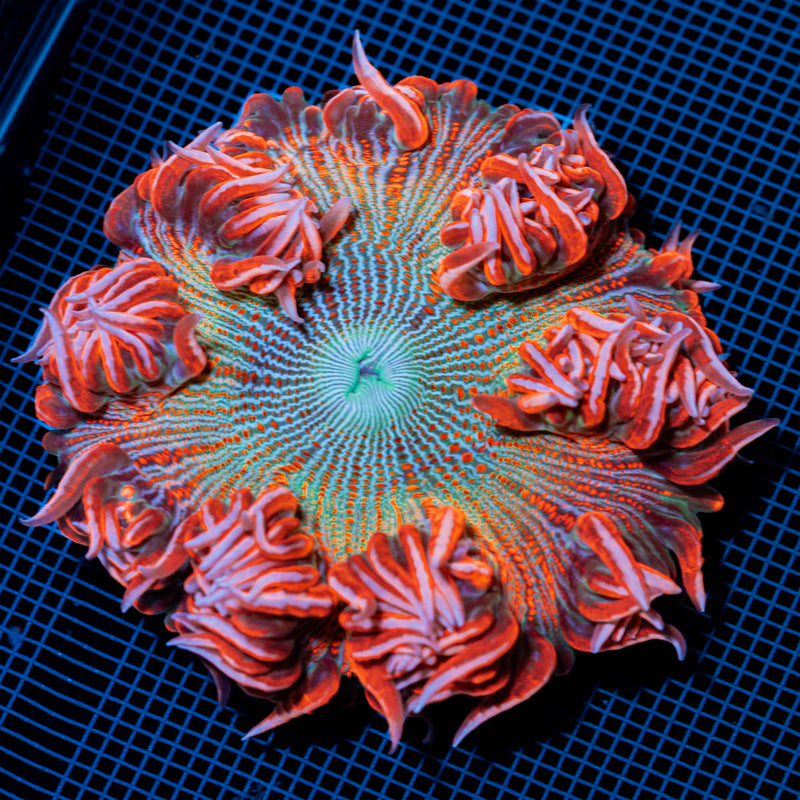
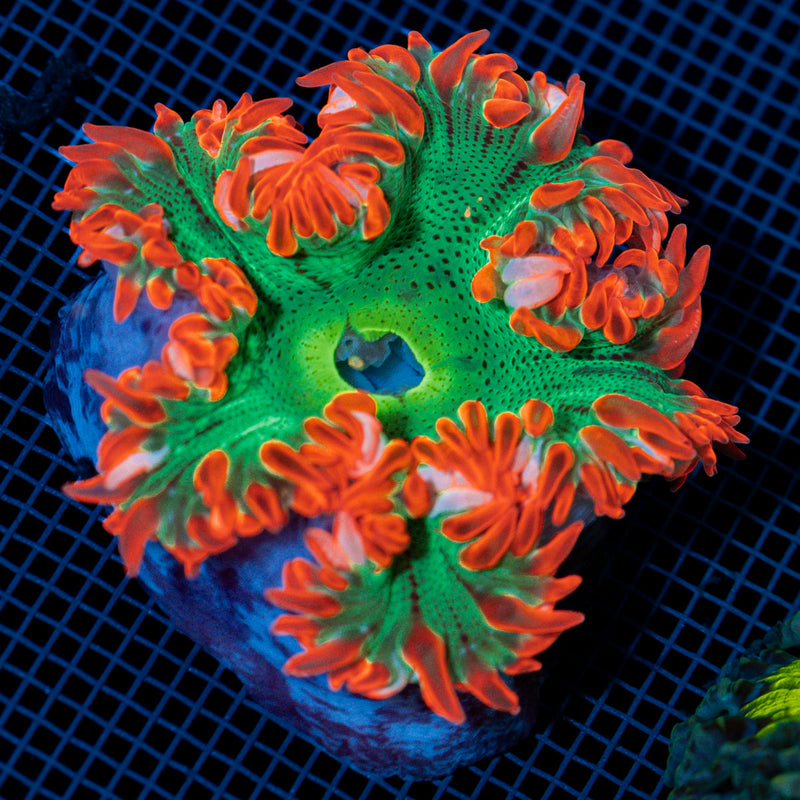
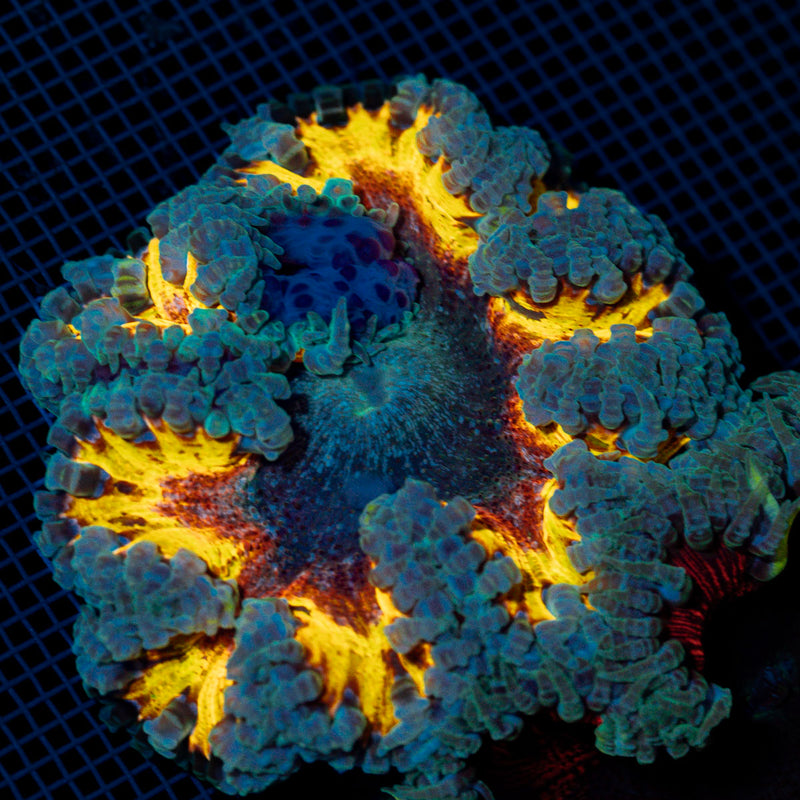
Many acans form fuller colonies by budding new heads, while mushroom corals can reproduce by splitting or dropping small clones. Both are excellent for adding rich color to lower rockwork, ledges, and areas where intense SPS lighting would be excessive.
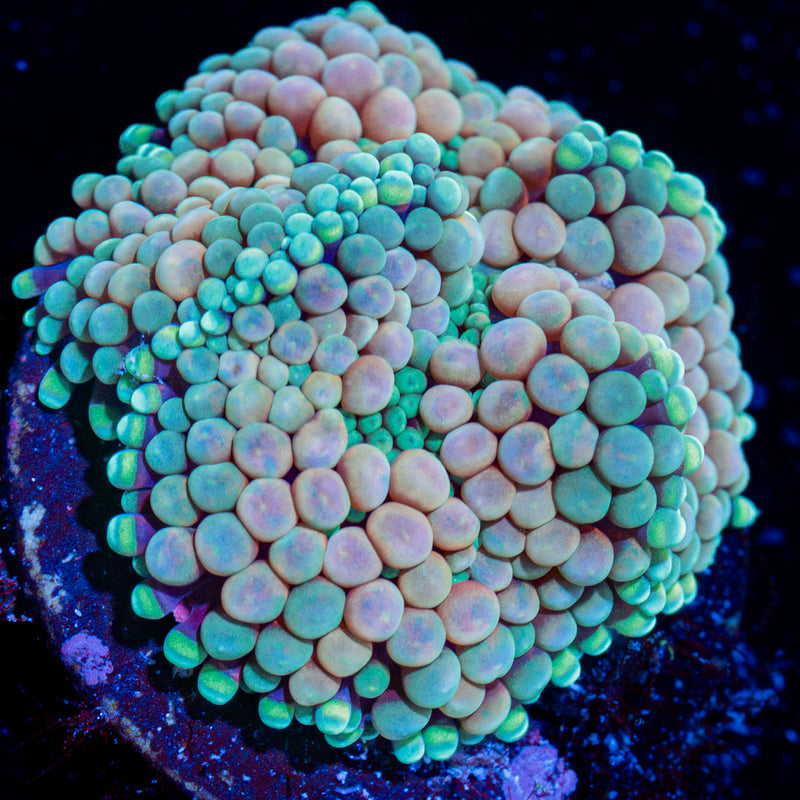
Growth can be variable. Some mushrooms spread rapidly, while premium bounce mushrooms and other high-end varieties may grow more deliberately. Their value is often in their exceptional color and texture, not simply how fast they occupy space.
The Fastest-Growing SPS Corals
When a reef tank is mature and stable, SPS can deliver some of the most satisfying visible growth in the hobby. Fresh branch tips, expanding plates, and colorful new encrustment are clear signs that a coral is settling in.
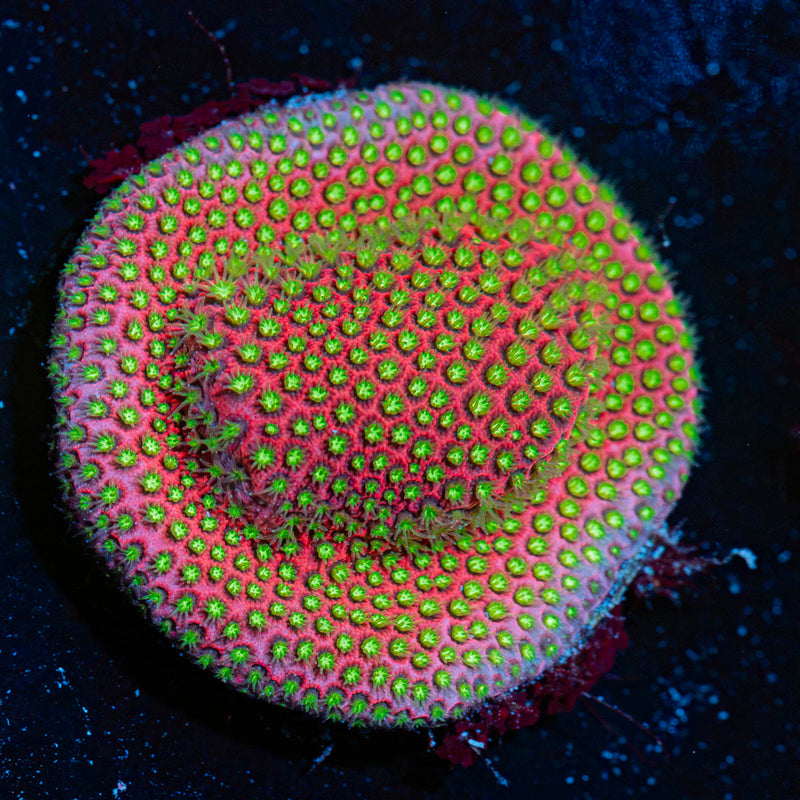
Montipora capricornis, Montipora digitata, birdsnest, and stylophora are commonly considered more approachable fast-growing SPS options. Montipora caps can plate outward into dramatic shelves, while digitata and birdsnest build branching structure. Stylophora often develops a compact, bushy shape with excellent color under proper conditions.
These corals ask more of the system. They generally perform best with strong light, brisk random flow, stable alkalinity, and nutrients that are present but controlled. Chasing ultra-low nutrients can slow growth and fade color, while unstable dosing can cause far more serious problems than slow growth. If you are adding your first SPS, begin with an aquacultured frag and allow it time to adapt before making major changes.
How to Encourage Coral Growth Without Forcing It
Corals do not grow faster because a tank is constantly adjusted. They grow when conditions remain consistently favorable. Stable salinity and temperature come first, followed by reliable alkalinity, calcium, and magnesium. Test on a schedule that matches your tank's demand, especially if you keep stony corals that consume these elements as they build skeleton.
Match light and flow to the coral rather than putting every frag in the brightest location. Soft corals and mushrooms often prefer gentler conditions. LPS usually appreciate moderate light and flow. SPS typically need more intensity and turbulent water movement. Acclimate new corals to your lighting gradually, because even a healthy aquacultured frag can bleach when moved too quickly into a high-light position.
Nutrients matter as well. Fish food, coral food, nitrate, and phosphate all play a role in a living reef ecosystem. The goal is not a sterile tank. It is a balanced tank where corals have access to nutrition without algae taking over. Healthy fish stocking, regular maintenance, and sensible feeding often create more sustainable growth than chasing a single test number.
Finally, make space a form of care. Fast-growing corals need pruning, fragging, or thoughtful placement before they shade, sting, or overtake slower neighbors. An isolated rock for GSP or Xenia, a generous buffer around Euphyllia, and open water above a plating Montipora can prevent future frustration.
A fast-growing coral frag is more than a quick fill for empty rockwork - it is the start of a living colony. Choose one whose color, movement, and long-term footprint fit your vision, give it stable care, and enjoy every new head, branch, and polyp as your reef becomes unmistakably your own.