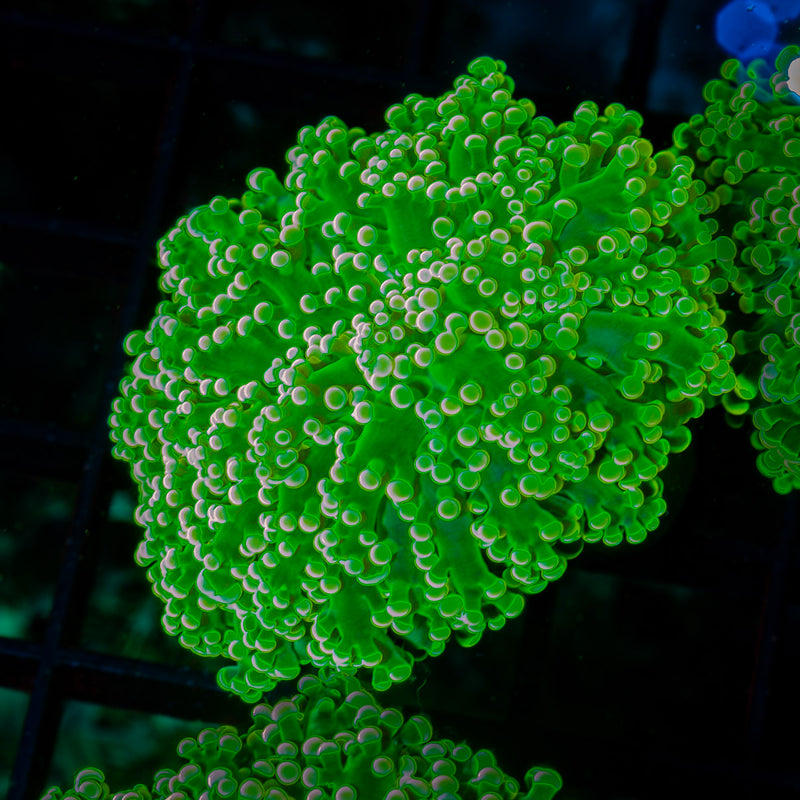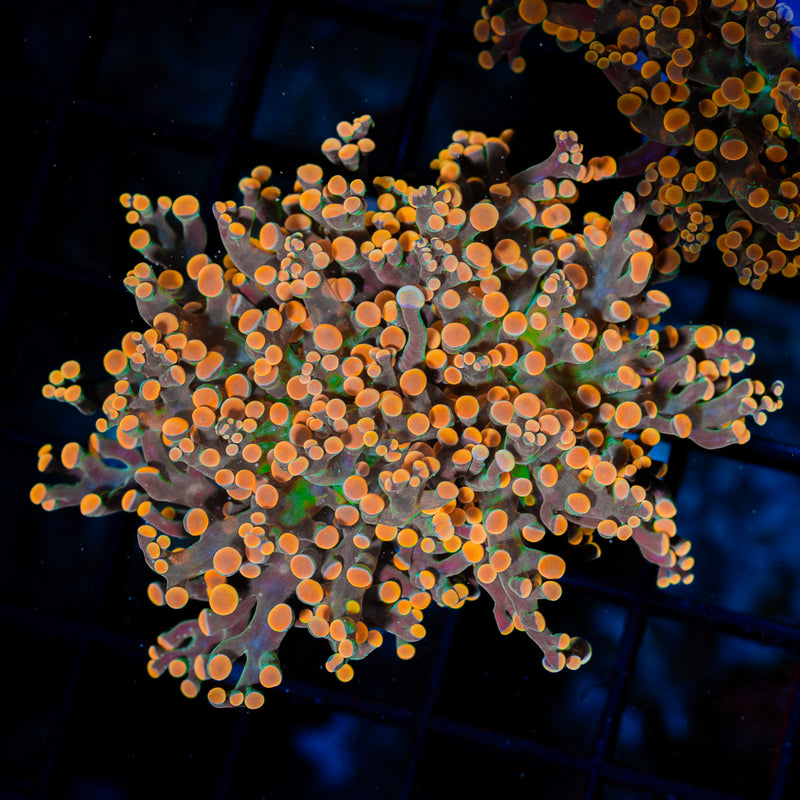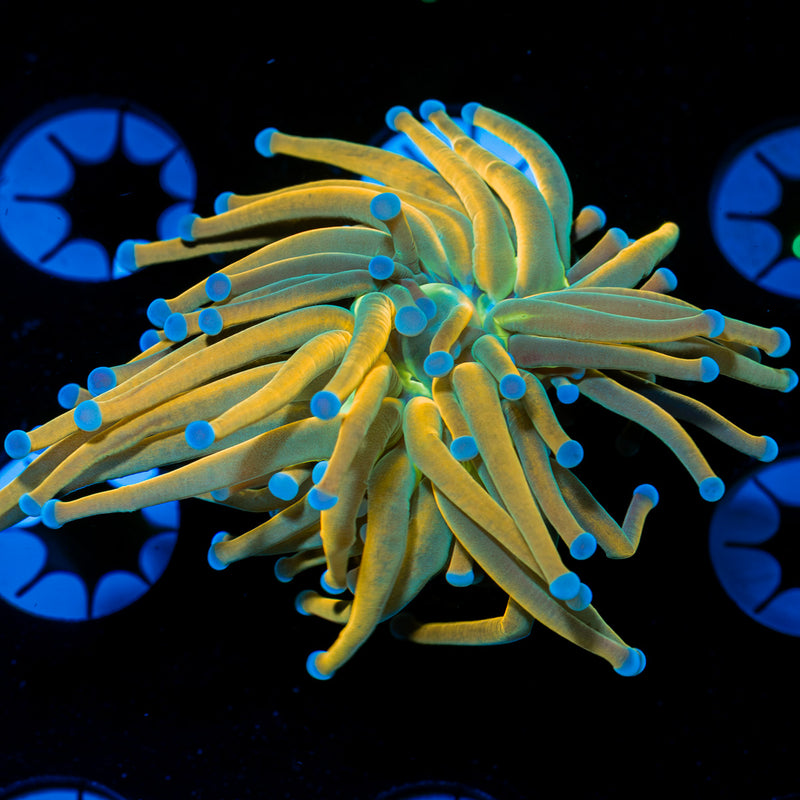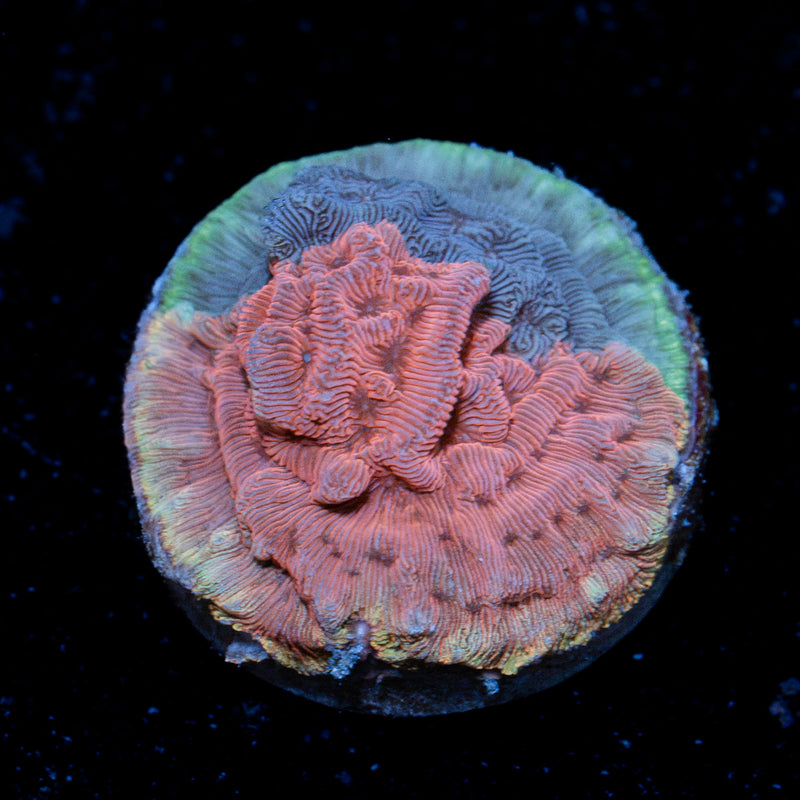
A reef tank under blue LEDs can look electric after the room lights go down, but not every frag delivers the same effect. The best colorful corals for blue lighting have naturally fluorescent pigments, strong contrast, and enough texture to stay visually interesting from across the room. Choose well, and your aquarium becomes a display of glowing green, hot orange, neon yellow, and deep red living jewels rather than a tank full of corals that blend into one blue field.
Blue-heavy lighting is popular for a reason: it supports the wavelengths zooxanthellae use while bringing out fluorescent proteins that can be less obvious under daylight-white spectrum. Still, lighting alone cannot turn a dull or unhealthy coral into a showpiece. Stable water, thoughtful placement, and a realistic understanding of how a coral looks under different settings are what keep those colors looking their best.
Why Blue Lighting Makes Some Corals Glow
Corals contain pigments that absorb certain wavelengths of light and re-emit them as visible fluorescence. Under royal blue and violet LEDs, green, orange, yellow, and red pigments can appear especially intense. That is why a small frag can become a focal point when actinic channels ramp up in the evening.
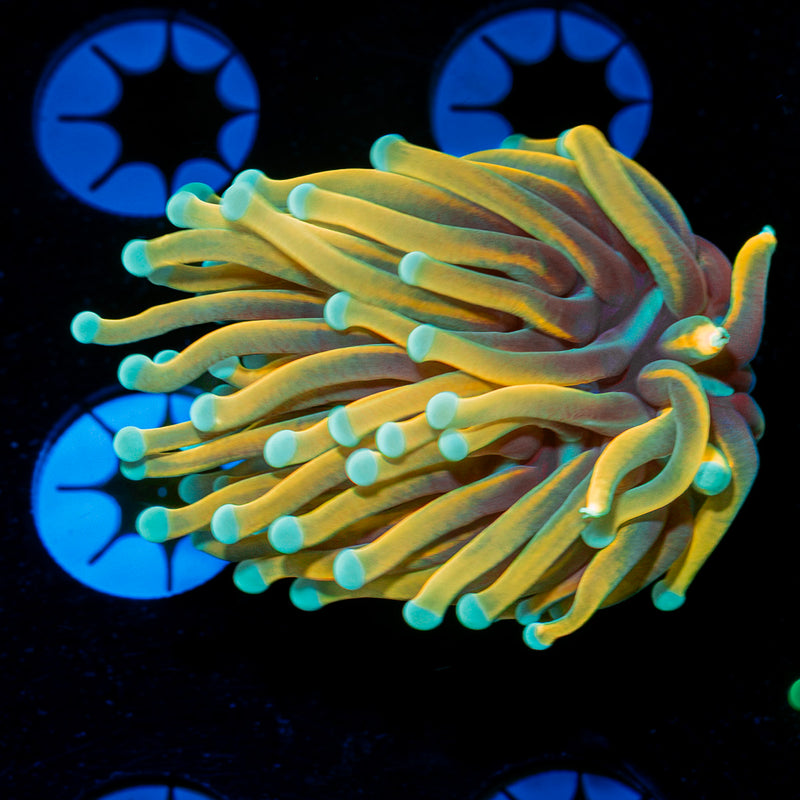
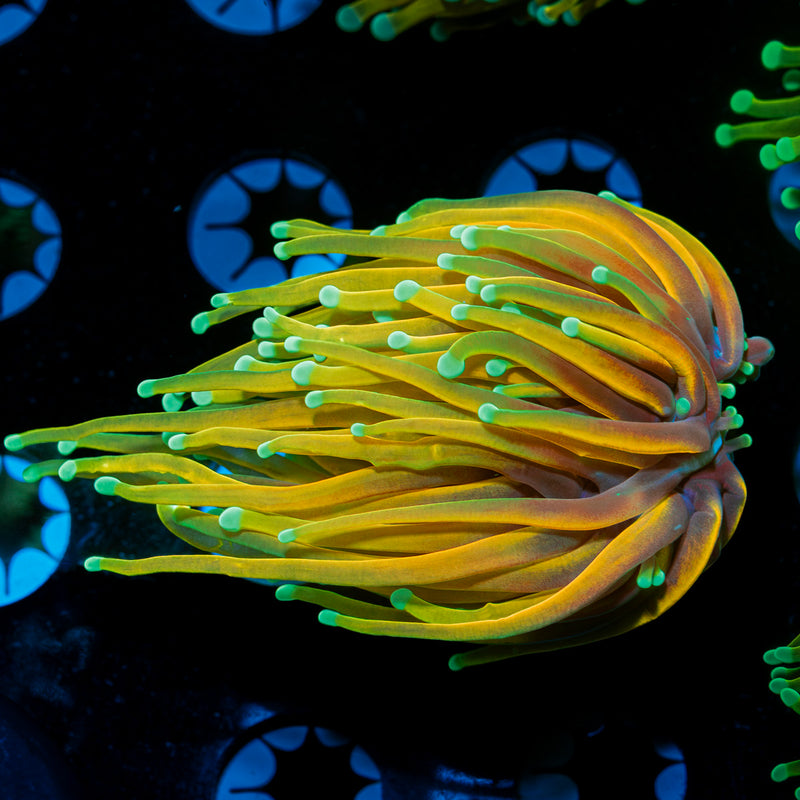
Fluorescence is only part of the picture. Pattern matters just as much. A torch with bright green tentacles and contrasting purple tips reads clearly under blue light. A zoanthid with an orange face, dark skirt, and luminous center offers layered color rather than a single glow. Corals with defined stripes, eyes, mouths, or tip coloration tend to hold their visual impact even when the tank is viewed from different angles.
There is a trade-off. Extremely blue settings can hide a coral's true daytime coloration, particularly pinks, reds, and subtle pastel tones. A coral that glows brilliantly under blue may look very different under balanced daylight spectrum. For that reason, it helps to choose pieces you love in both conditions, not just under the most dramatic evening setting.
Best Colorful Corals for Blue Lighting
Torches, hammers, and frogspawn
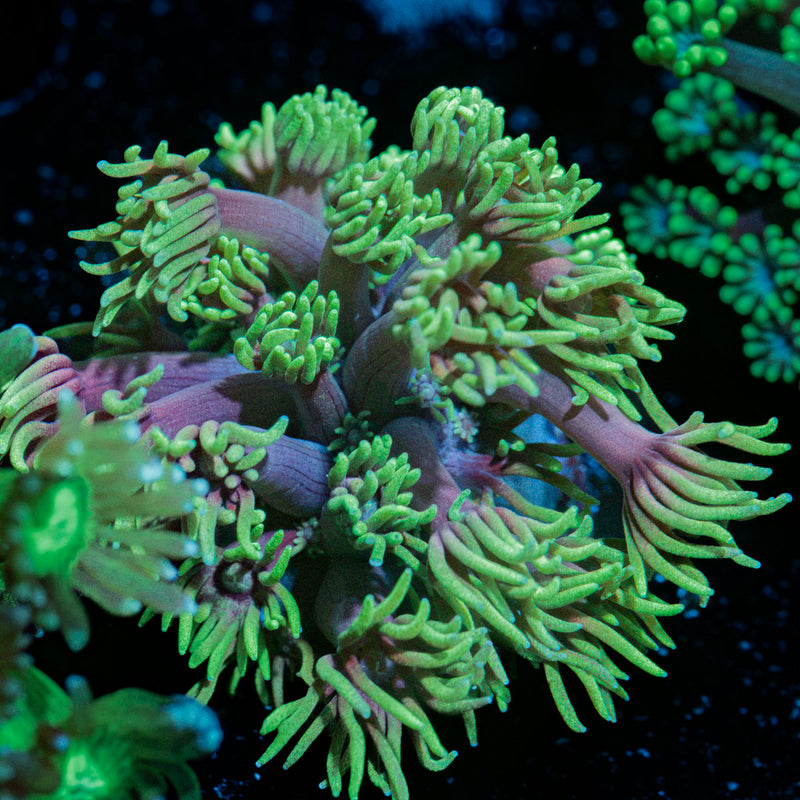
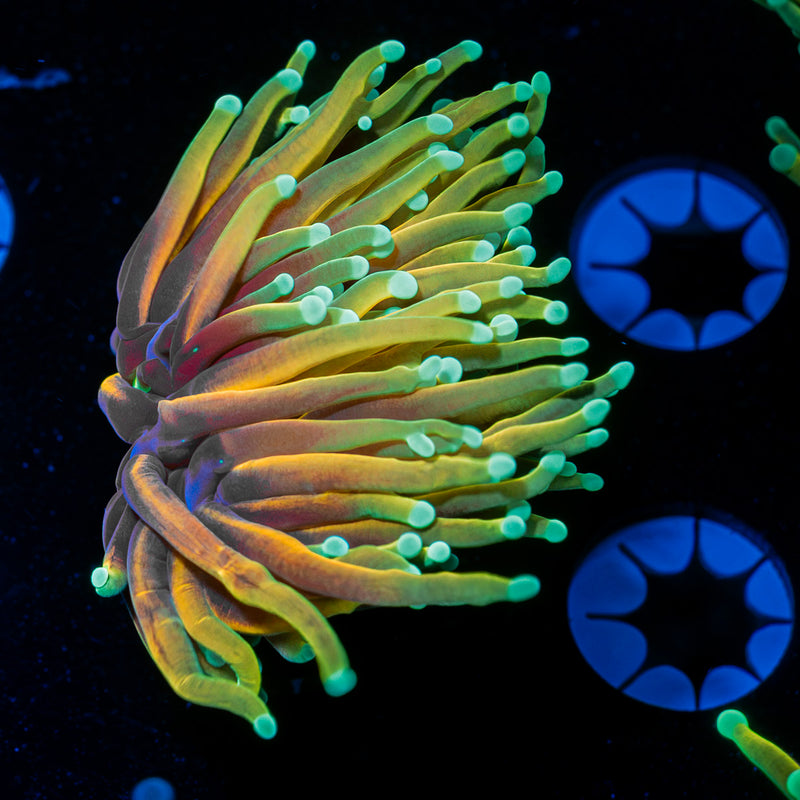
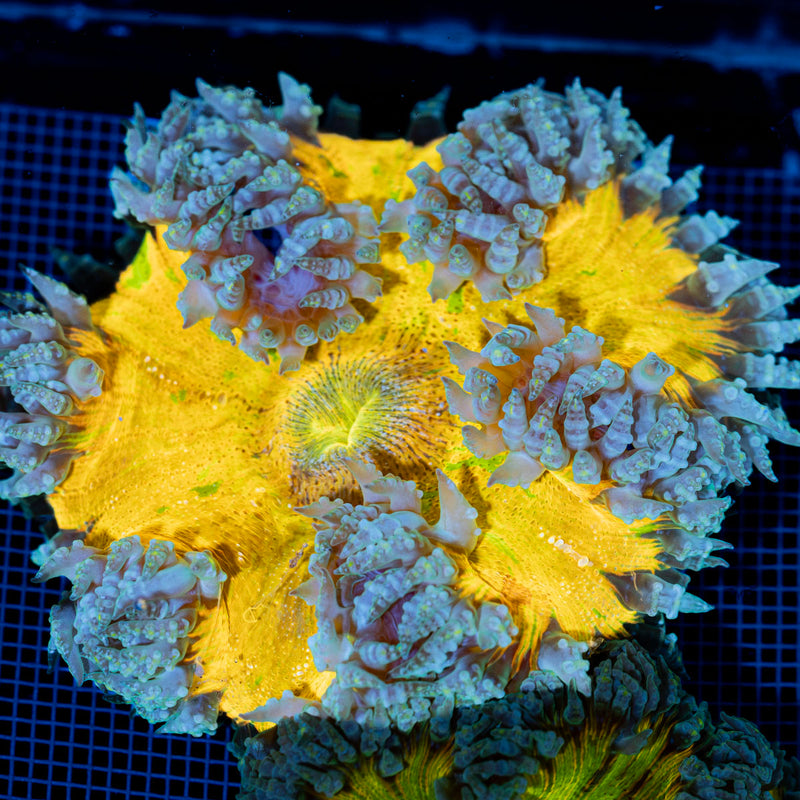
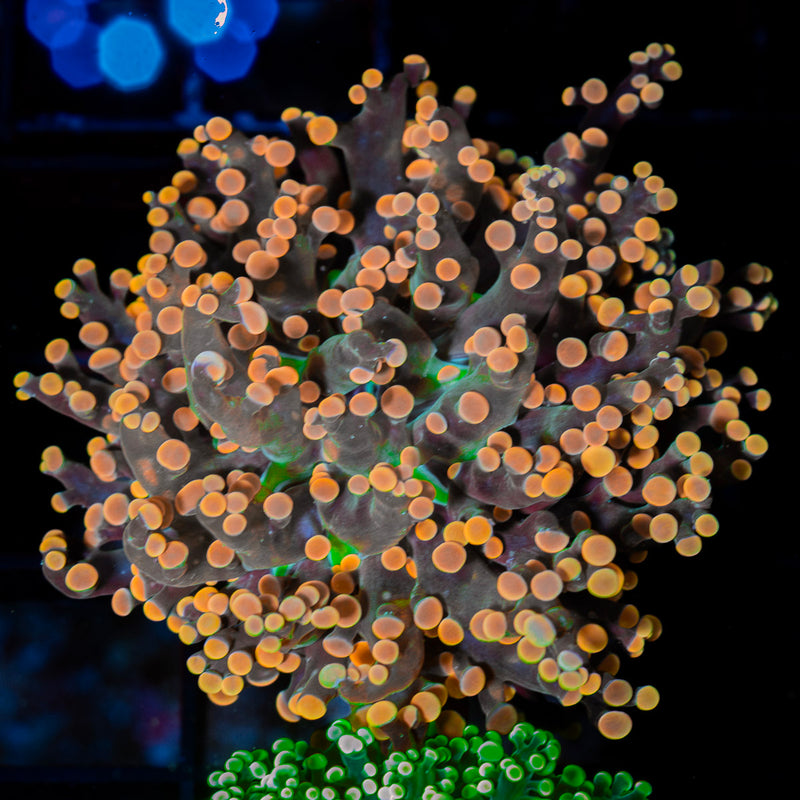
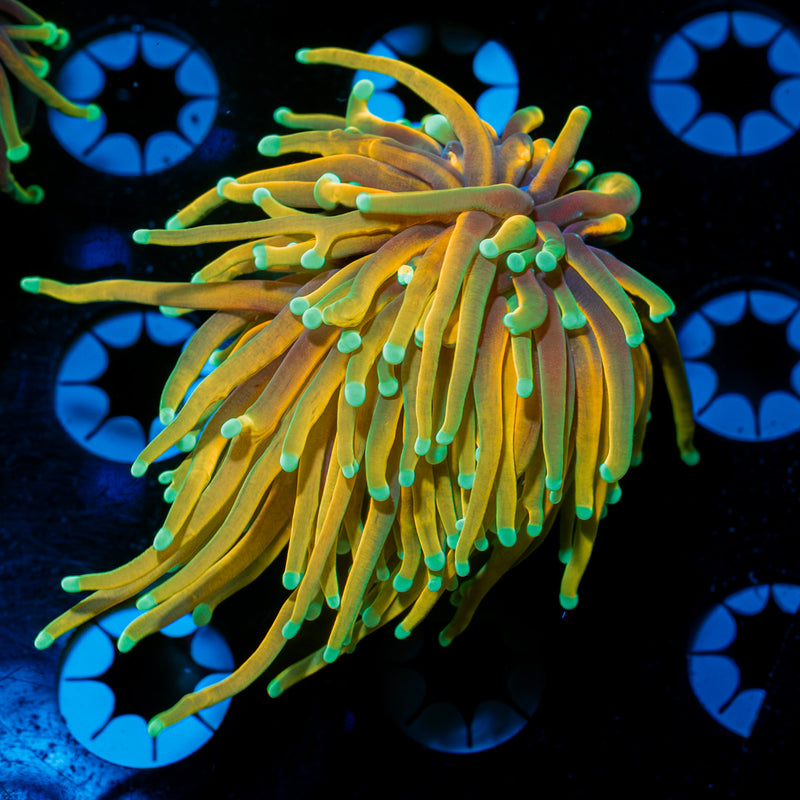
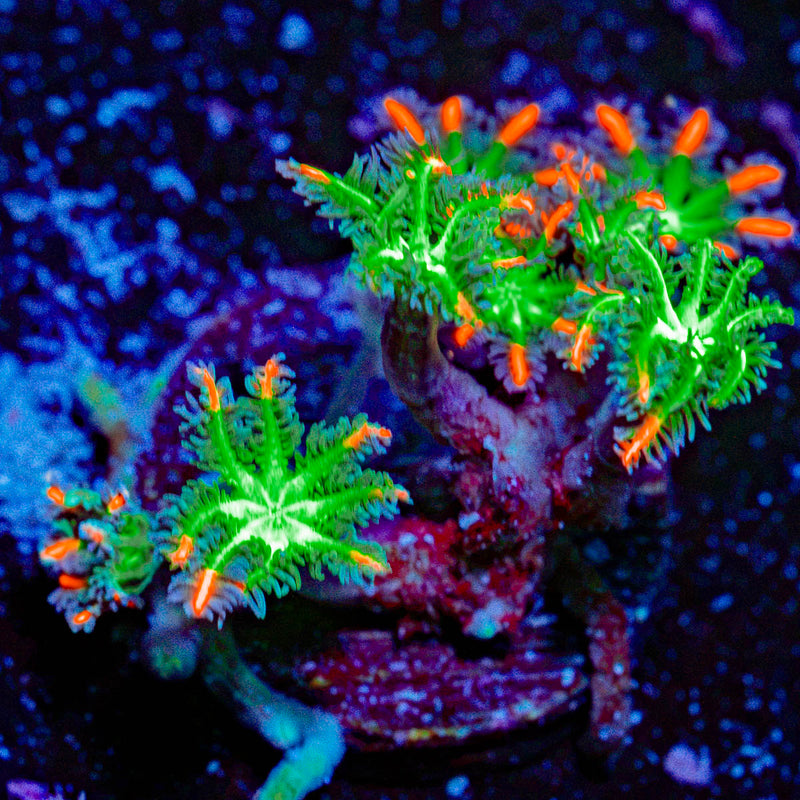
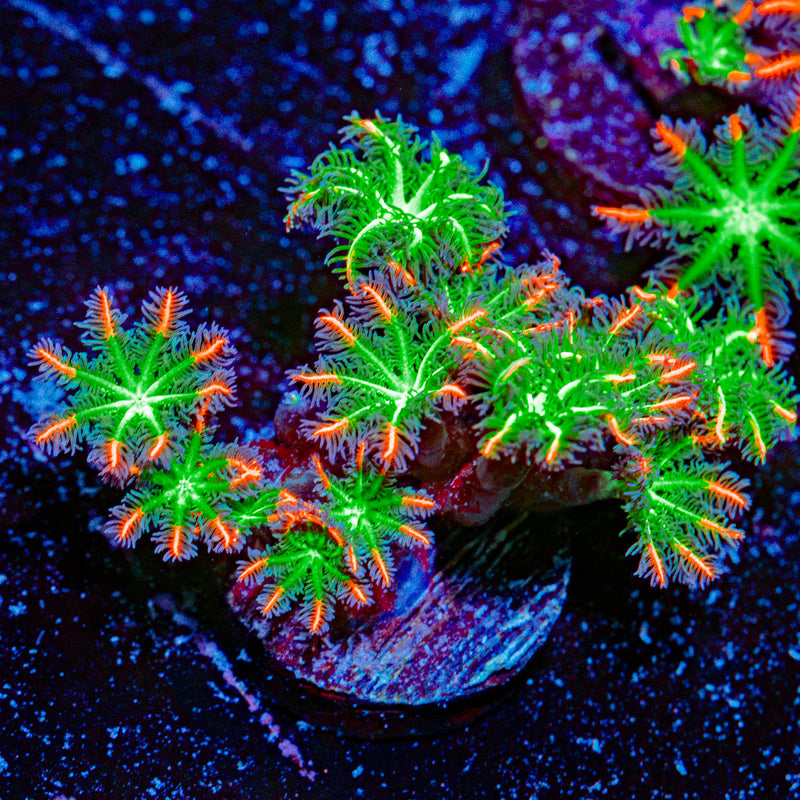
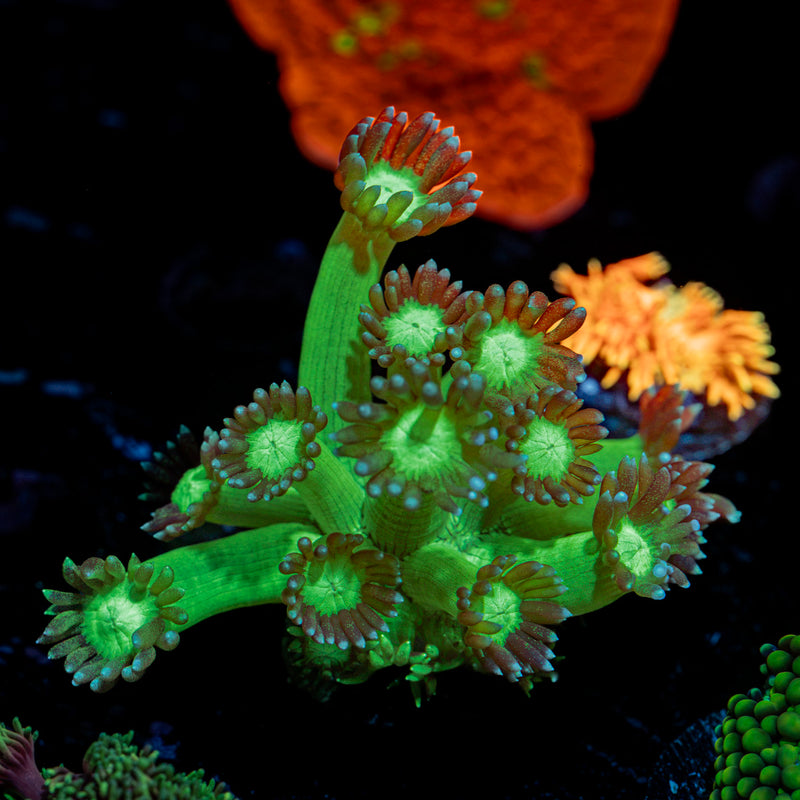
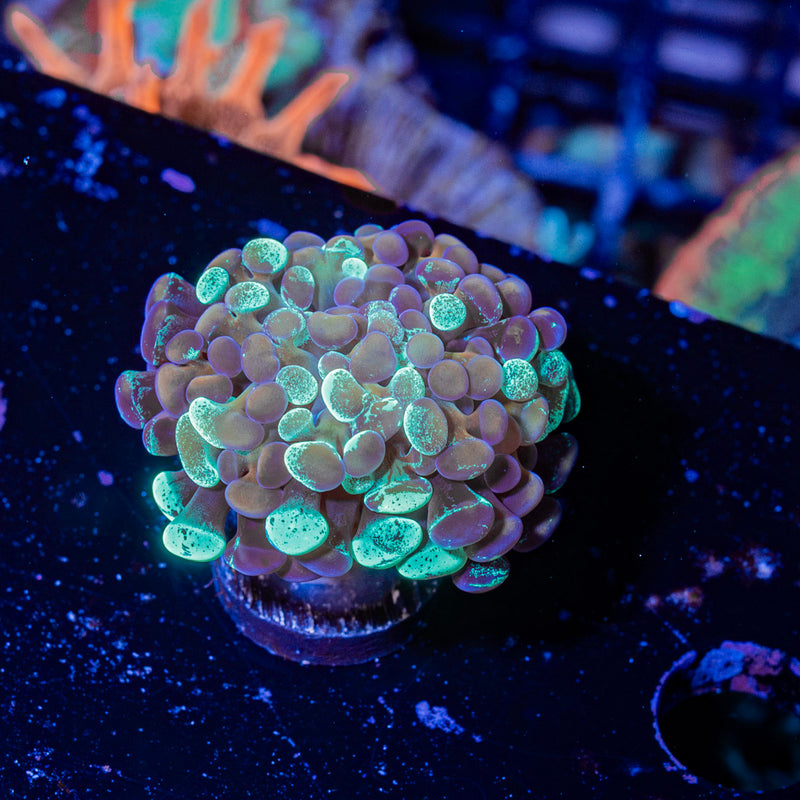
Euphyllia corals are a natural fit for hobbyists who want movement and fluorescent color in the same package. Torches are especially striking, with long flowing tentacles that catch the eye even in a larger reef. Green, gold, yellow, and orange-tipped varieties can glow intensely, while purple or blue tips create beautiful contrast against green tentacles.
Hammers and frogspawn offer a fuller, more clustered look. They work well when you want a lush LPS garden rather than a single tall showpiece. Give Euphyllia moderate light, gentle to moderate indirect flow, and generous space. Their sweeper tentacles can sting nearby corals, so a gorgeous torch should not be wedged tightly into a crowded rockscape.
Zoanthids and palythoas
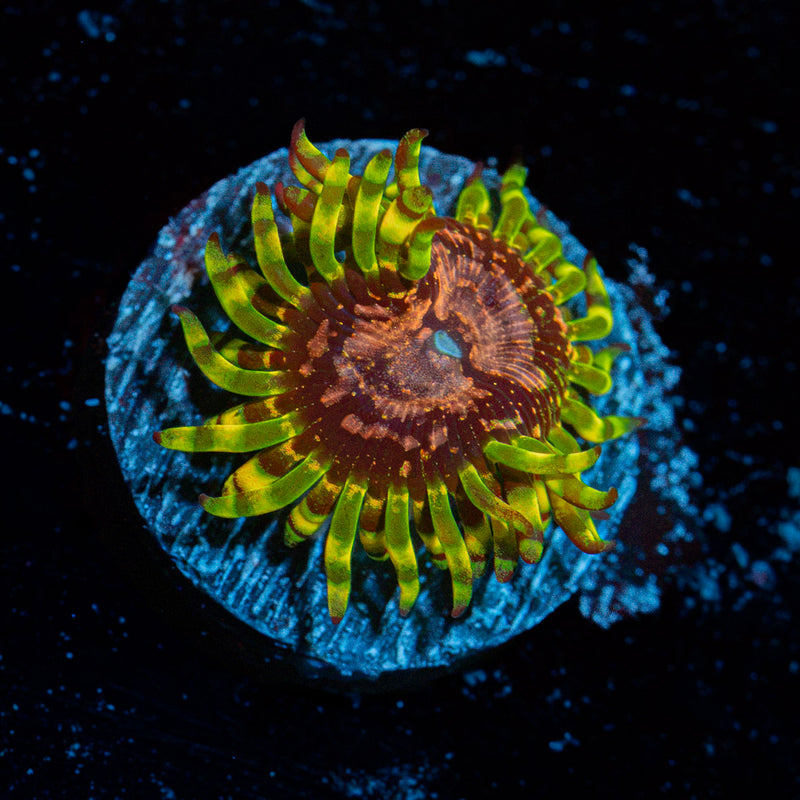
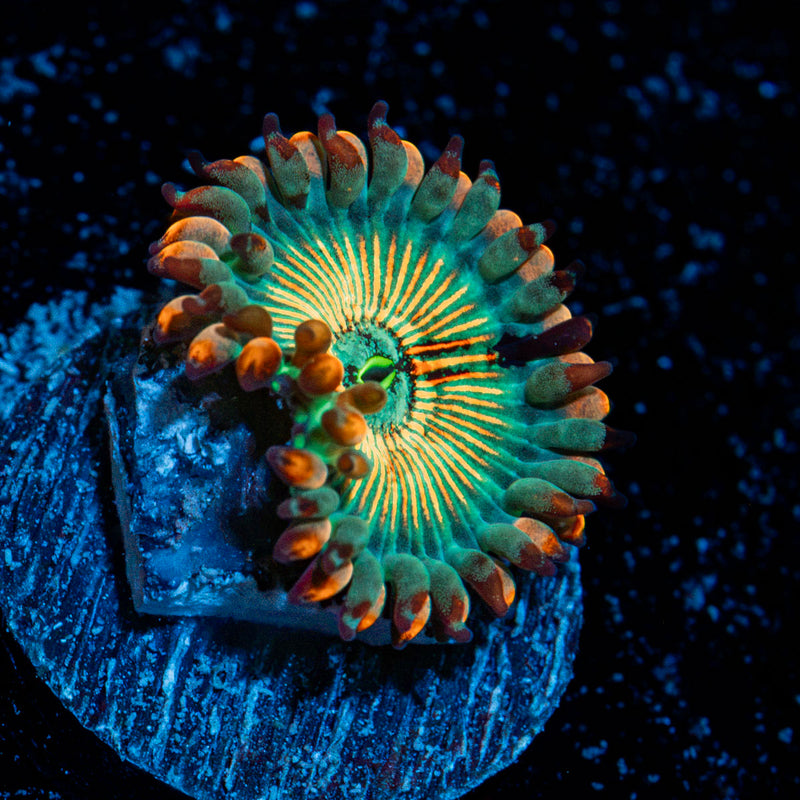
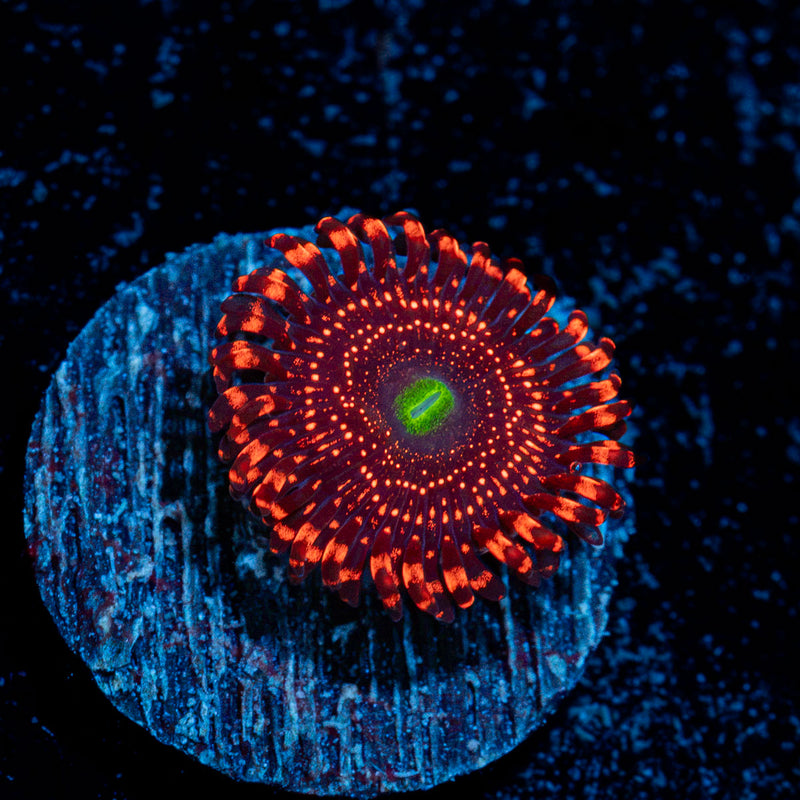
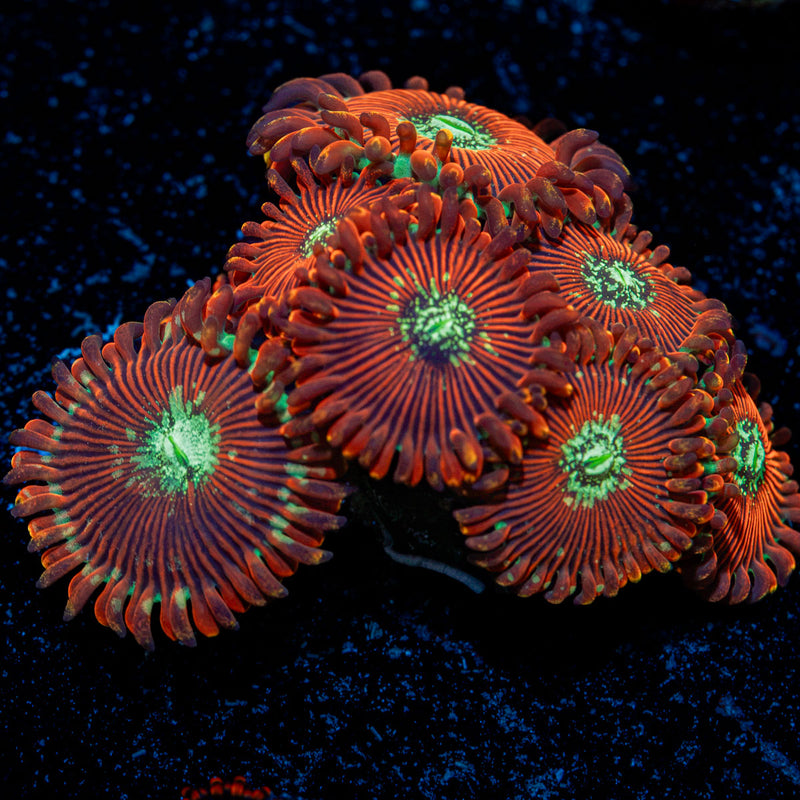
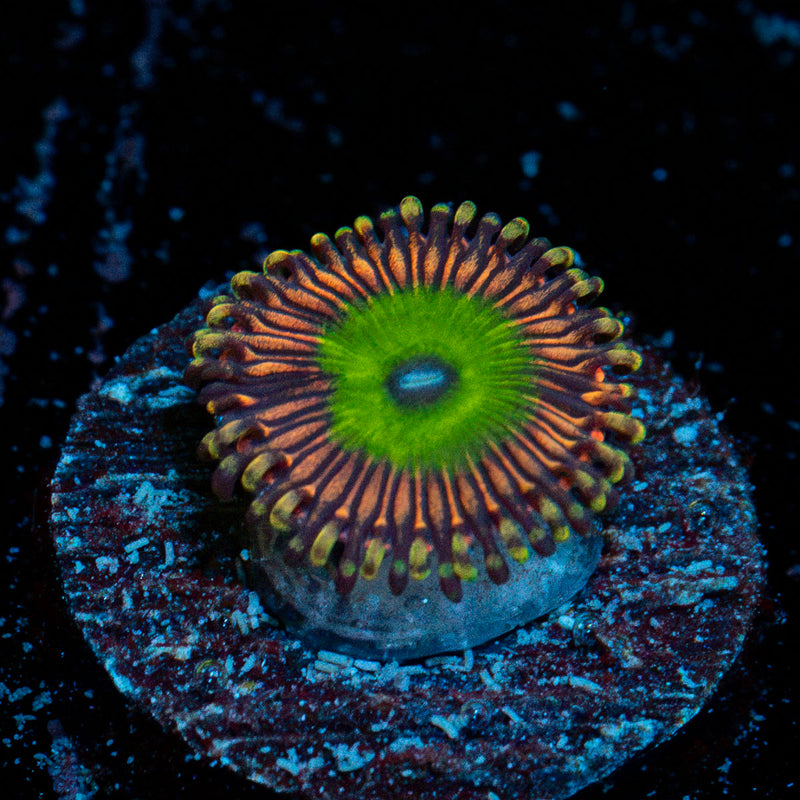
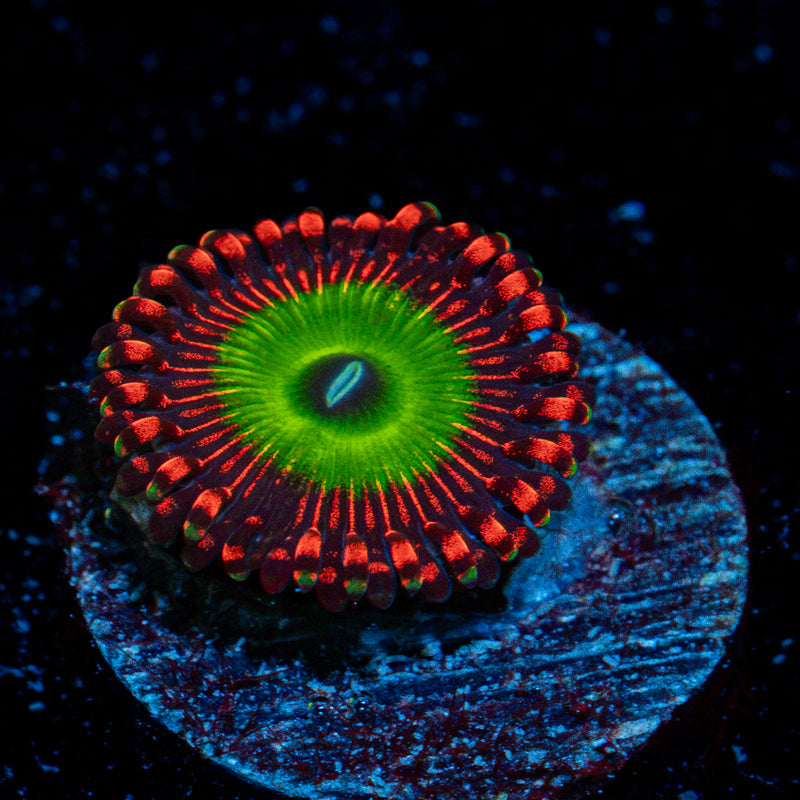
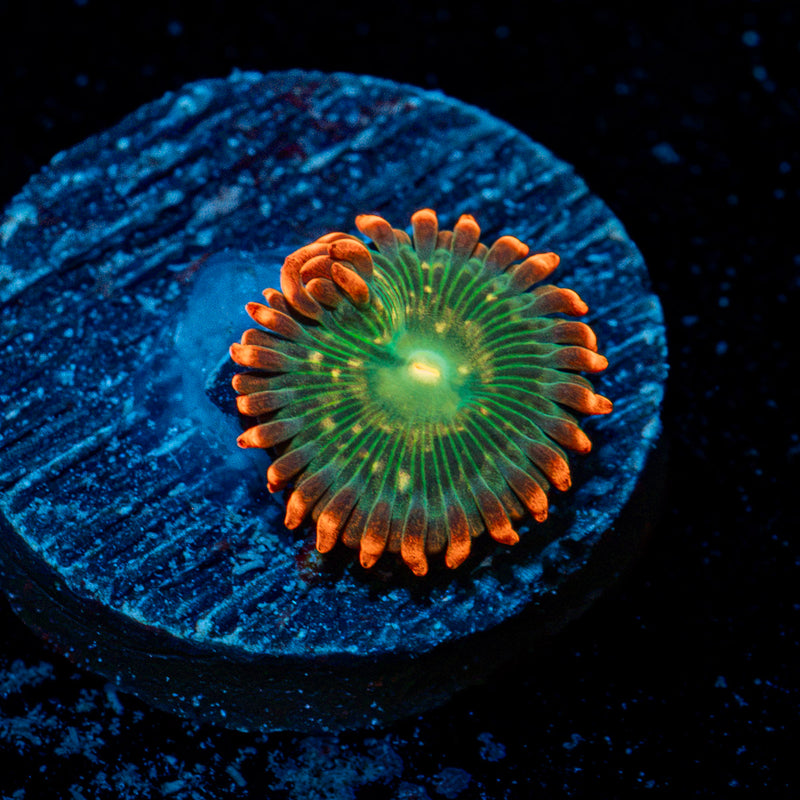
Zoanthids bring some of the biggest color per inch in reef keeping. Neon green, fiery orange, bright yellow, red, and multicolor varieties can form vivid colonies under blue LEDs. Their disc-and-skirt structure also makes color combinations easy to see, even on smaller frags.
They are often a welcoming choice for newer reef keepers because many varieties adapt well to moderate light and flow. That said, "easy" does not mean careless. Zoanthids prefer stable salinity and clean, consistent conditions. Keep in mind that some palythoas may contain palytoxin. Wear gloves, avoid aerosolizing tank water, and use sensible safety practices whenever handling or fragging them.
Mushrooms and ricordea
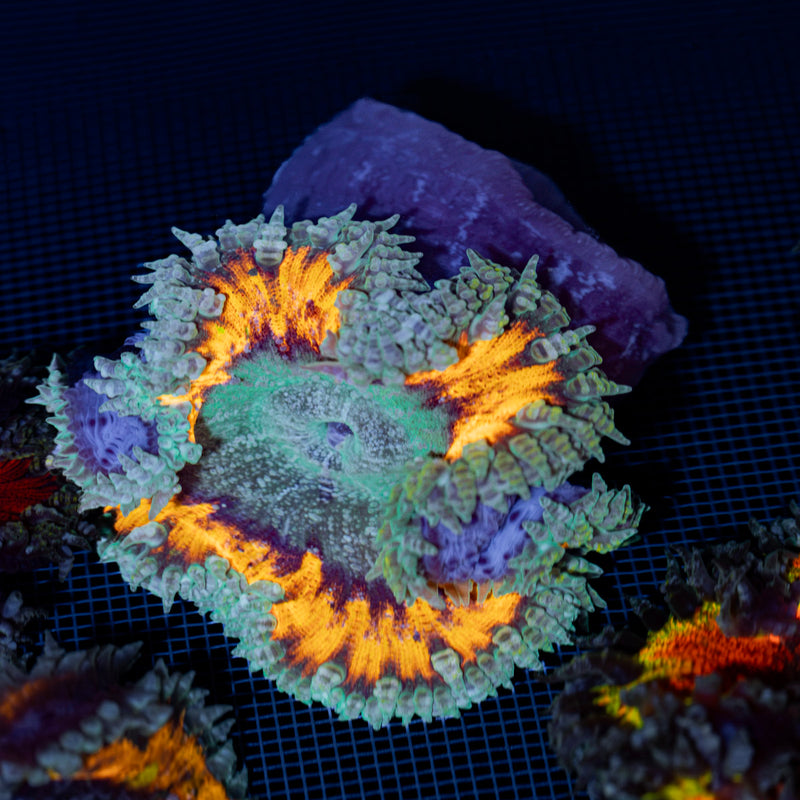
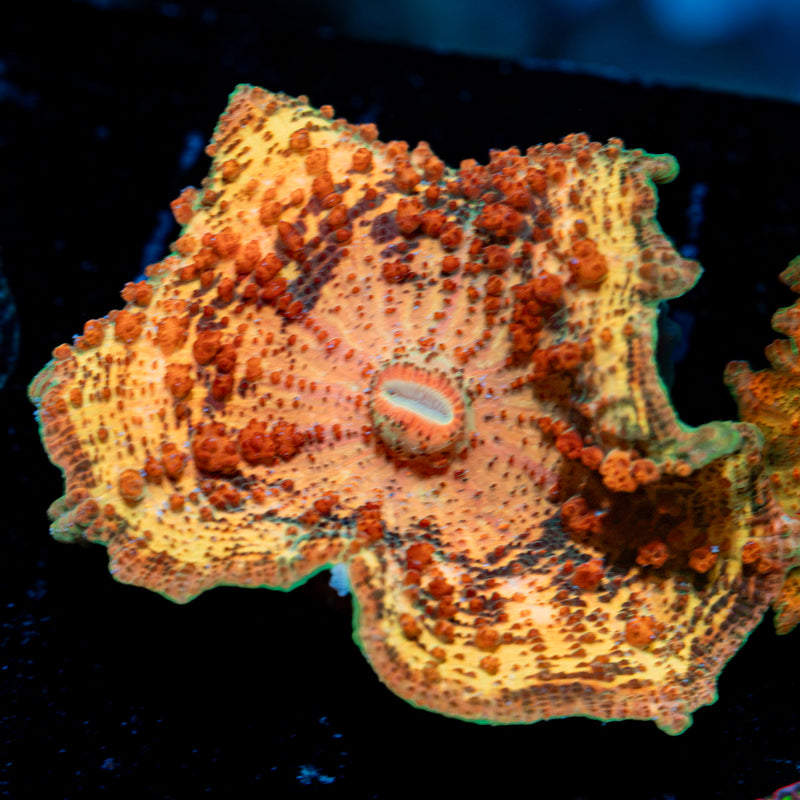
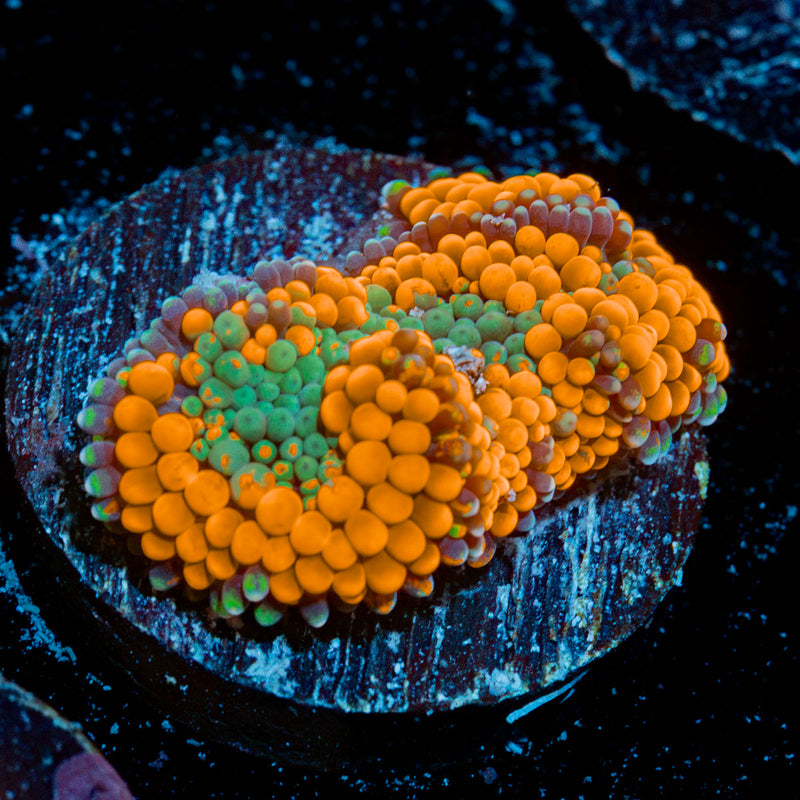
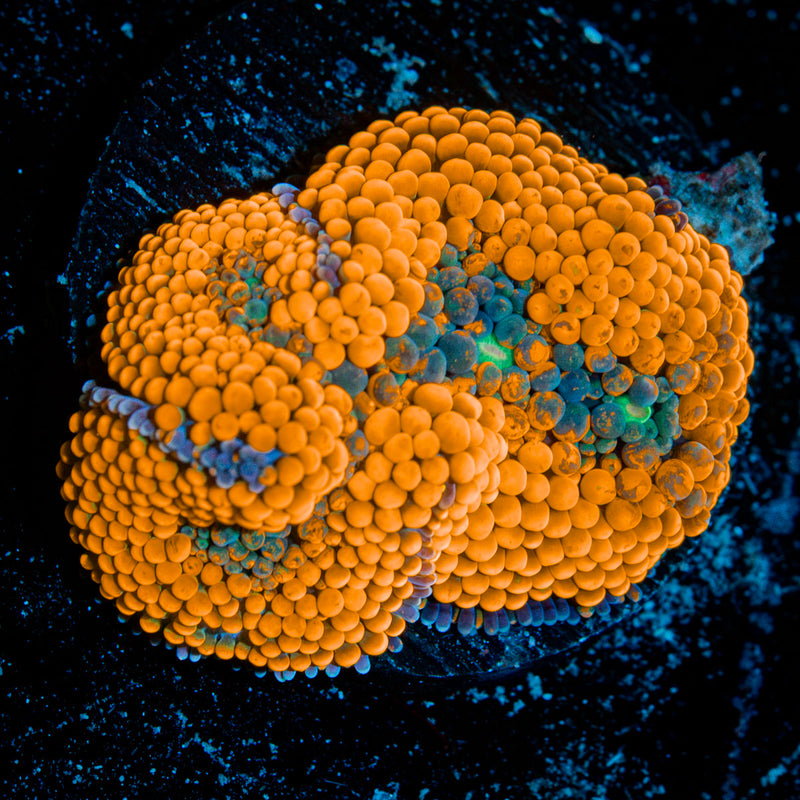
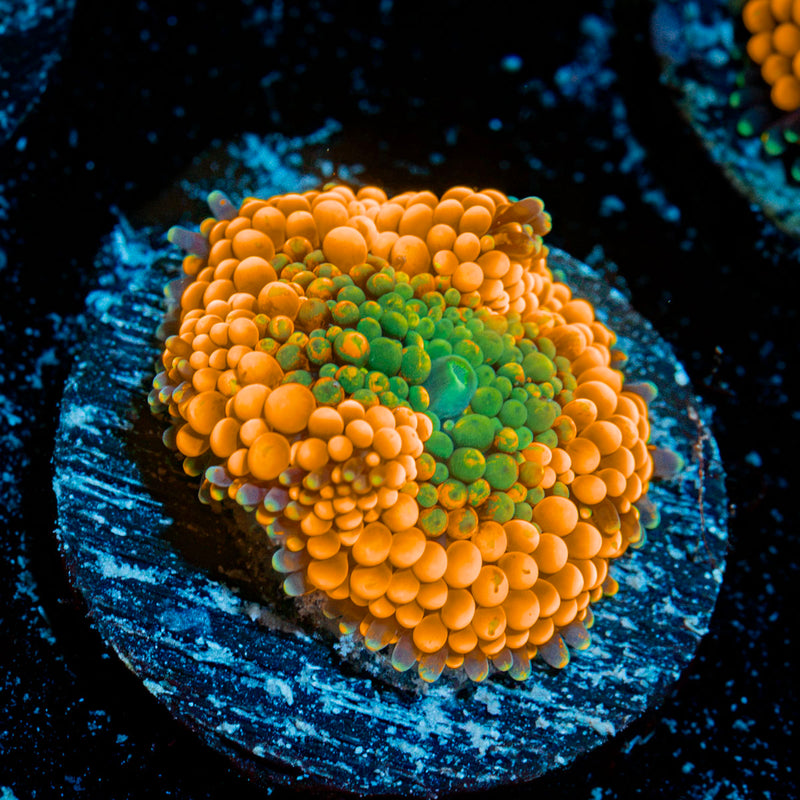
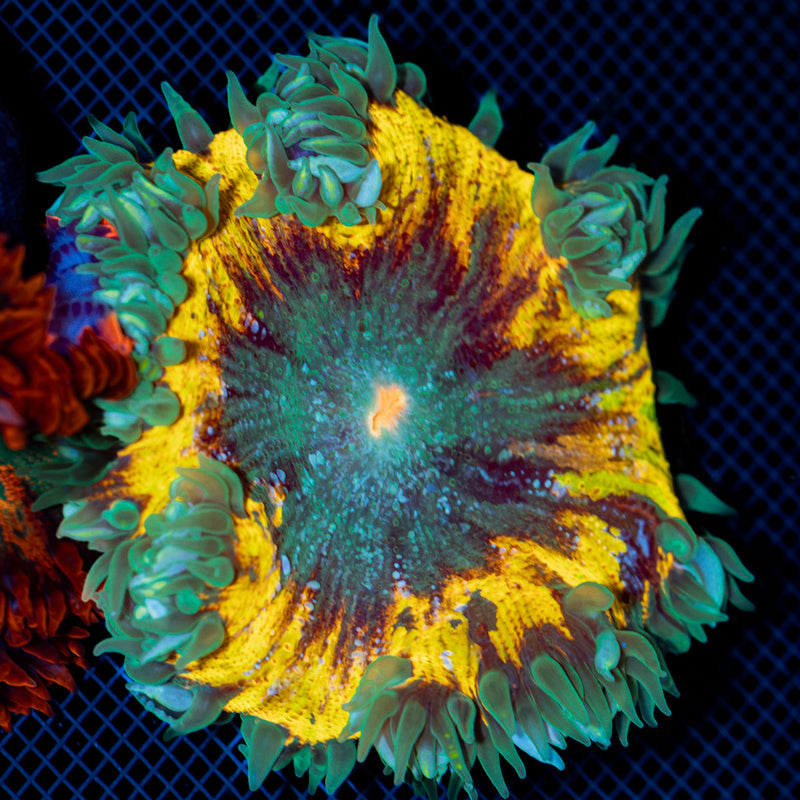
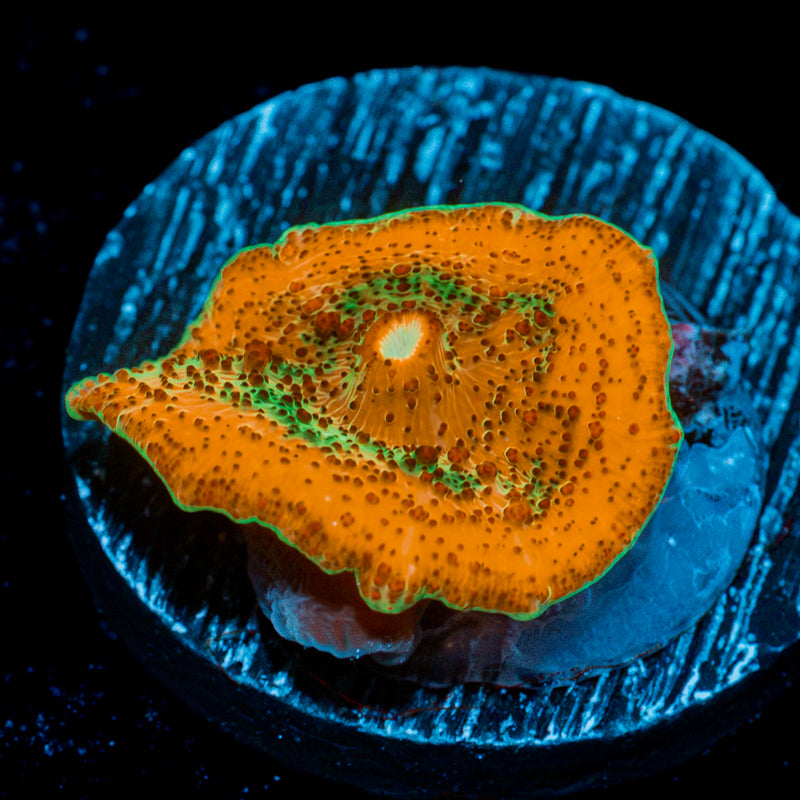
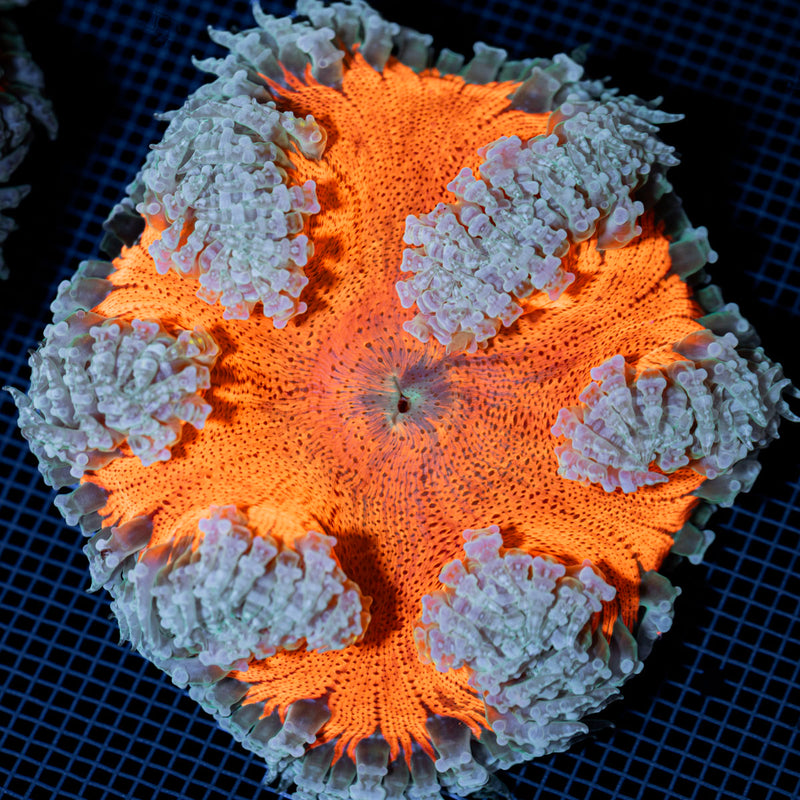
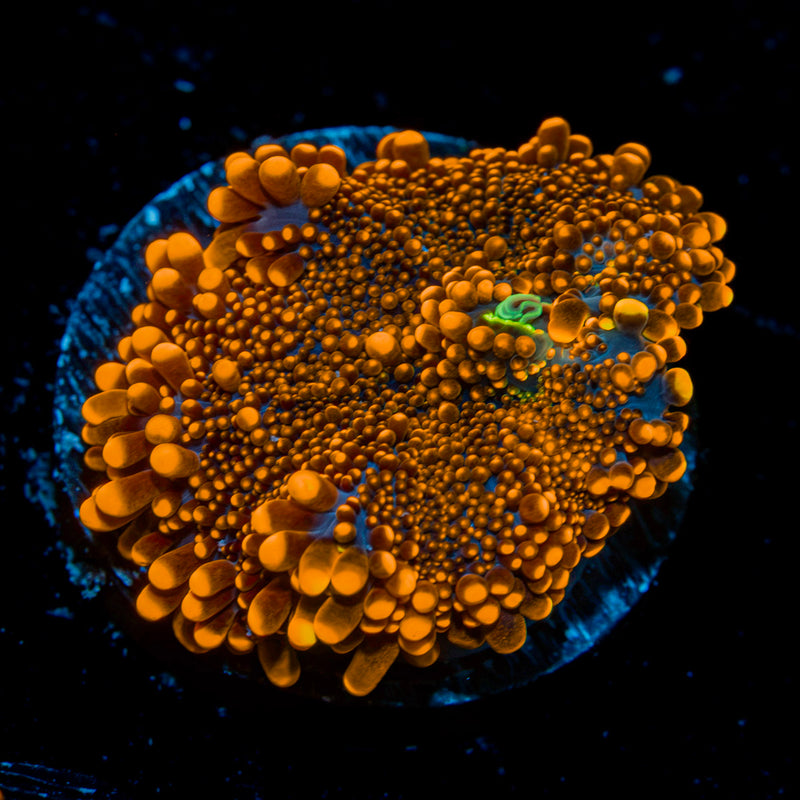
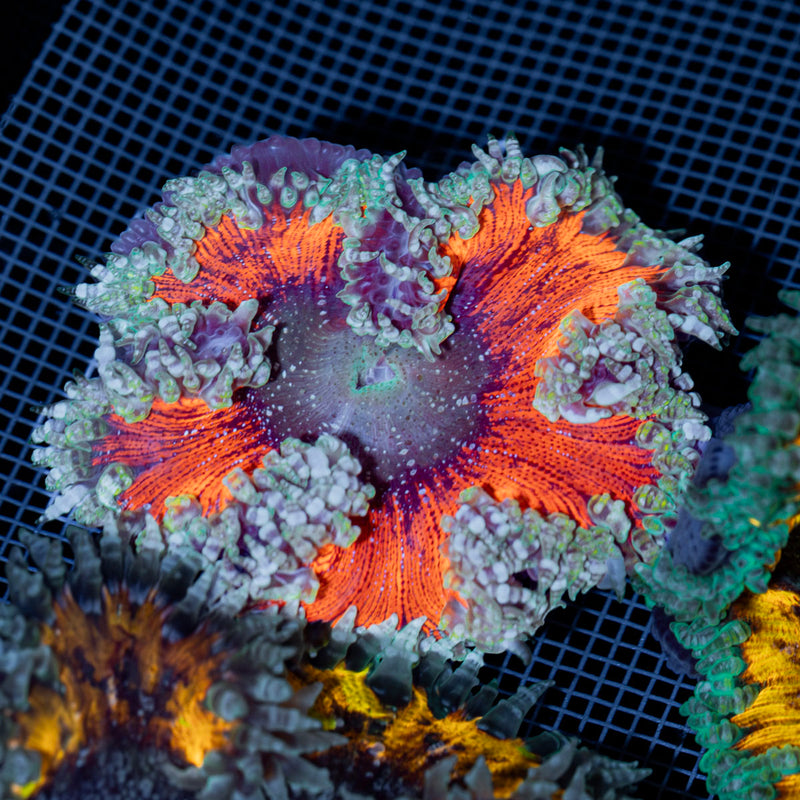
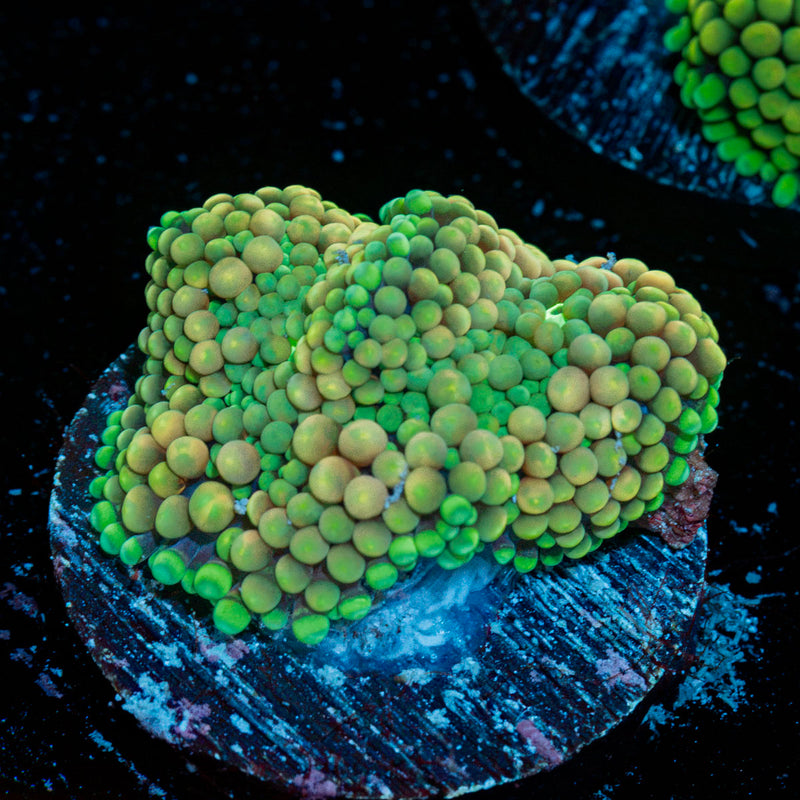
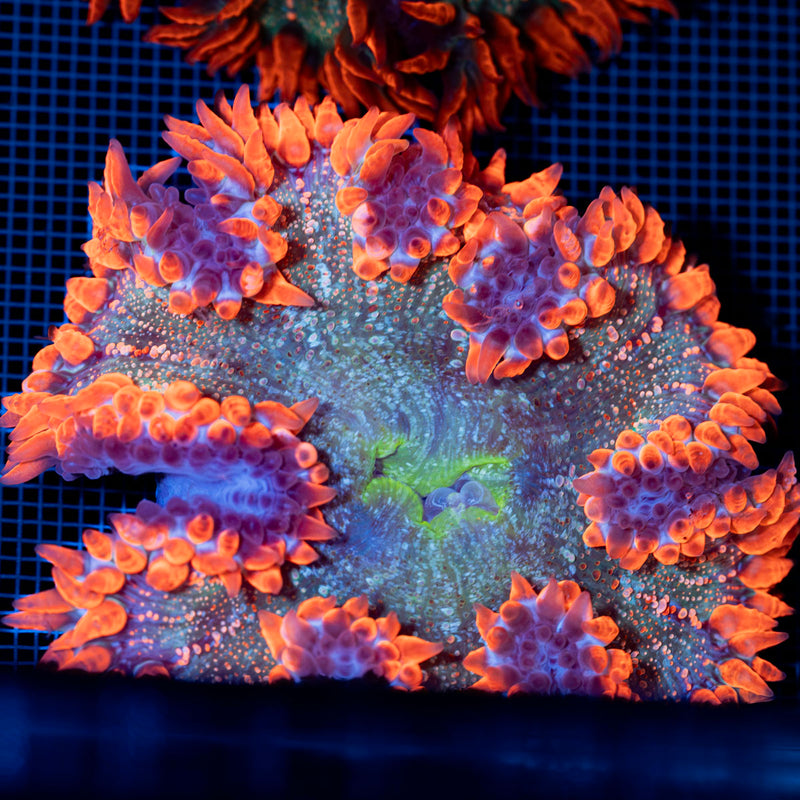
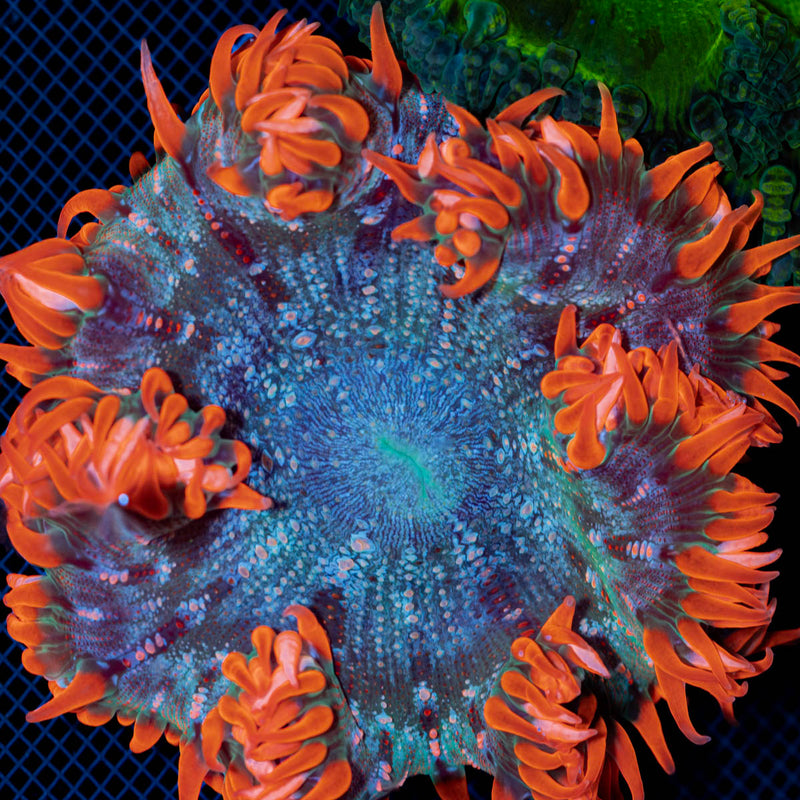
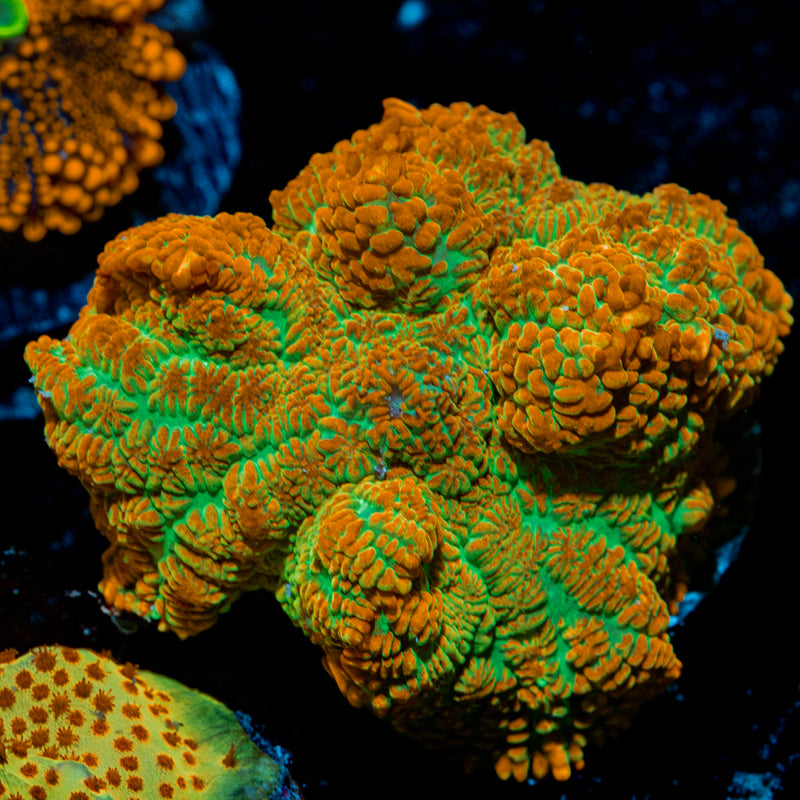
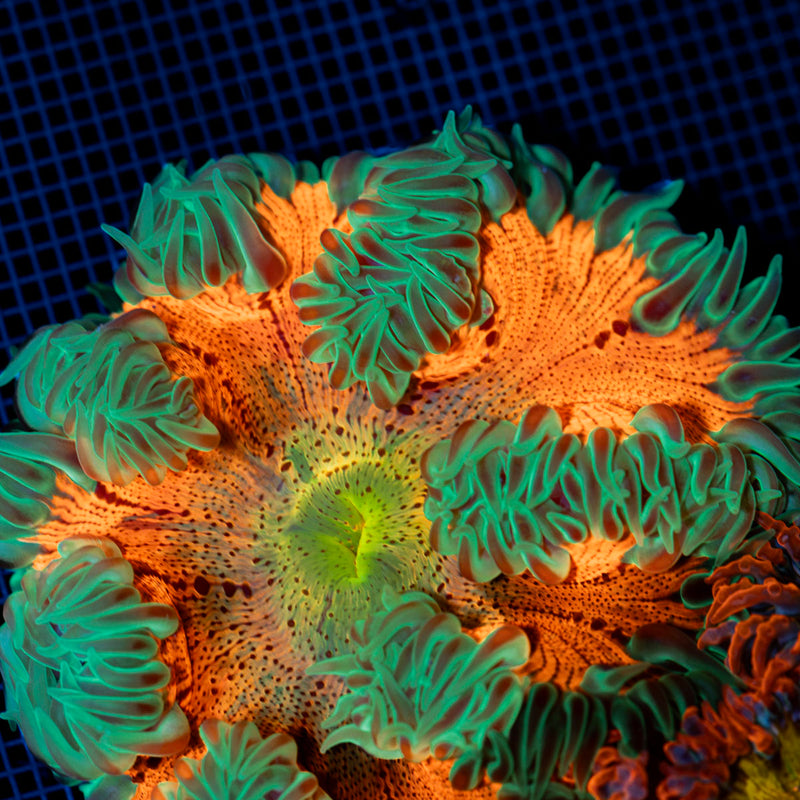
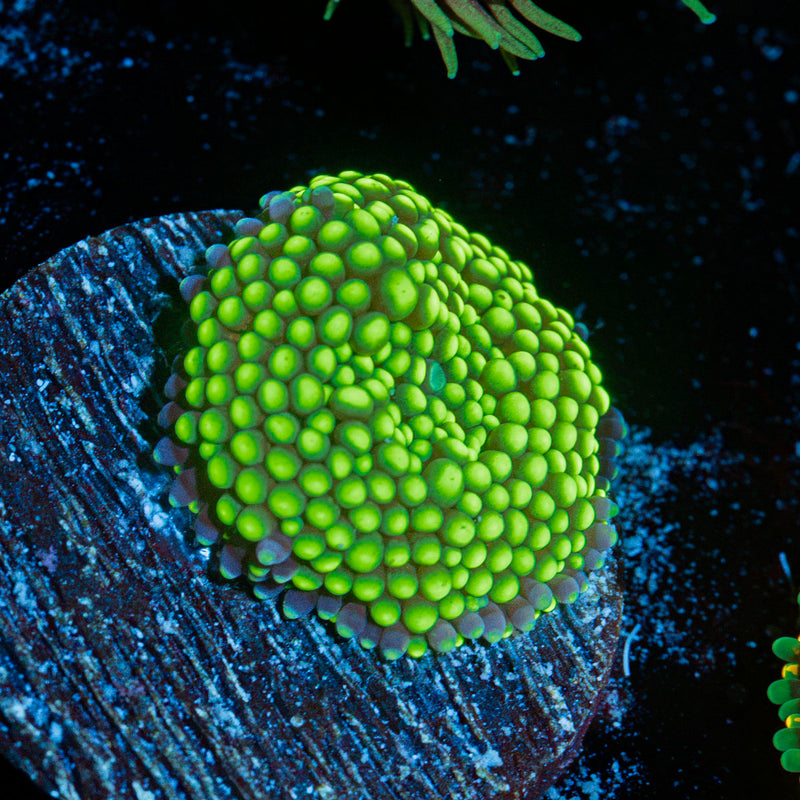
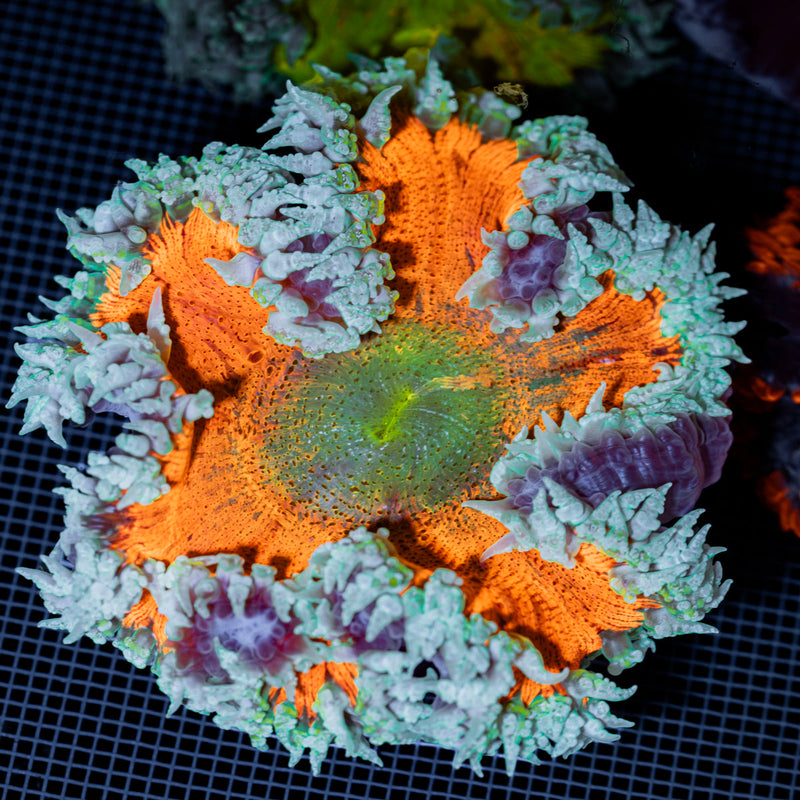
Mushrooms are ideal for lower areas of the aquascape where high-light SPS would struggle. Ricordea, bounce mushrooms, discosoma, and rhodactis varieties can show fluorescent green, orange, red, blue, and rainbow patterns that seem to glow from within. Their soft, inflated texture gives a reef a relaxed, natural look that balances the sharper branches of stony corals.
Most mushrooms prefer lower to moderate light and lower flow than many other coral groups. Too much flow can keep them from expanding fully, while too much light can cause fading or shrinking. They can also spread once established, so isolate fast-growing varieties on a dedicated rock if you want to preserve open space for future additions.
Acans, chalices, and other LPS color collectors
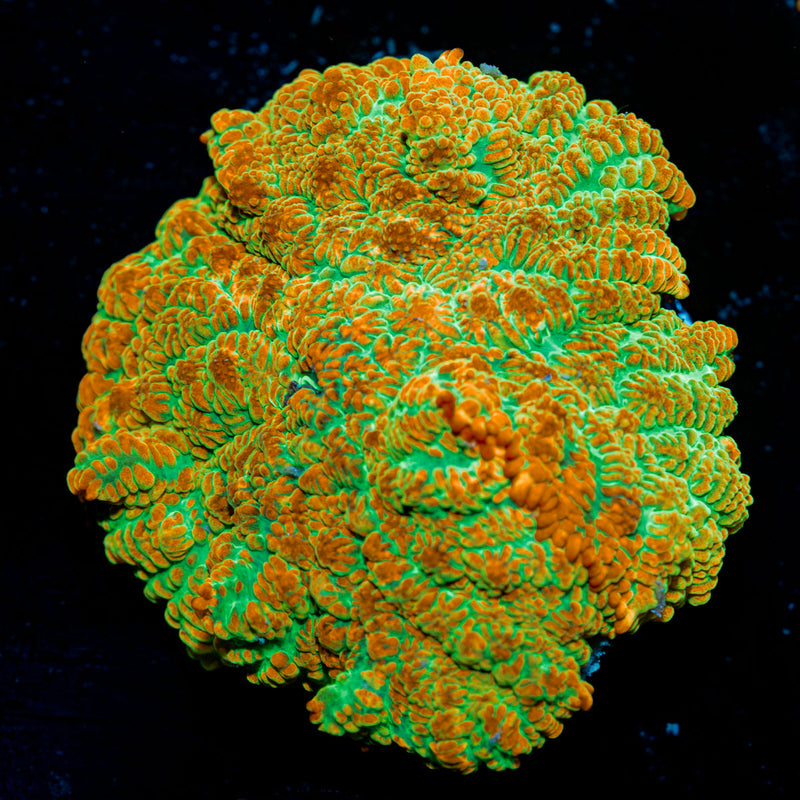
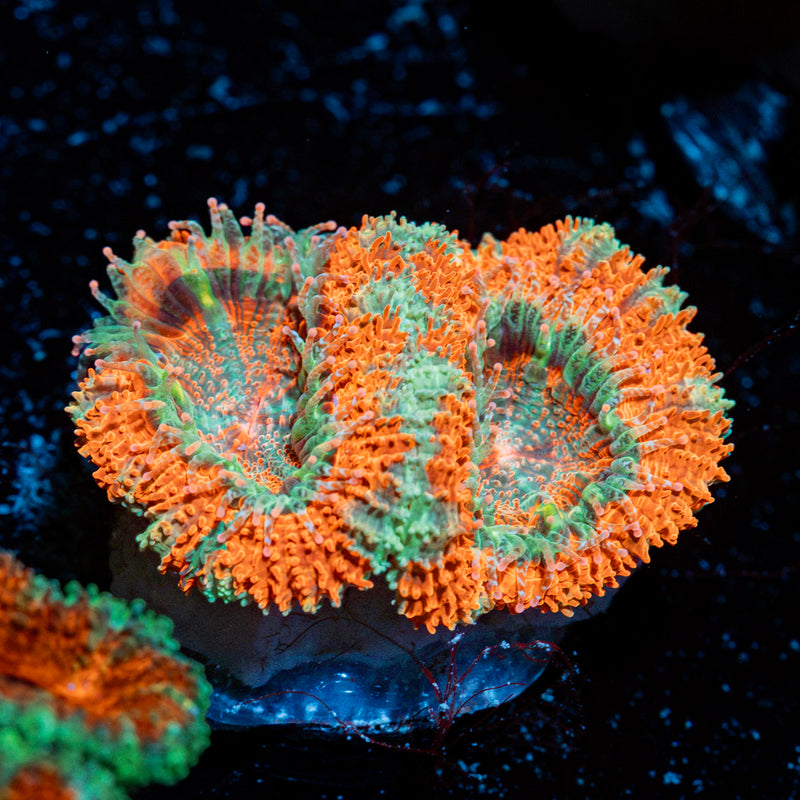
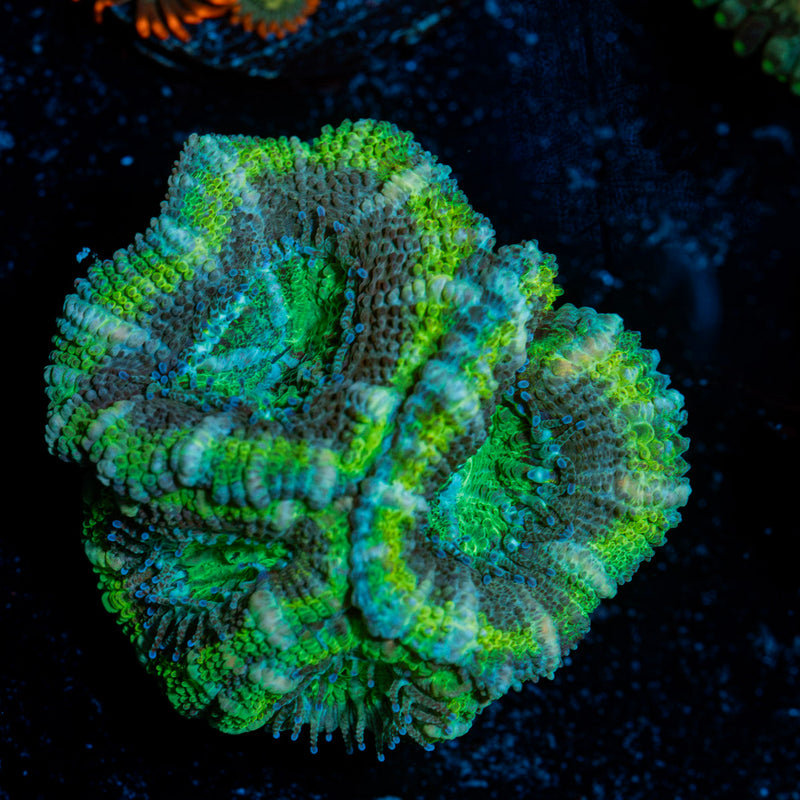
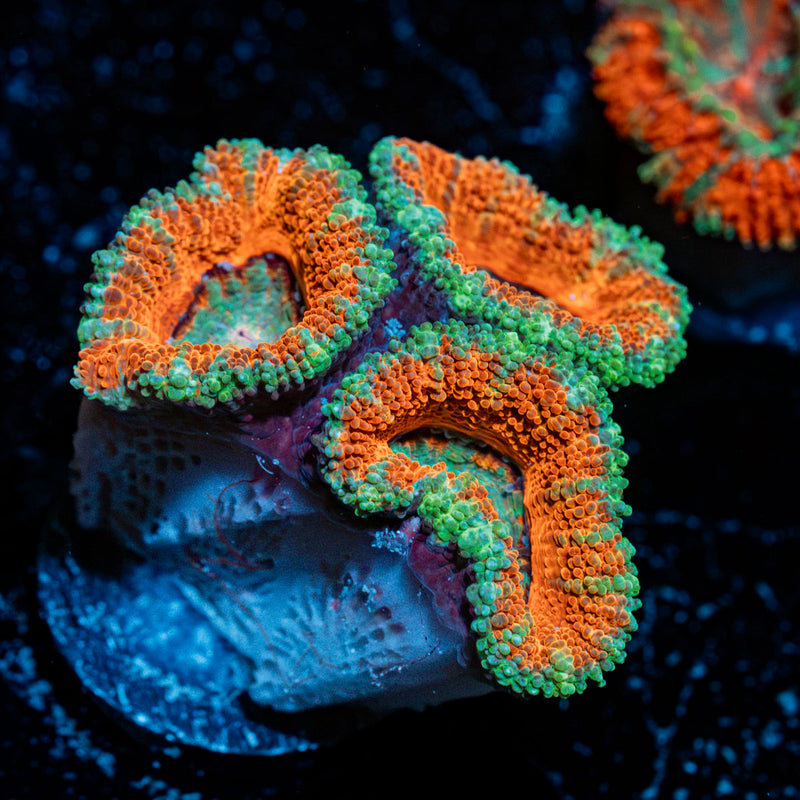
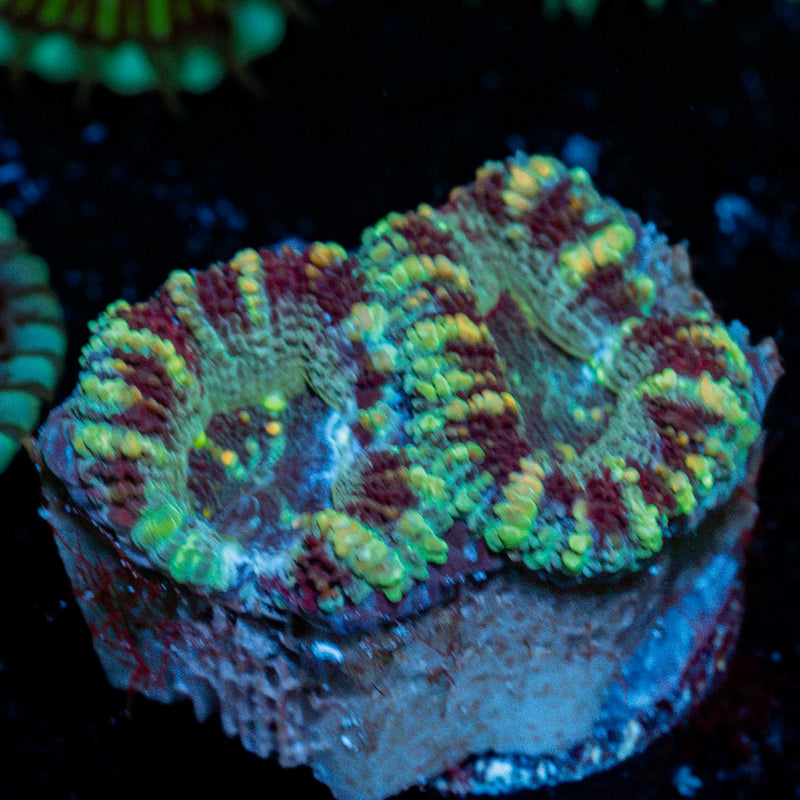
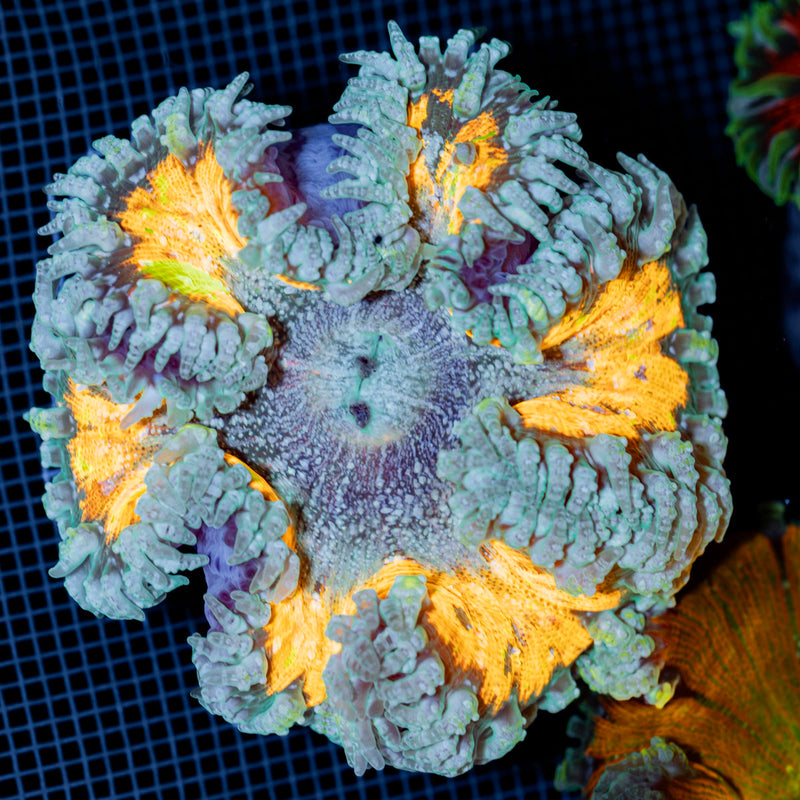
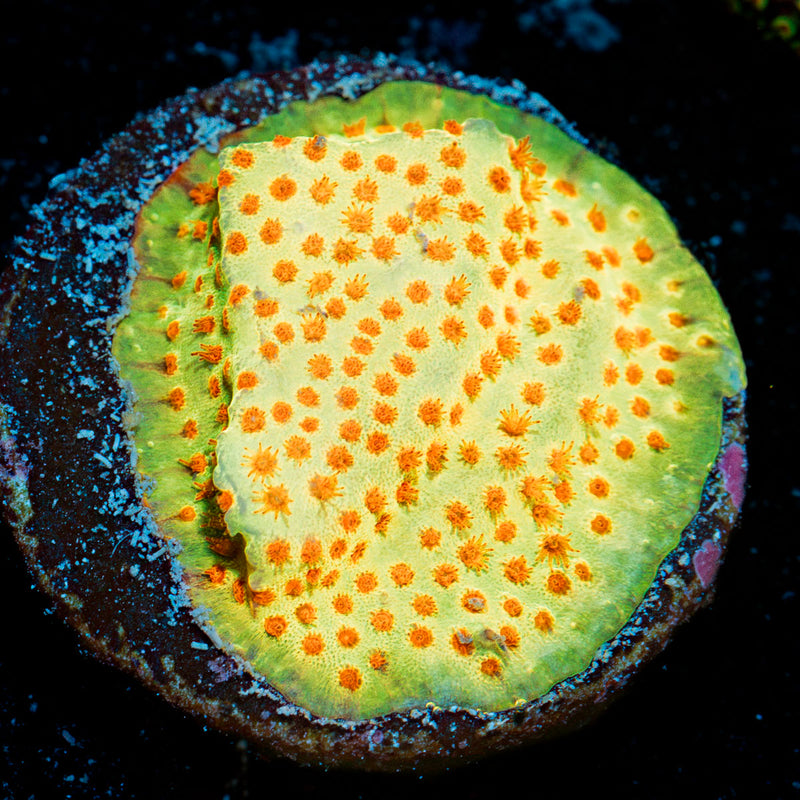
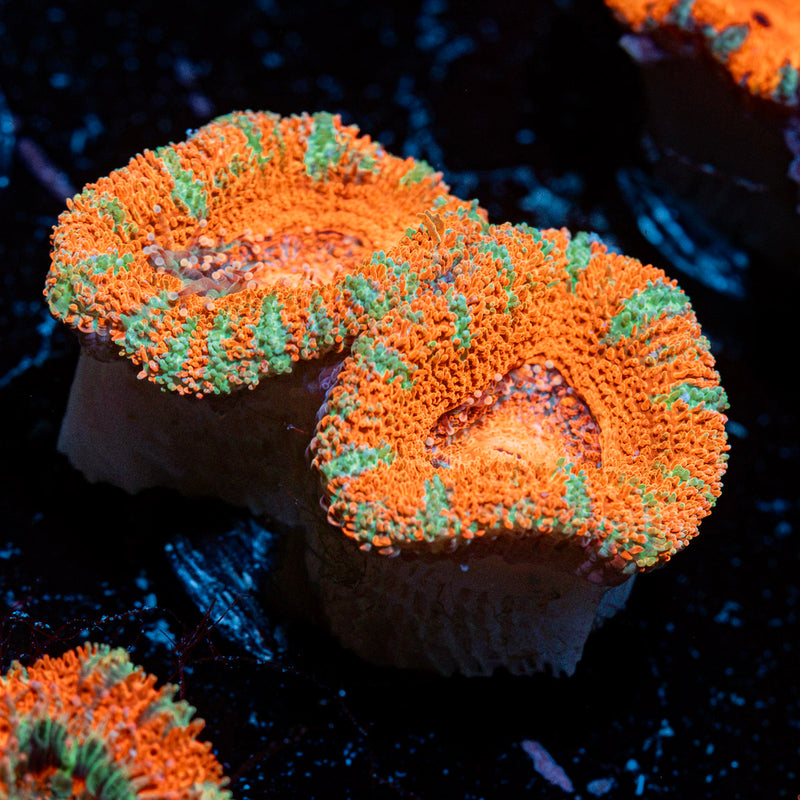
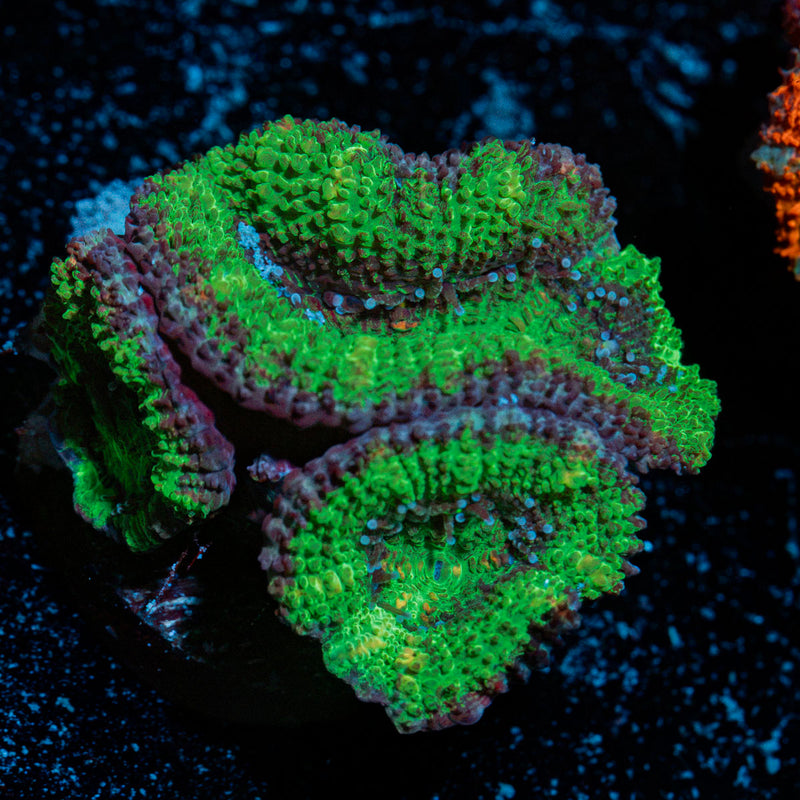
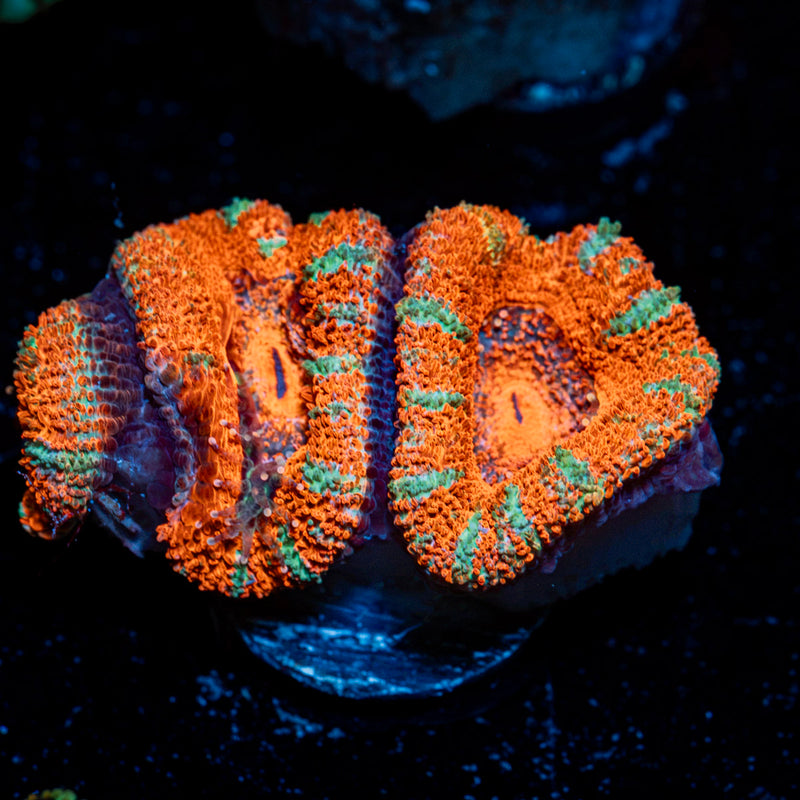
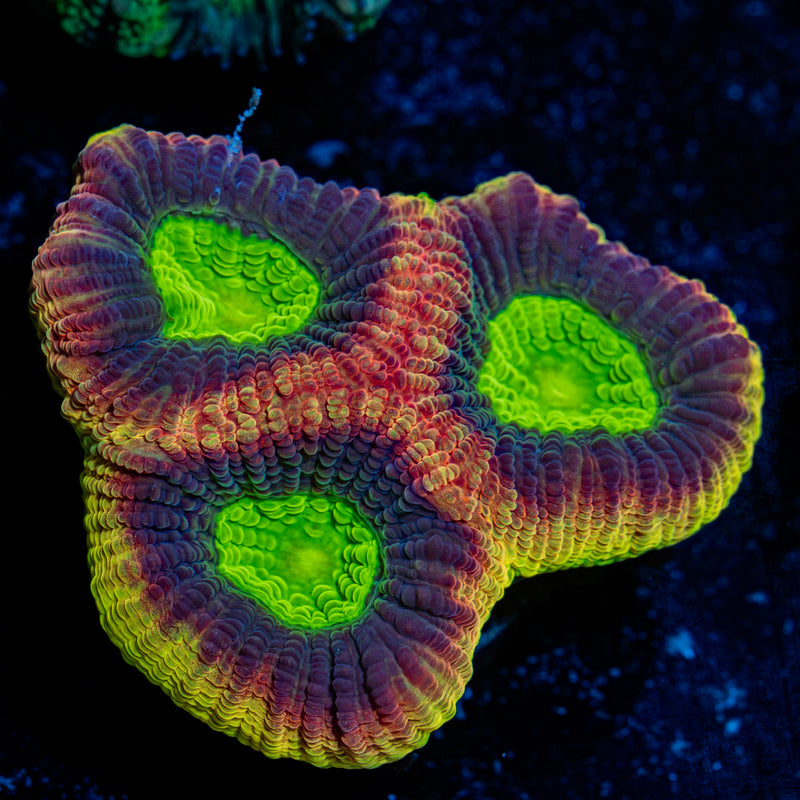
Micromussa acans are packed with contrast. Look for pieces with bright mouths, ringed centers, and colored rims, since those details stand out beautifully under blue lighting. Chalices can be equally impressive, often featuring glowing eyes against a dark green, blue, or red base. They are excellent choices for hobbyists who enjoy studying their reef up close after lights dim.
Both groups generally appreciate moderate to lower light and controlled flow, although each individual coral can vary. Chalices in particular need room. Their edges can extend at night, and fast-growing specimens may shade or challenge corals placed too closely.
SPS for high-energy color
For a reef with strong lighting and mature stability, colorful SPS can create a completely different kind of impact. Acropora, millepora, stylophora, birdsnest, and montipora can display fluorescent tips, contrasting polyps, and intricate branching forms under blue LEDs. A green millepora with pink or orange growth tips, for example, adds texture and color at the upper levels of an aquascape.
SPS are not automatically difficult, but they are less forgiving of sudden changes. They generally need higher light, stronger random flow, and steady alkalinity, calcium, and nutrient levels. Start with proven, aquacultured frags and allow them time to encrust and settle. Color development in SPS is often a long game, and the reward is a living structure that becomes more impressive as it grows.
Match the Coral to Your Light, Not the Photo
A blue-light photo can be useful, but it should never be the only buying decision. Camera settings, orange filters, and editing can intensify fluorescence beyond what your eyes will see in a home aquarium. WYSIWYG selections provide the strongest purchase confidence because you can evaluate the exact frag's shape, pattern, and coloration rather than relying on a representative image.
Ask yourself where the frag will live. A low-light mushroom may look spectacular in a blue-lit photo but fail to thrive high beneath powerful LEDs. Conversely, a vivid Acropora may need a level of light and flow that a soft-coral tank does not provide. Match the coral's care needs to the available space first, then choose the color palette that excites you.
Your own light spectrum also matters. If your fixture has adjustable channels, avoid making large changes all at once. Corals acclimated to a balanced schedule can react poorly when intensity or spectrum shifts abruptly. A predominantly blue evening period is great for viewing, but the daily program should still provide a consistent environment that supports healthy growth.
Placement and Acclimation Protect the Color You Bought
When a new frag arrives, color preservation starts before it enters the display. Temperature acclimate according to your normal livestock procedure, inspect the plug and tissue carefully, and consider an appropriate coral dip. Then begin the coral lower than its final intended placement unless you already know your tank's PAR and the coral's previous light conditions are comparable.
Light acclimation is especially valuable with modern LEDs. Start a new coral on the sand bed or lower rockwork, or reduce intensity with an acclimation program if your fixture offers one. Over the next few weeks, watch for expansion, polyp behavior, tissue recession, bleaching, and shifts in coloration. Move the frag gradually rather than making daily adjustments.
Flow deserves the same attention. Euphyllia should sway rather than whip violently. Mushrooms should inflate without collecting detritus. SPS should receive varied flow that reaches all sides of the colony. Good flow helps corals exchange gases and shed waste, but each species has a point where more becomes stress rather than benefit.
Build Contrast, Not Just a Collection
The most memorable blue-lit reefs are not necessarily packed with the rarest frags. They use contrast deliberately. Place orange or yellow zoanthids near a darker purple mushroom. Let a bright green hammer rise above a bed of red acans. Reserve open rock around a single high-color torch or branching SPS colony so it can read as a true focal point.
It also pays to think beyond the first week. Frags grow, mushrooms divide, zoanthids spread, and branching corals cast shade. Give each coral enough room to become what it is meant to be. This patient approach creates a reef that looks curated rather than crowded.
At Riptide Aquaculture, aquacultured WYSIWYG corals make it easier to choose with confidence because the piece you select is the piece you receive. Whether you are building your first fluorescent coral garden or adding a premium centerpiece to an established system, start with healthy specimens suited to your light and leave room for their color to grow into the reef.