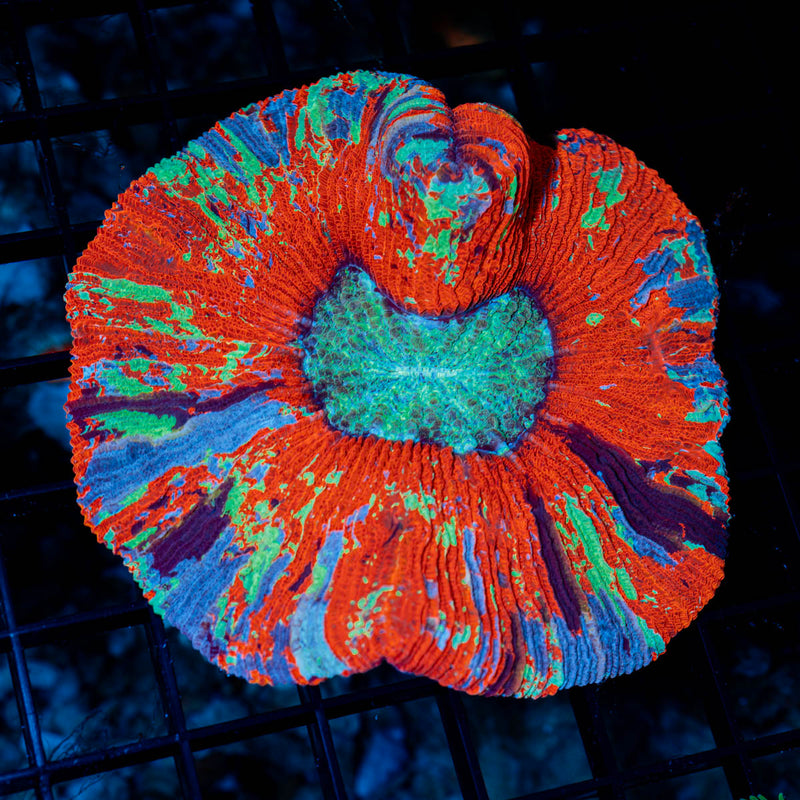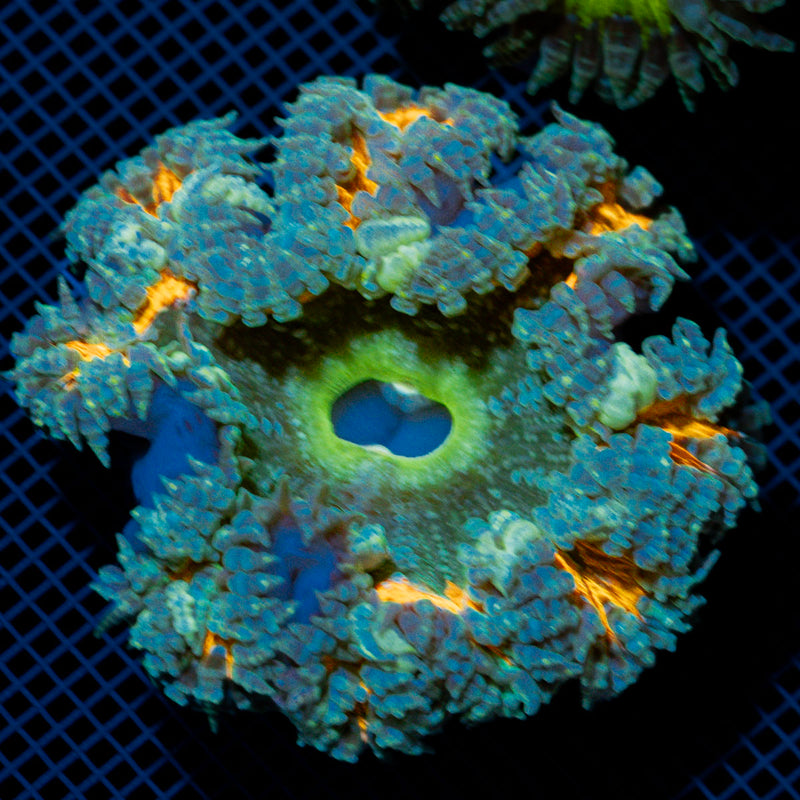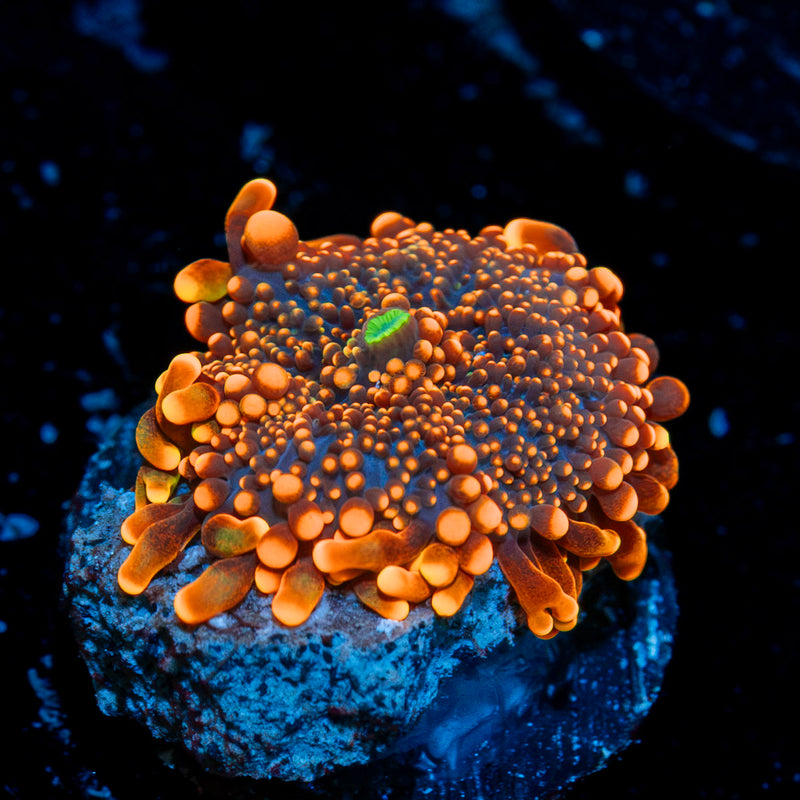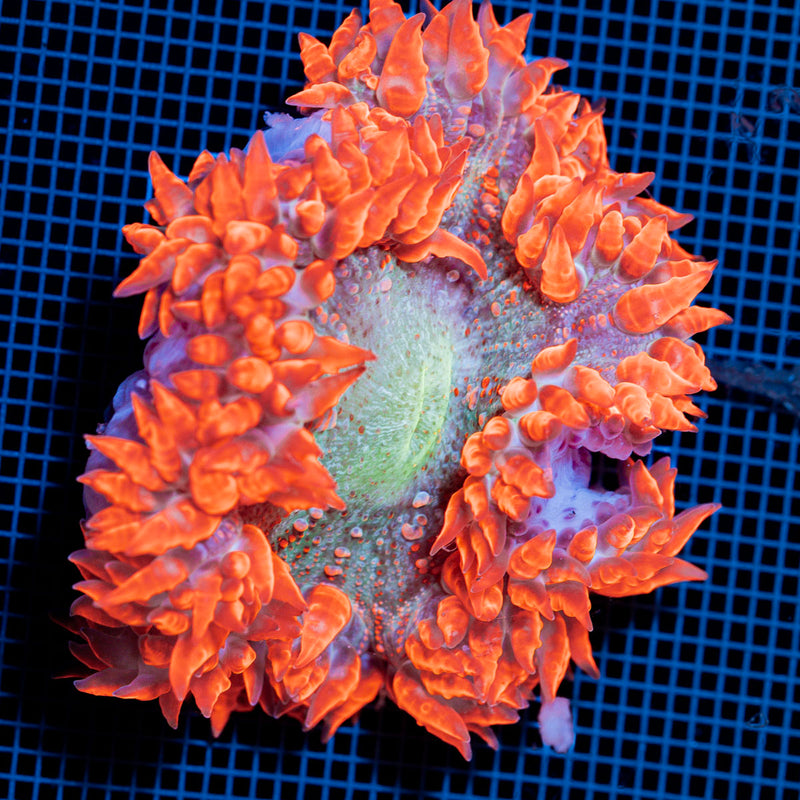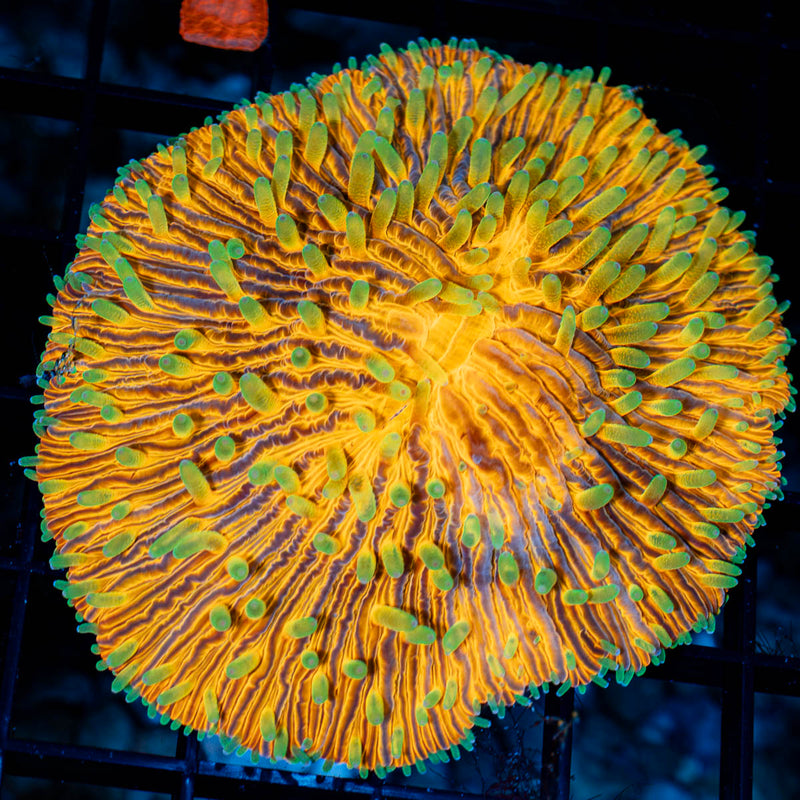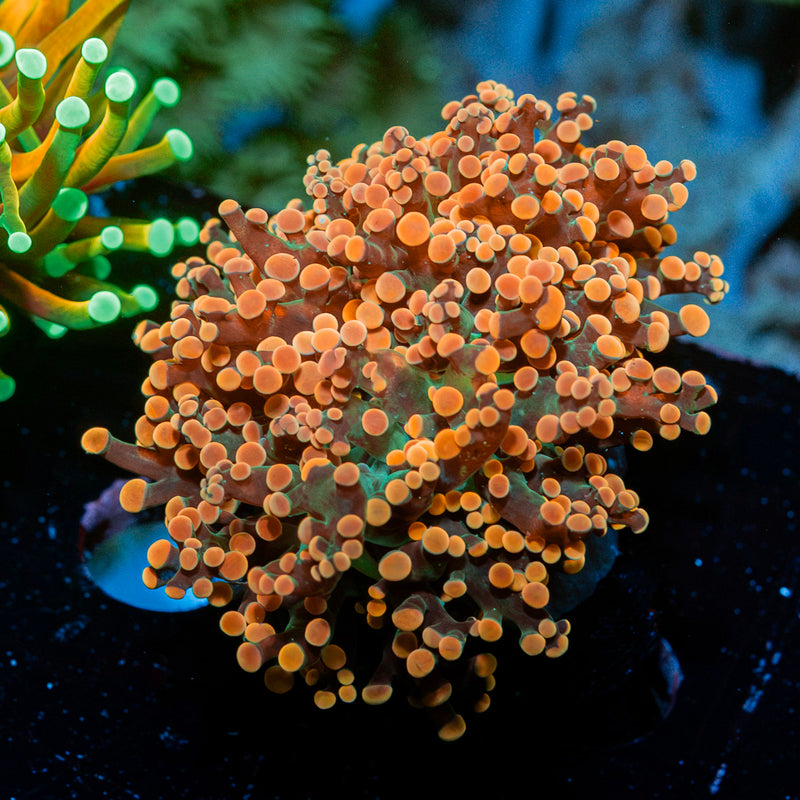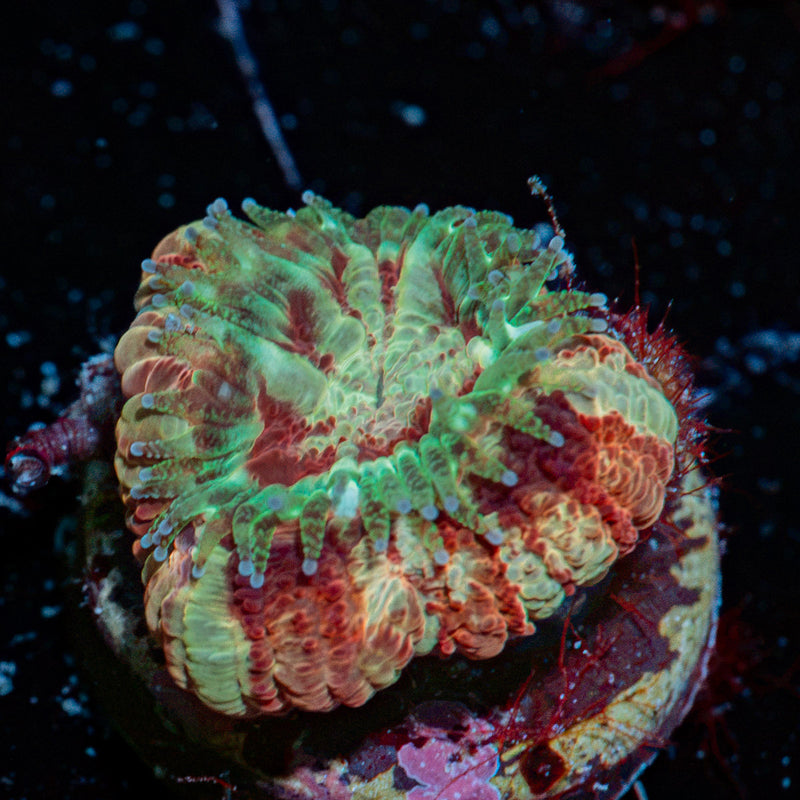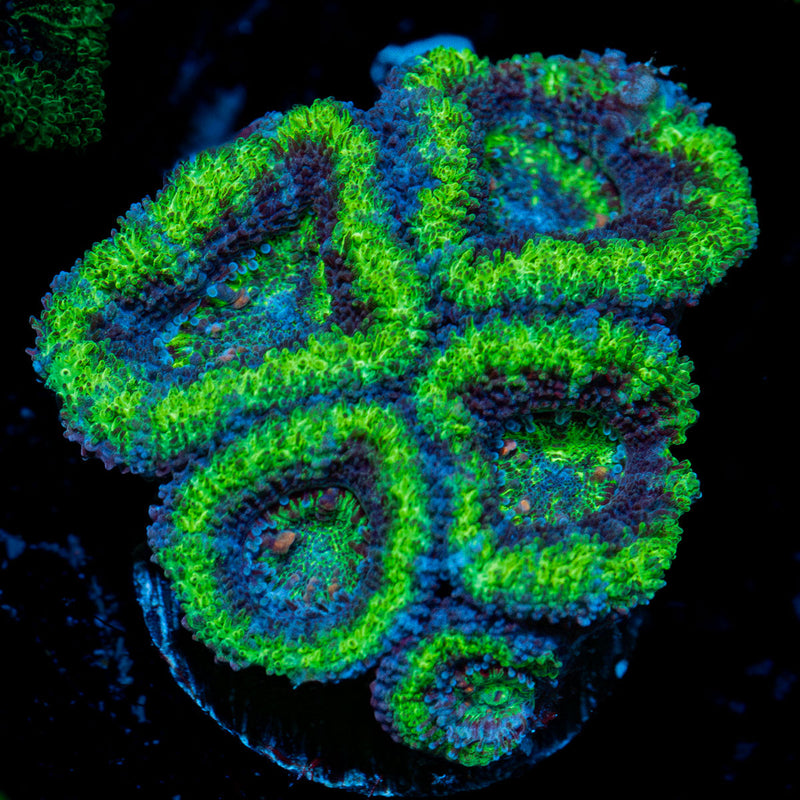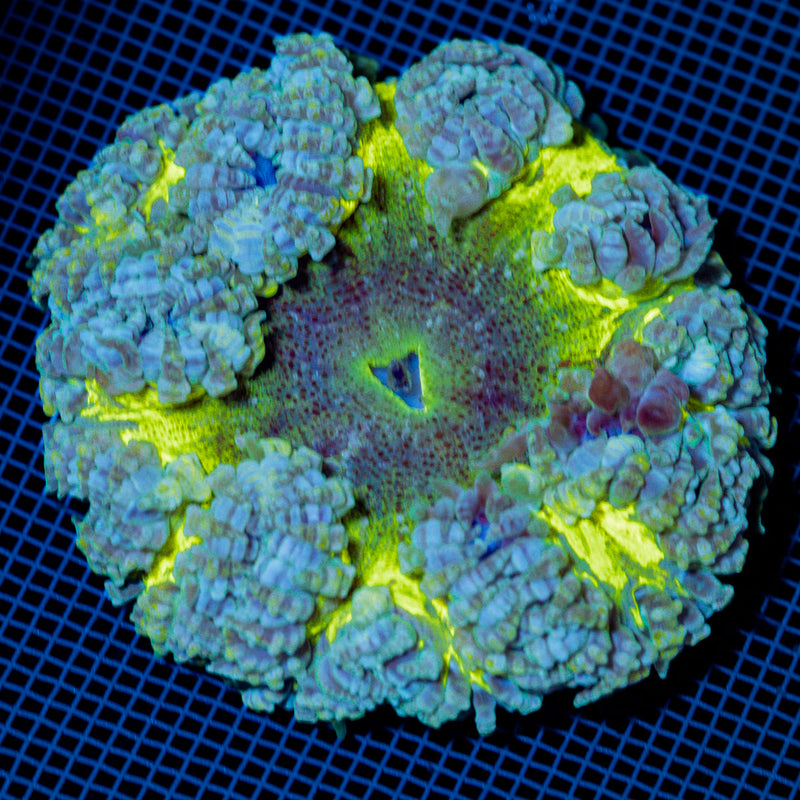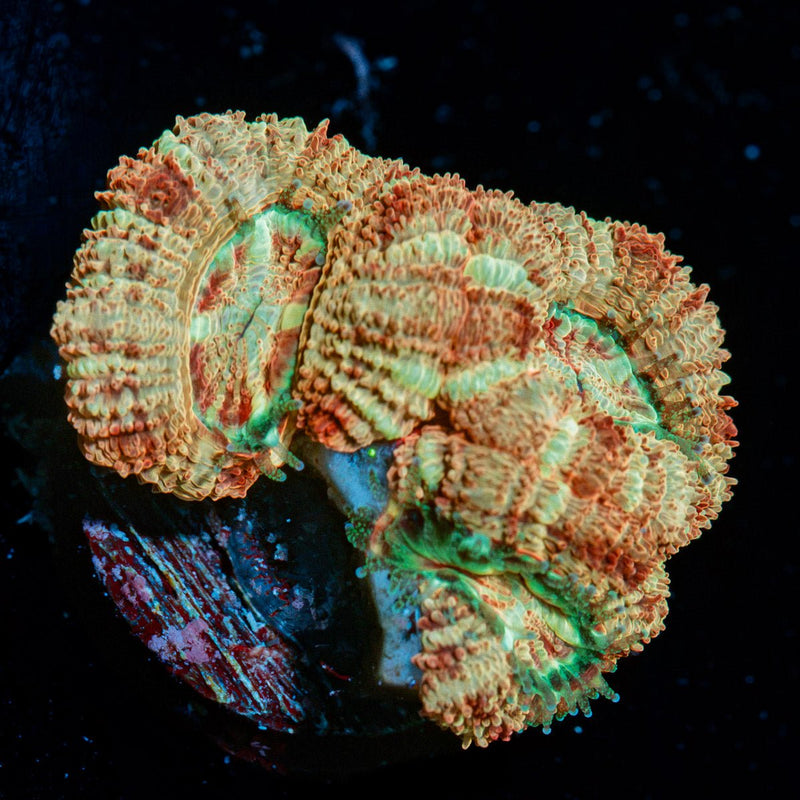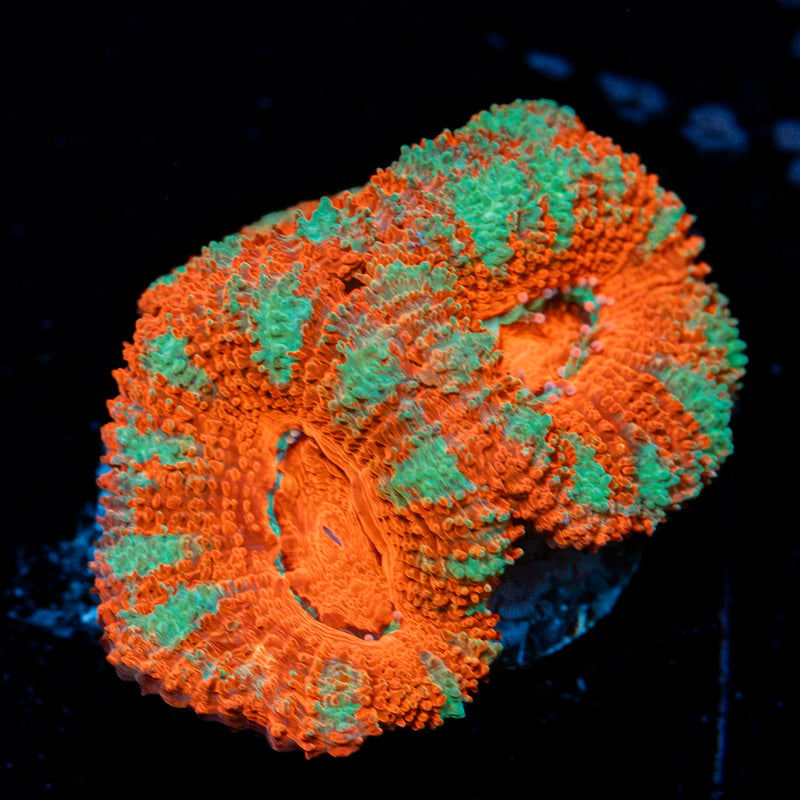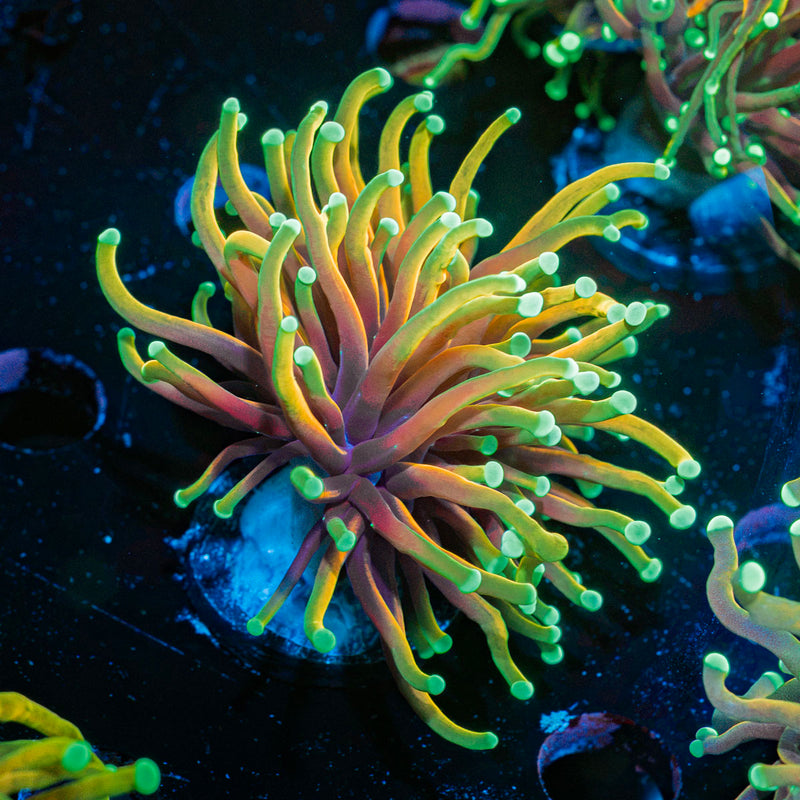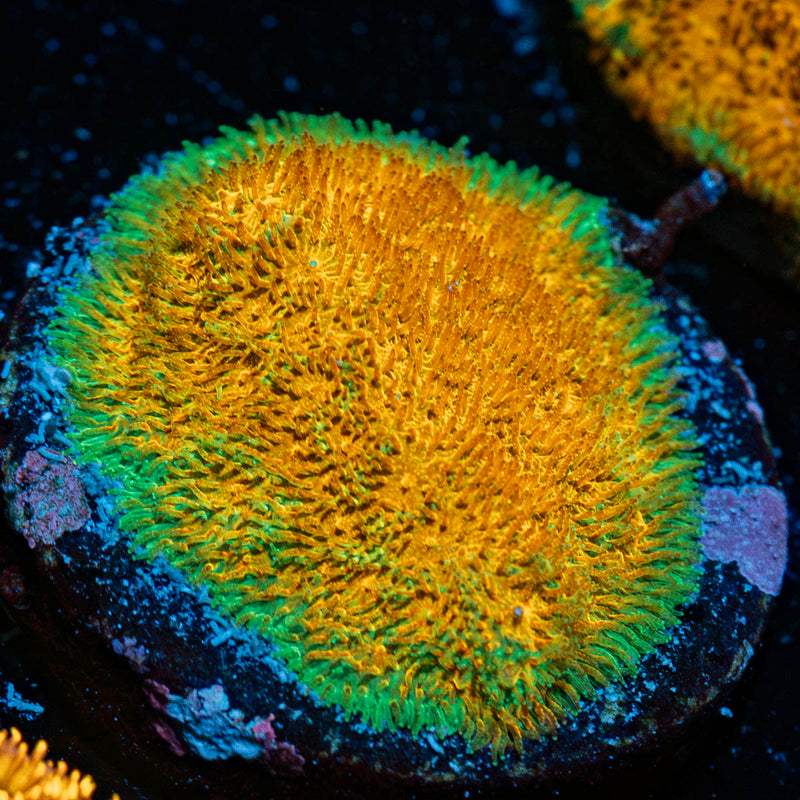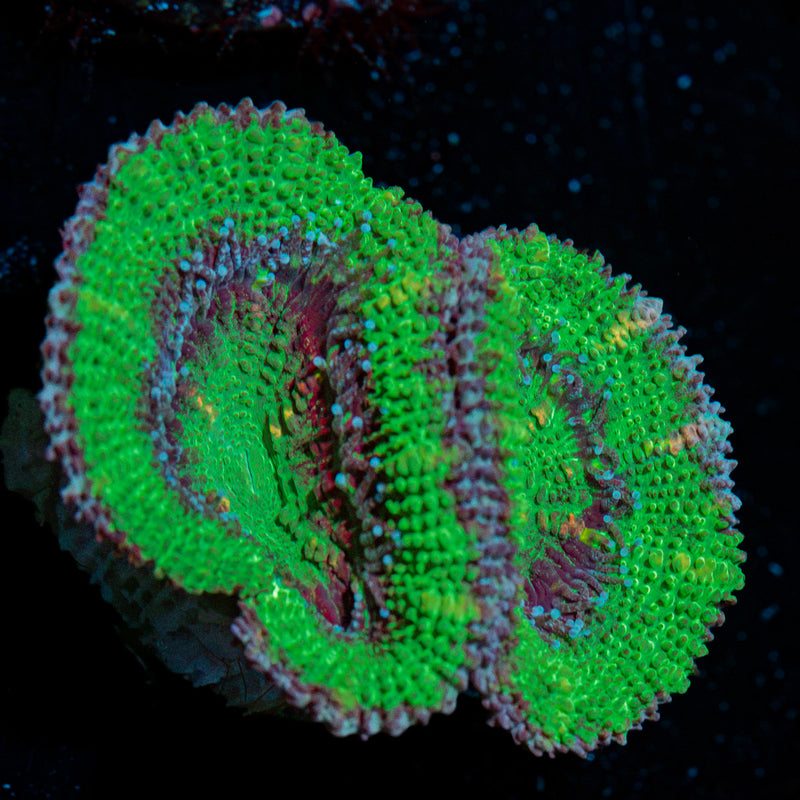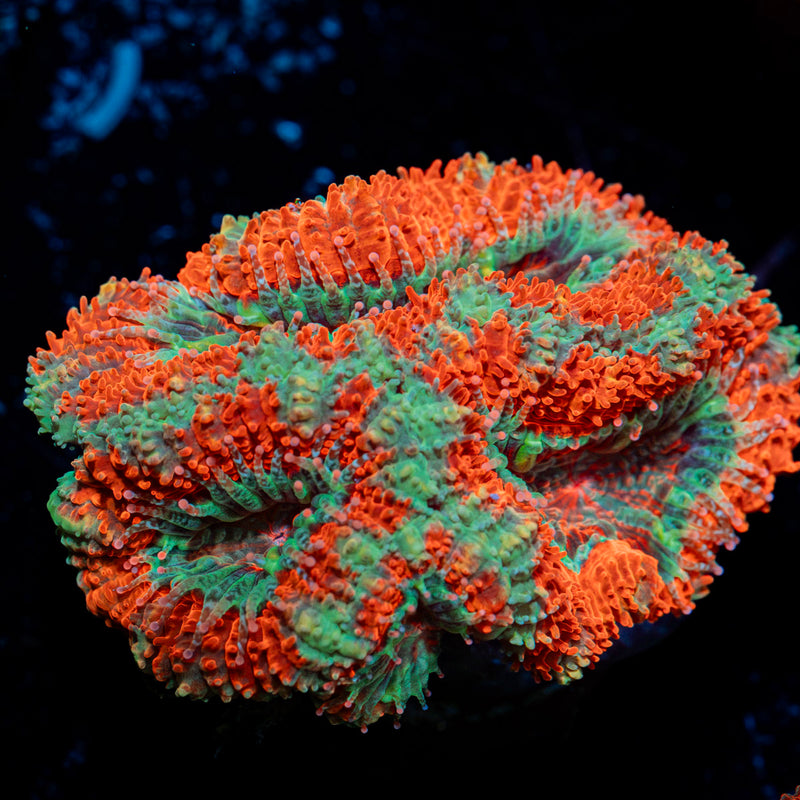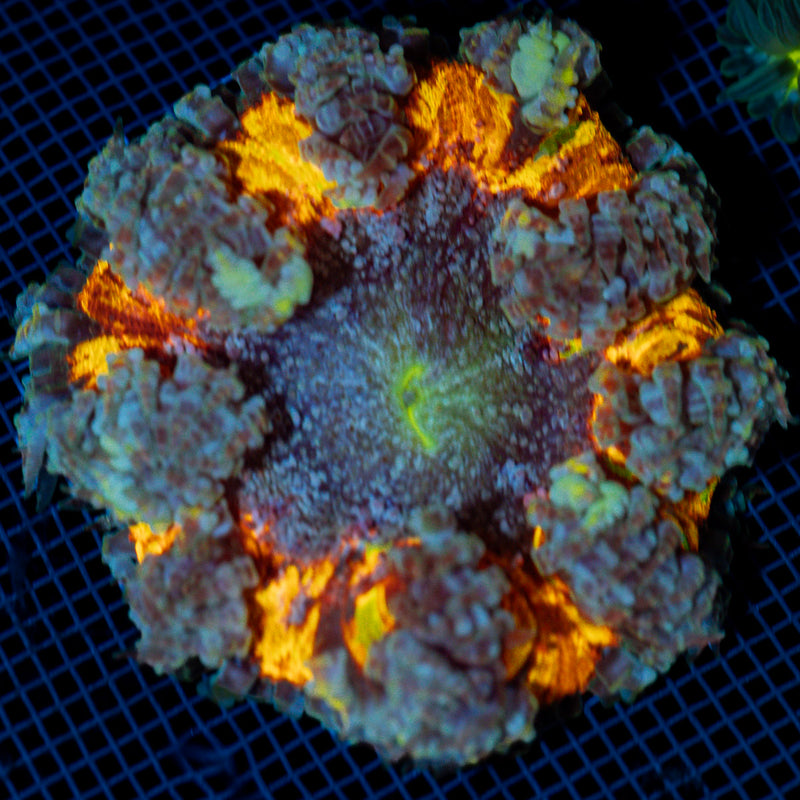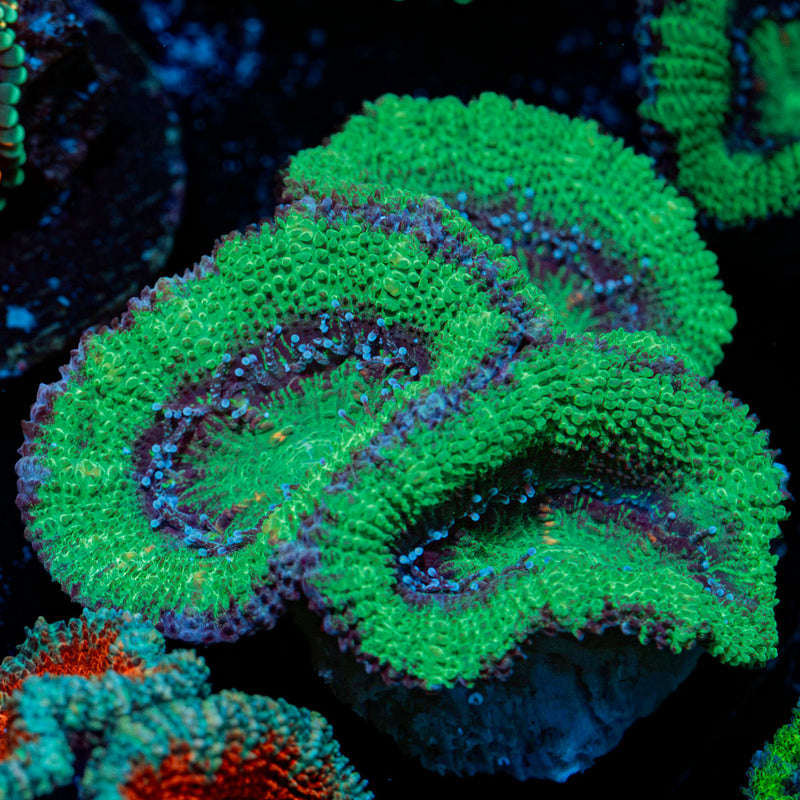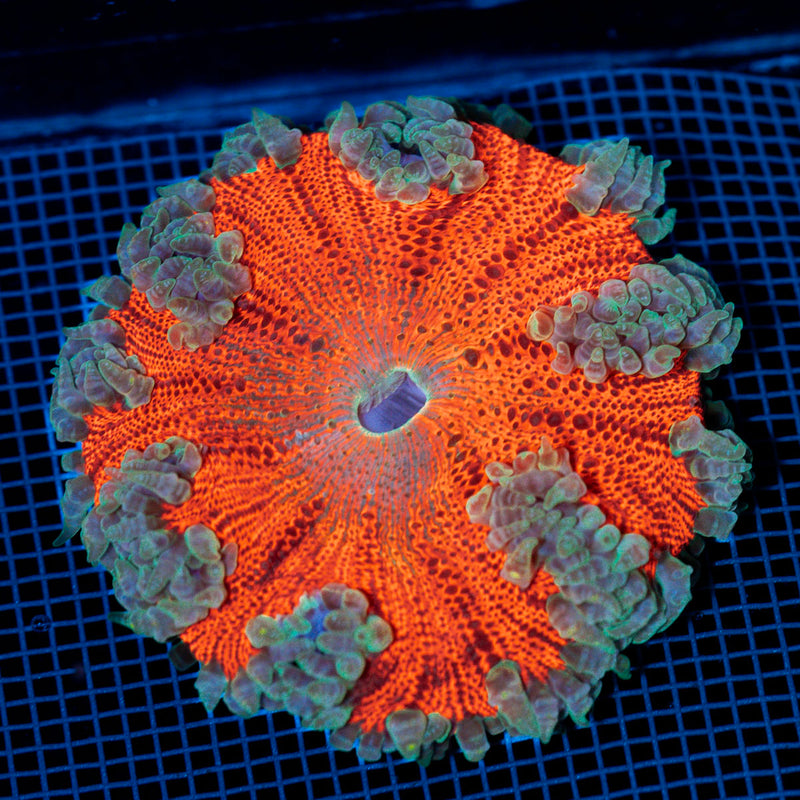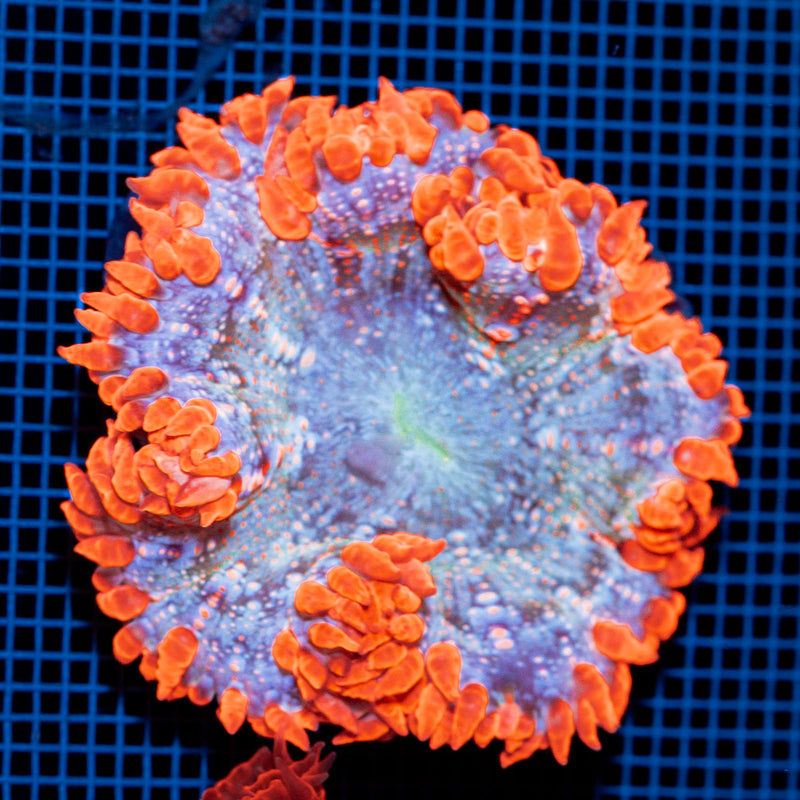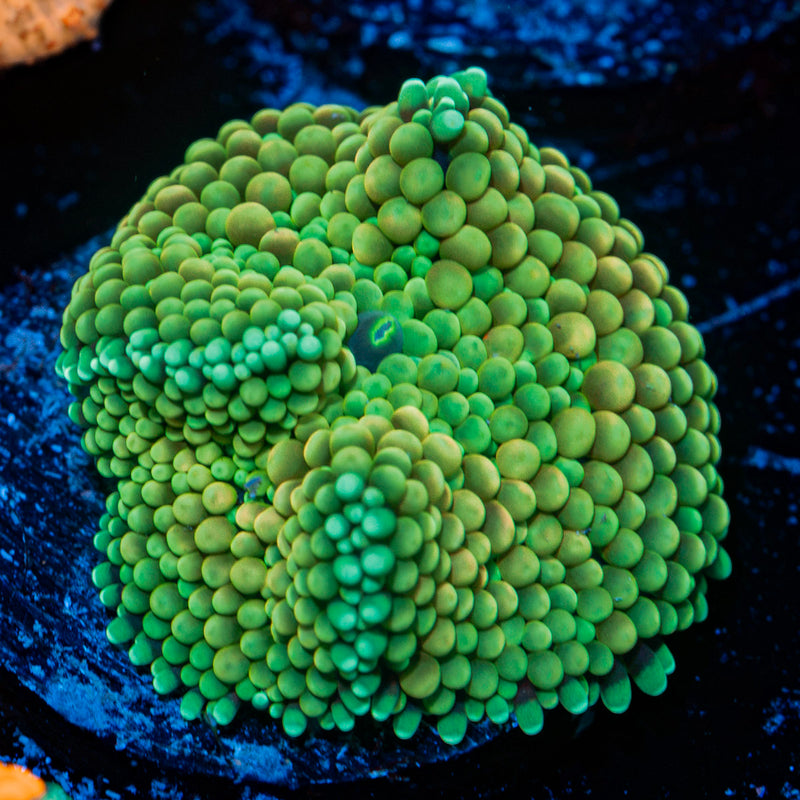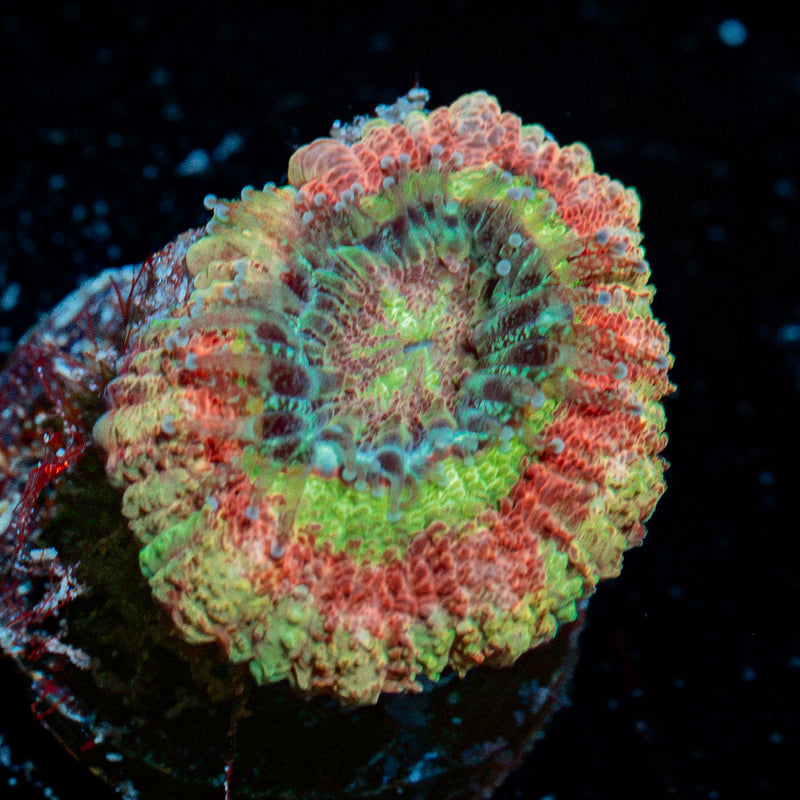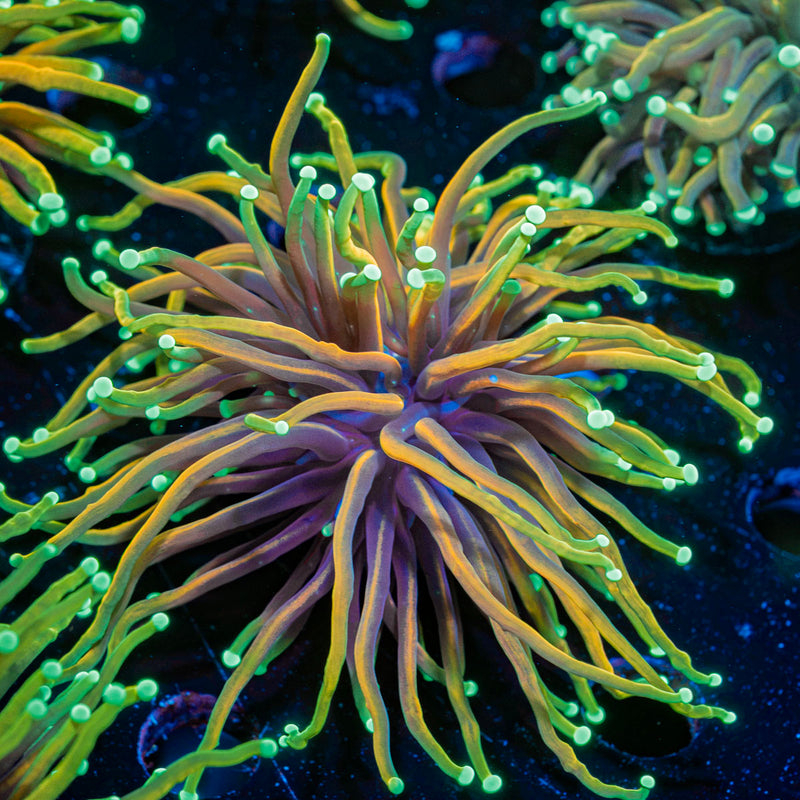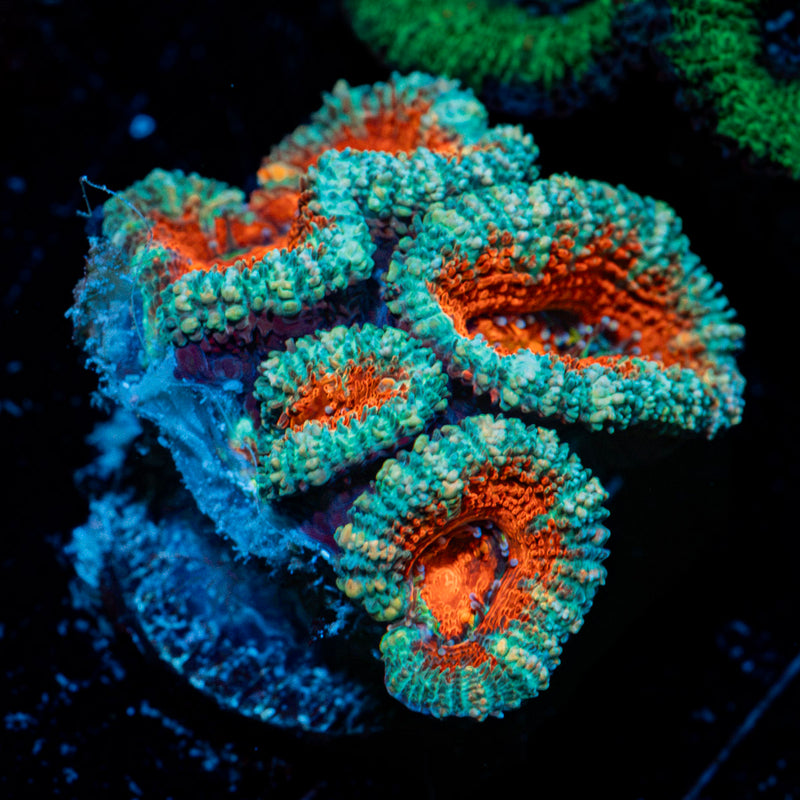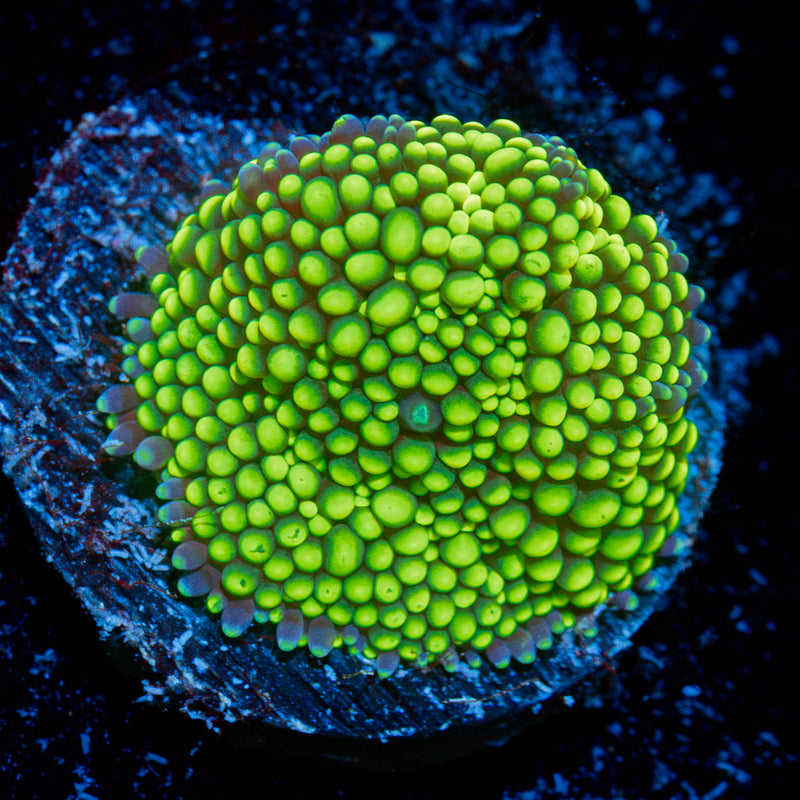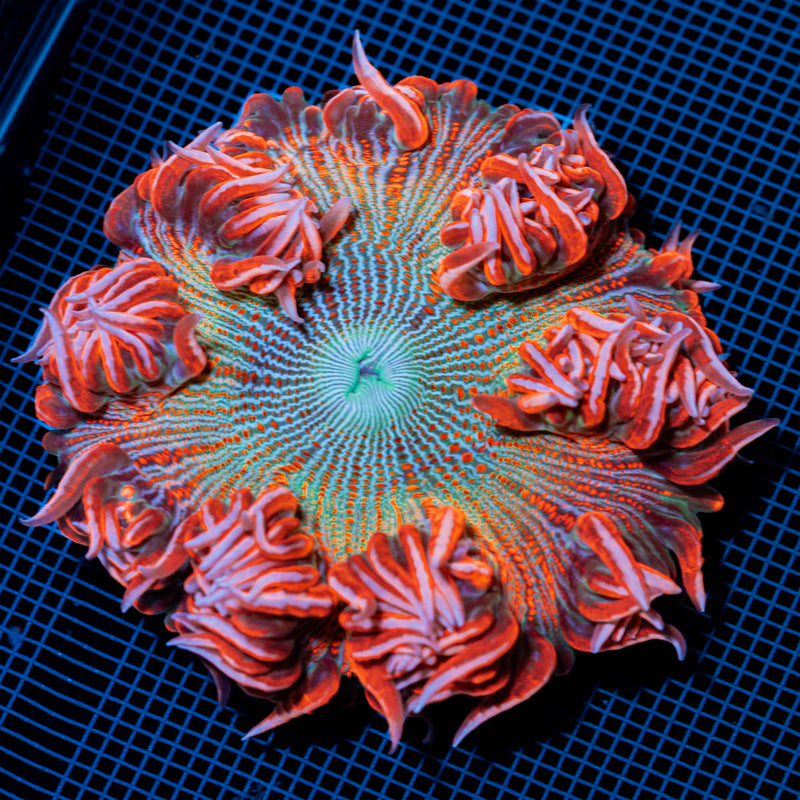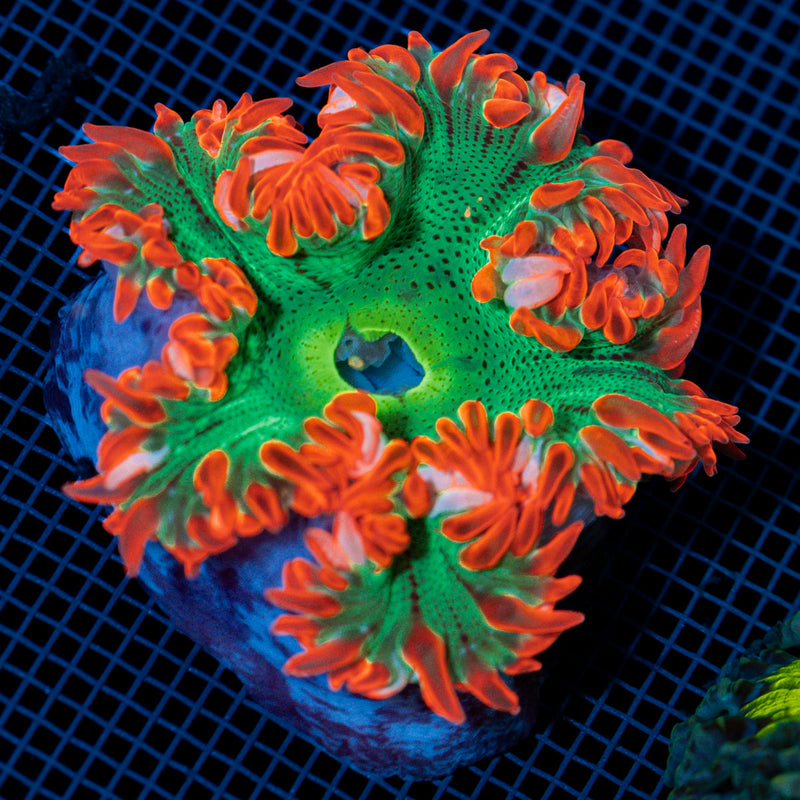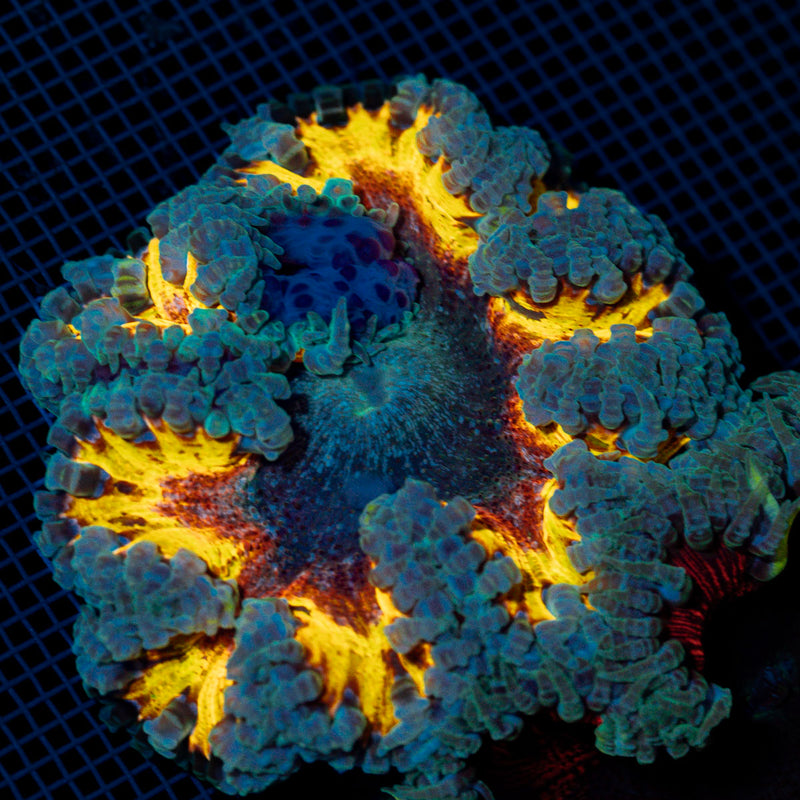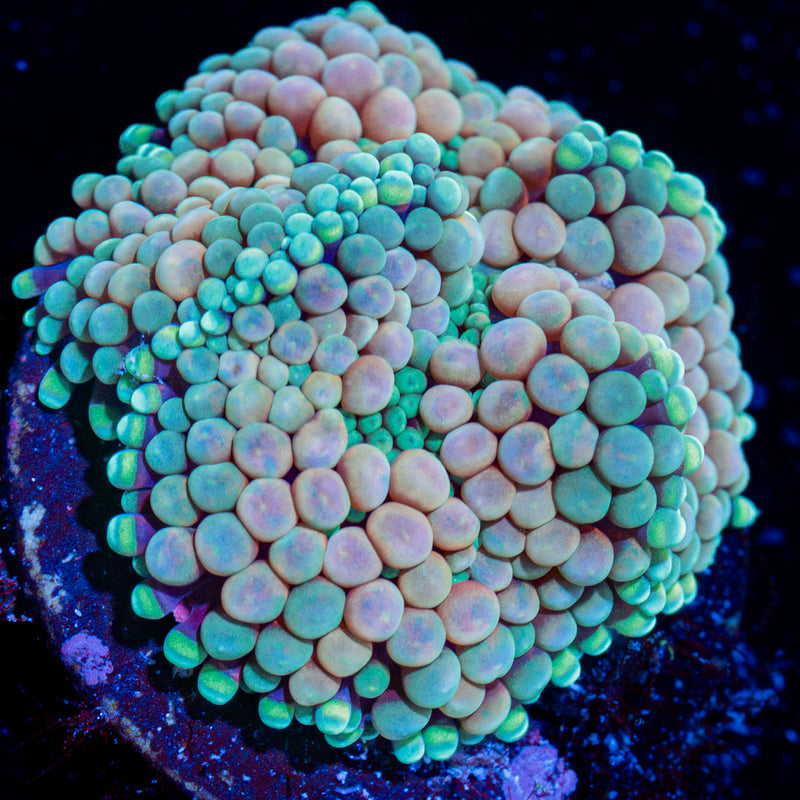
A torch that stays tucked in for one afternoon is not necessarily sick. A torch whose tissue is peeling away from the skeleton by morning is a different story. Successful coral disease identification starts with that distinction: noticing the difference between a coral having a rough day and a coral that needs immediate intervention.
Corals are living jewels, but they do not display illness the way fish do. Many of the same visual symptoms - faded color, closed polyps, recession, slime, and spots - can come from disease, pests, unstable water chemistry, excessive light, poor flow, or a recent change in the aquarium. Before treating anything, slow down, observe closely, and look for the pattern.
Start With the Coral's Normal Behavior
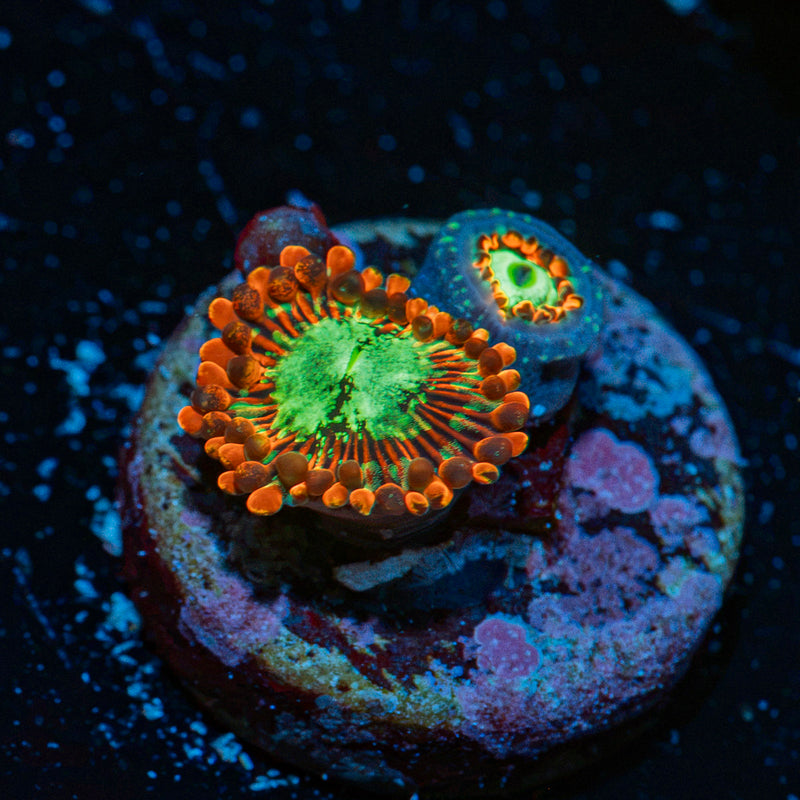
The most useful diagnostic tool is a baseline. Healthy corals vary widely in their daily behavior. Zoanthids and many LPS corals often close after lights out, during feeding, or after a fish brushes past them. SPS may show little visible polyp extension while still maintaining rich color and clean, intact tissue.
Ask three simple questions: What changed? How fast did it change? Is the issue spreading? A coral that has been slightly pale for weeks may be adapting to light or nutrient conditions. A white patch that expands across an Acropora overnight deserves more urgency.
Recent additions matter, too. A newly shipped frag can remain retracted while it settles into stable temperature, salinity, lighting, and flow. Give a new coral reasonable time to acclimate, but do not mistake rapidly worsening tissue loss for normal shipping stress.
Coral Disease Identification: What You Are Actually Seeing
In a home reef aquarium, “disease” is often used as a catch-all term. In practice, visible problems usually fit one of four categories: a true disease process, environmental stress, predation or pests, or physical damage. The response depends on which category is most likely.
Tissue recession and exposed skeleton
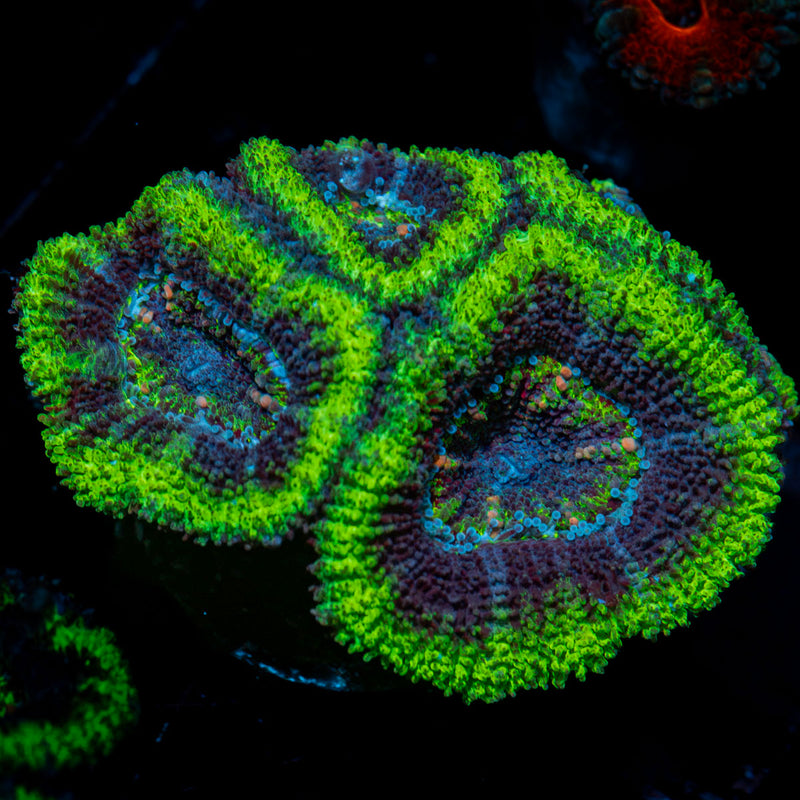
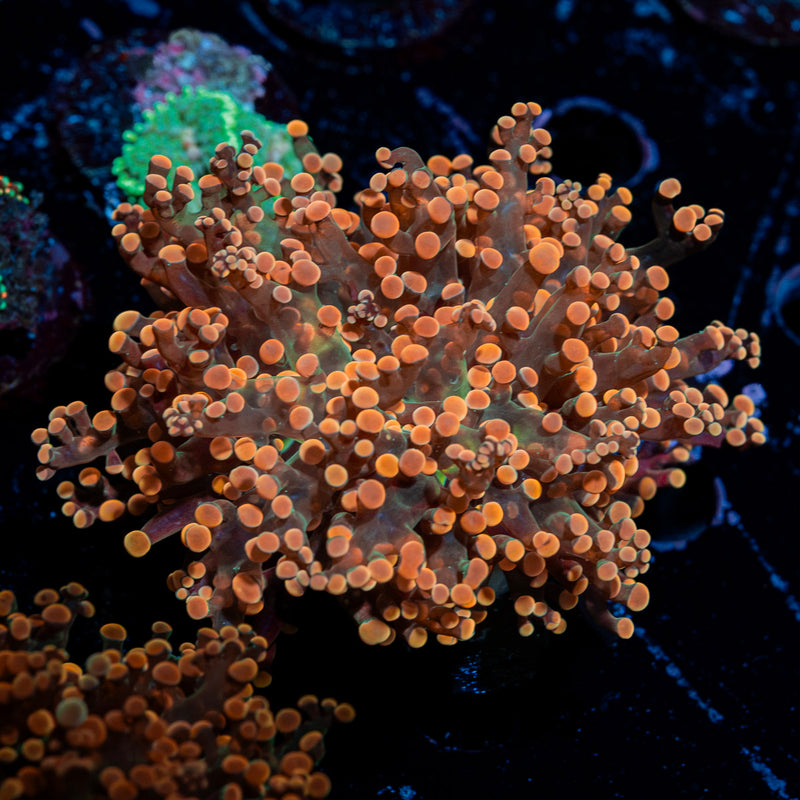
Tissue recession is one of the clearest warning signs. On SPS, it may look like a sharp white edge moving across a branch or base. On LPS such as hammers, frogspawn, and acans, tissue may pull back and reveal bright white skeleton underneath.
Rapid tissue necrosis, often called RTN, can progress with alarming speed. Slow tissue necrosis, or STN, moves more gradually and is usually associated with a longer-running stressor. These labels describe the pattern, not always the root cause. Check temperature stability, salinity, alkalinity, flow, lighting changes, and signs of pests before assuming an infection is the sole culprit.
A stable frag that begins receding at the base may be shaded, irritated by detritus, or affected by unstable alkalinity. A frag with a fast-moving recession line, especially if nearby corals show symptoms, should be isolated if possible and addressed promptly.
Brown jelly on LPS corals
Brown jelly disease is one of the most recognizable and serious problems for fleshy LPS corals, particularly Euphyllia, acans, and some brain corals. It appears as a brown, cloudy, mucus-like mass over damaged tissue. The coral may deflate, lose tissue quickly, and develop an unpleasant appearance that is very different from ordinary feeding slime.
Act quickly. Move the affected coral away from healthy neighbors, siphon away loose material without blasting it through the aquarium, and inspect it for injury, stings, or trapped debris. A properly prepared coral dip may be appropriate, depending on the coral and product instructions. If a colony has a clearly infected or dying head, separating that head can sometimes protect the remaining healthy tissue.
Brown jelly is not a situation to watch for several days. Early action gives the coral its best chance.
Bleaching, paling, and sudden color shifts
Bleaching means a coral has lost much of the color provided by its symbiotic algae. It can look bright white, pastel, or unusually translucent. Paling is less severe but still signals that something may be off.
The common triggers are light shock, temperature swings, very low nutrients, chemical exposure, or abrupt parameter changes. A coral placed directly under intense LEDs after shipping can bleach even in otherwise excellent water. Conversely, a coral that has slowly lost color may need a closer look at nitrate, phosphate, feeding, and light intensity.
Do not respond by making five corrections at once. Reduce obvious excess light if the timing fits, confirm temperature and salinity with reliable tools, and correct water chemistry gradually. Stability is more valuable than chasing a single “perfect” number.
Spots, bites, and unusual marks
Not every mark is disease. White bite marks on Acropora may indicate Acropora-eating flatworms. Small pale spots, missing tissue between polyps, or irritated zoanthids can point to nudibranchs, spiders, sundial snails, or other unwanted hitchhikers. Chalices may show localized damage from sweeper tentacles, while Euphyllia can be stung by a nearby coral even when the two pieces appear comfortably spaced during the day.
Inspect the coral after lights out with a flashlight. Many pests are easier to find at night, when they emerge to feed. Look under frag plugs, along the underside of branches, and around the base of fleshy corals. A coral dip can help reveal some pests, but it is not a universal cure and may not remove eggs. Match the treatment to the suspected problem.
Check the Aquarium Before You Treat the Coral
A stressed coral is often the messenger, not the entire problem. Test the basics before reaching for medication or repeated dips: temperature, salinity, alkalinity, calcium, magnesium, nitrate, and phosphate. Also review recent maintenance, new livestock, dosing changes, filter cleaning, and lighting adjustments.
For many mixed reefs, swings are more damaging than a slightly imperfect reading. A sudden alkalinity increase, a salinity correction made too quickly, or a heater malfunction can trigger widespread stress. If several unrelated corals close or fade at once, suspect a system-level issue before diagnosing a coral-specific disease.
Flow deserves the same attention. Corals need enough water movement to keep detritus from settling and to exchange nutrients and gases, but direct, punishing flow can tear tissue from an LPS coral or keep its polyps permanently withdrawn. Look for detritus collecting around the affected area, damaged tissue facing a powerhead, or a coral that inflates only on one side.
A Calm Response Plan for a Sick-Looking Coral
When you spot a concerning change, take a clear photo before moving the coral. Photos make it easier to judge whether the problem is improving or spreading over the next 24 to 48 hours.
If the coral is declining rapidly or showing brown jelly, isolate it in a quarantine or treatment container with matched temperature and salinity when practical. Improve its immediate environment by removing debris, preventing contact with aggressive neighbors, and ensuring appropriate flow. Then choose a targeted next step, such as pest inspection, a coral-safe dip, fragging away a clearly diseased section, or correcting a verified water-quality problem.
Avoid the temptation to repeatedly dip a coral simply because it looks unhappy. Dips can be useful tools, but they also add stress. For a newly added frag that is closed yet has intact tissue and no visible pests, stable placement and patience are often the better first move.
Prevention Makes Diagnosis Easier
Quarantining and dipping new corals according to the dip manufacturer's directions can reduce the odds of introducing pests. Acclimate corals to lighting rather than placing them immediately into the brightest spot, and give each piece enough room for future growth and nighttime sweepers.
Buying healthy, aquacultured frags also provides an advantage: smaller, well-healed pieces are easier to inspect, position, and monitor than a crowded wild colony. At Riptide Aquaculture, carefully observing each coral's tissue, color, and polyp behavior after it enters your system will help you protect the vibrant reef you are building.
The goal is not to panic over every closed polyp. It is to become familiar enough with your corals that a real change stands out early, when a measured response can still make all the difference.