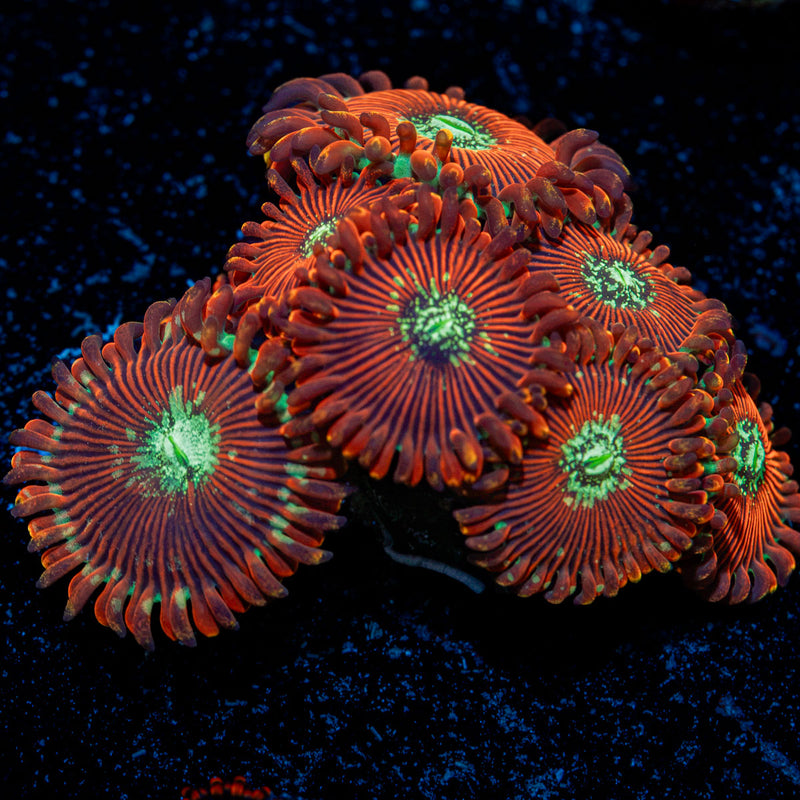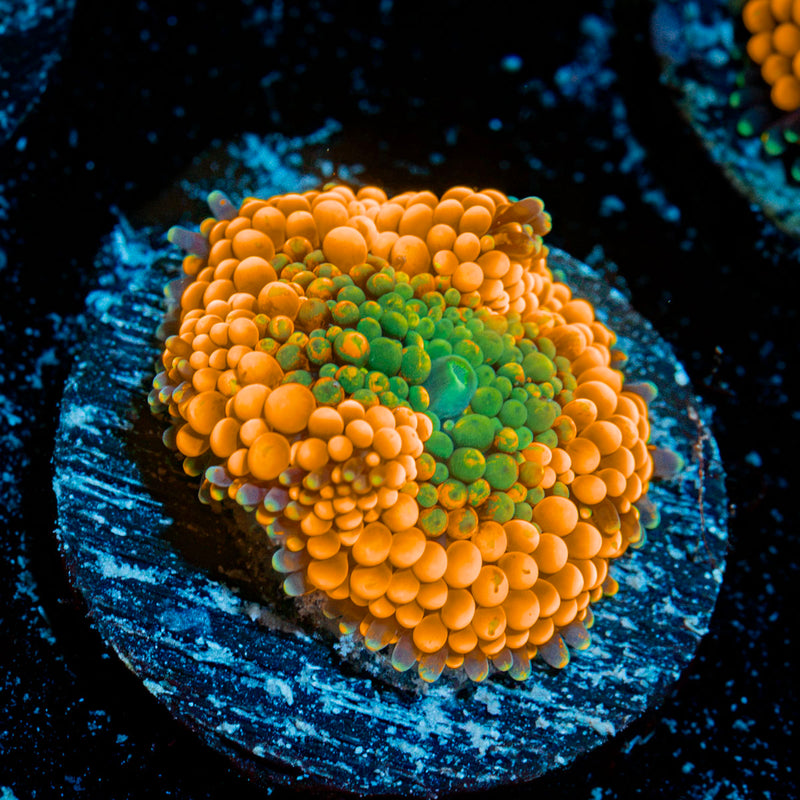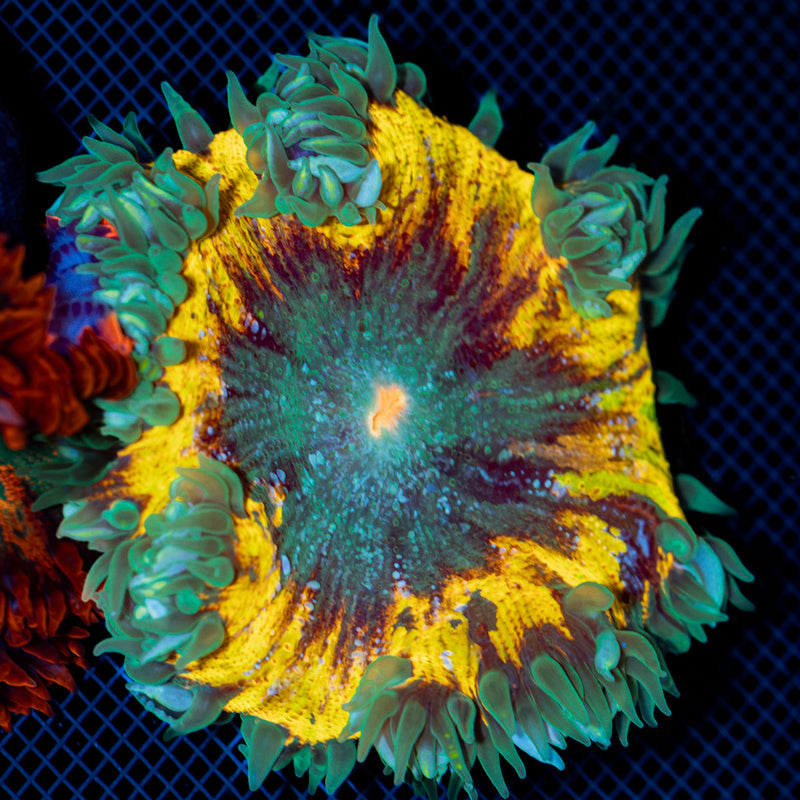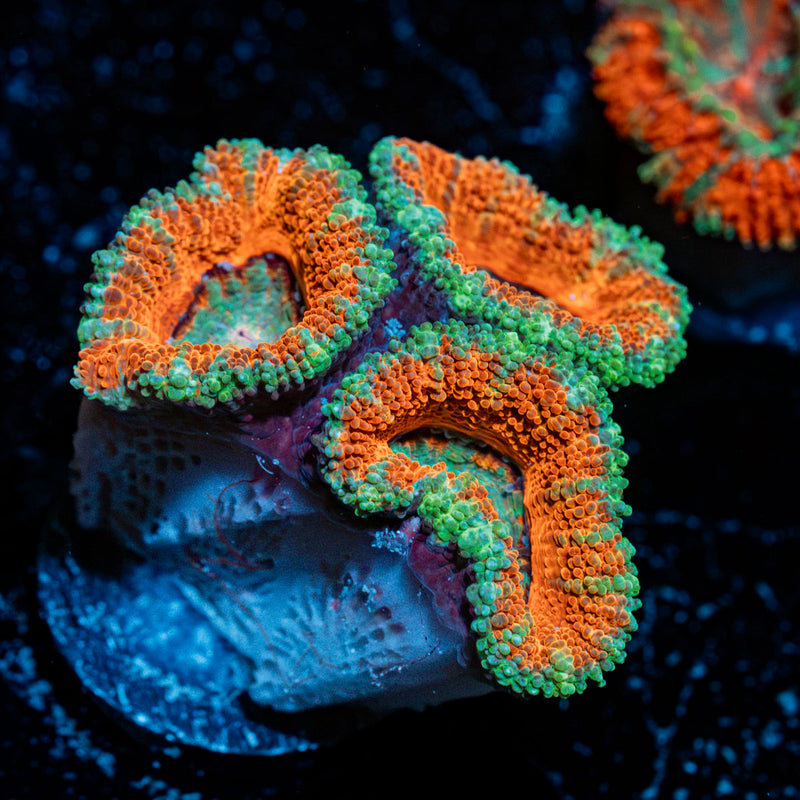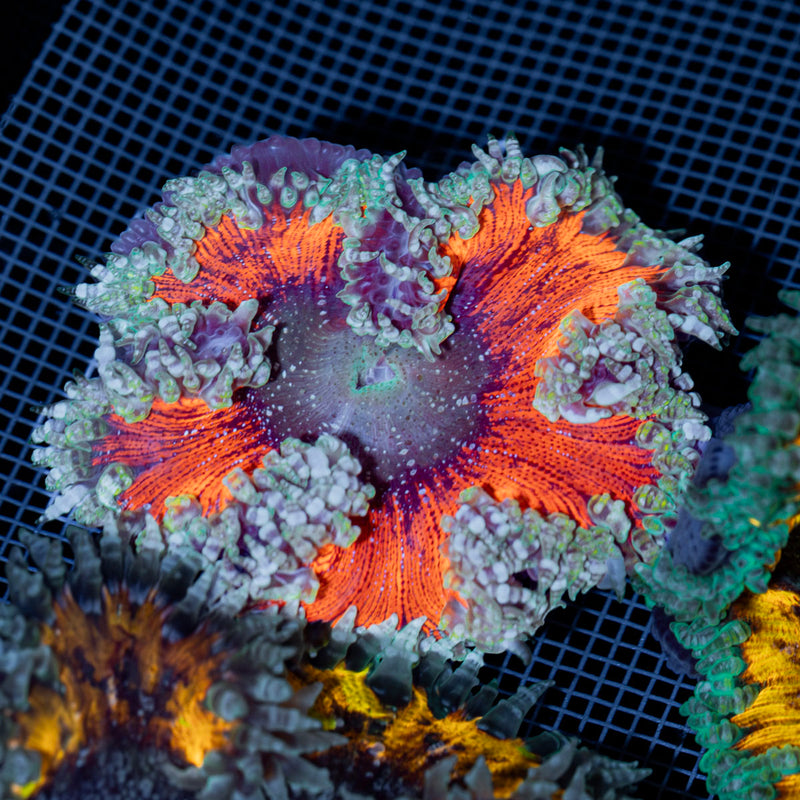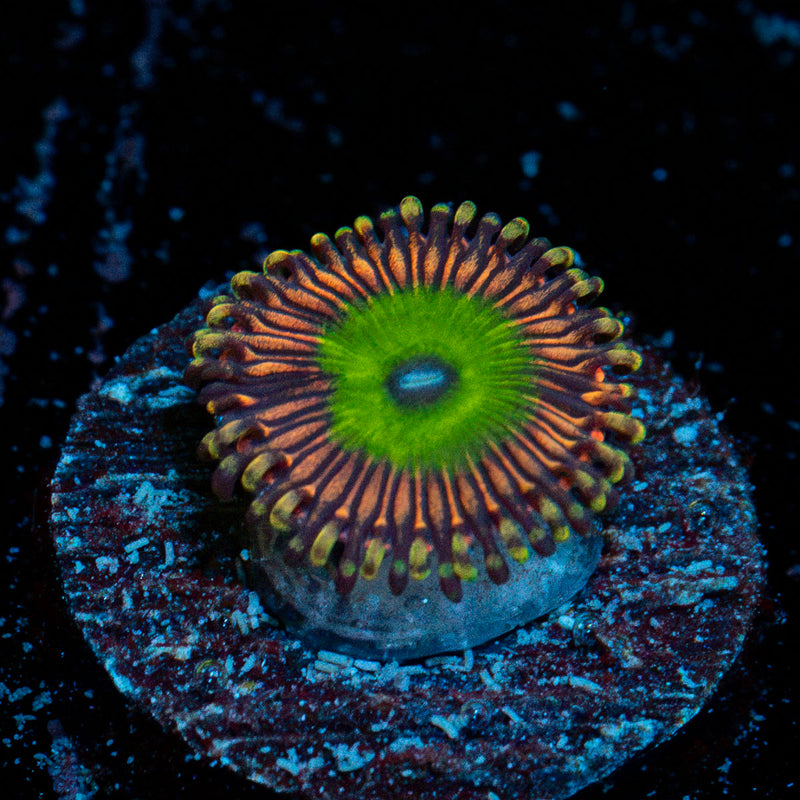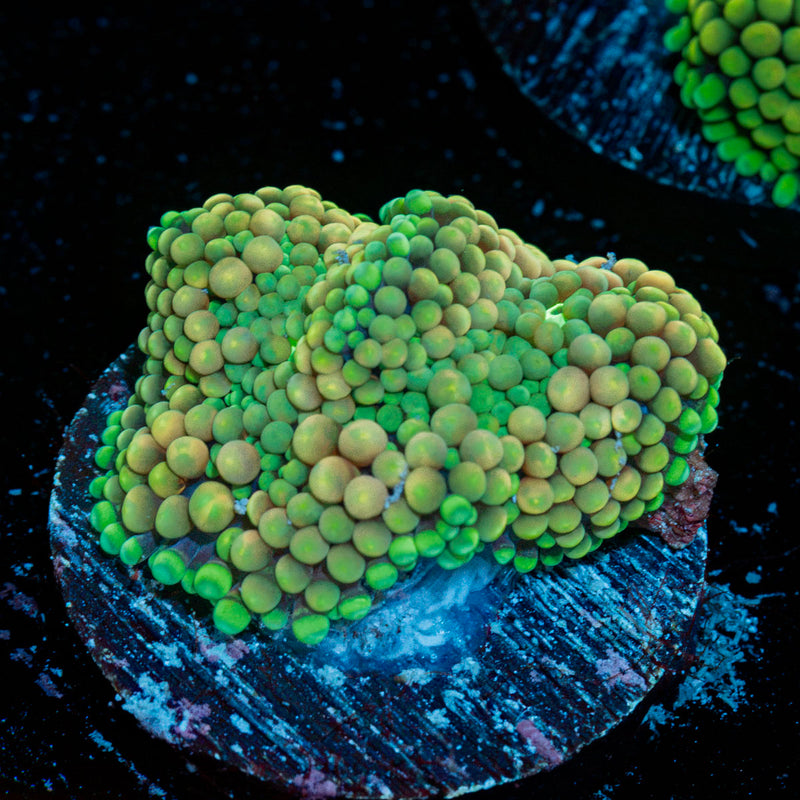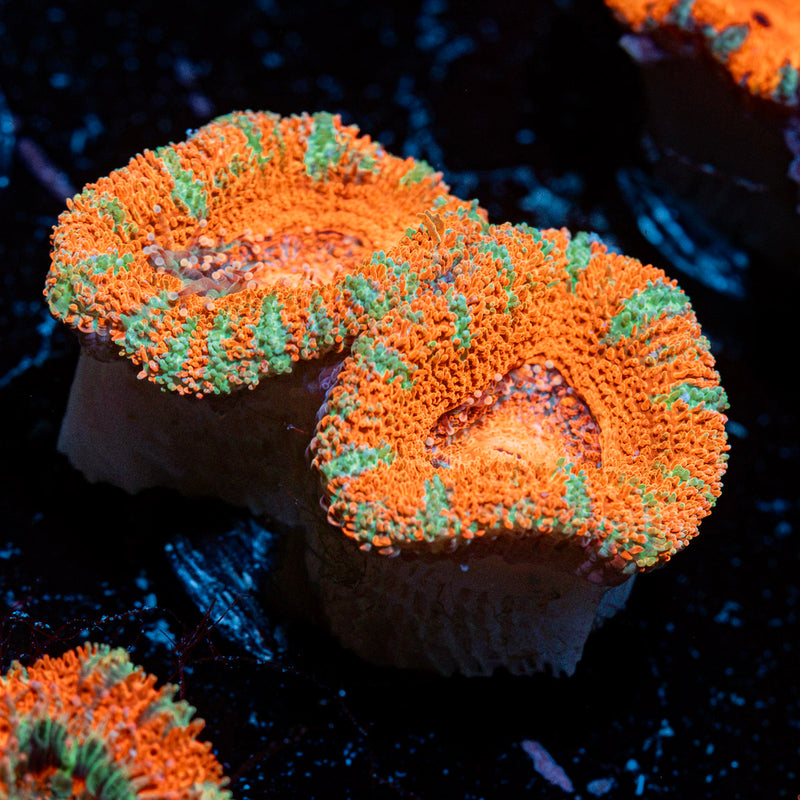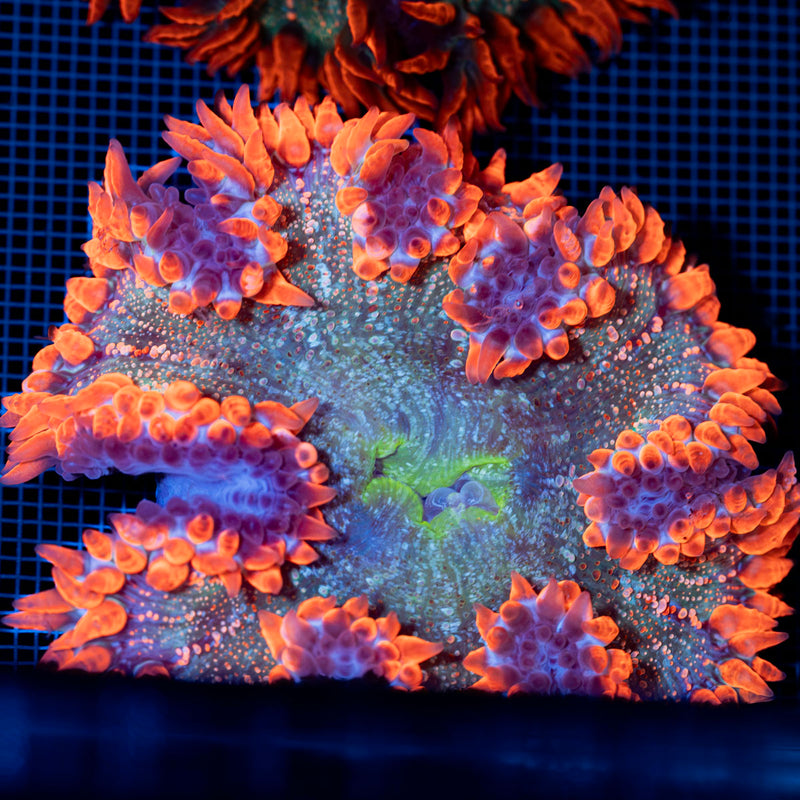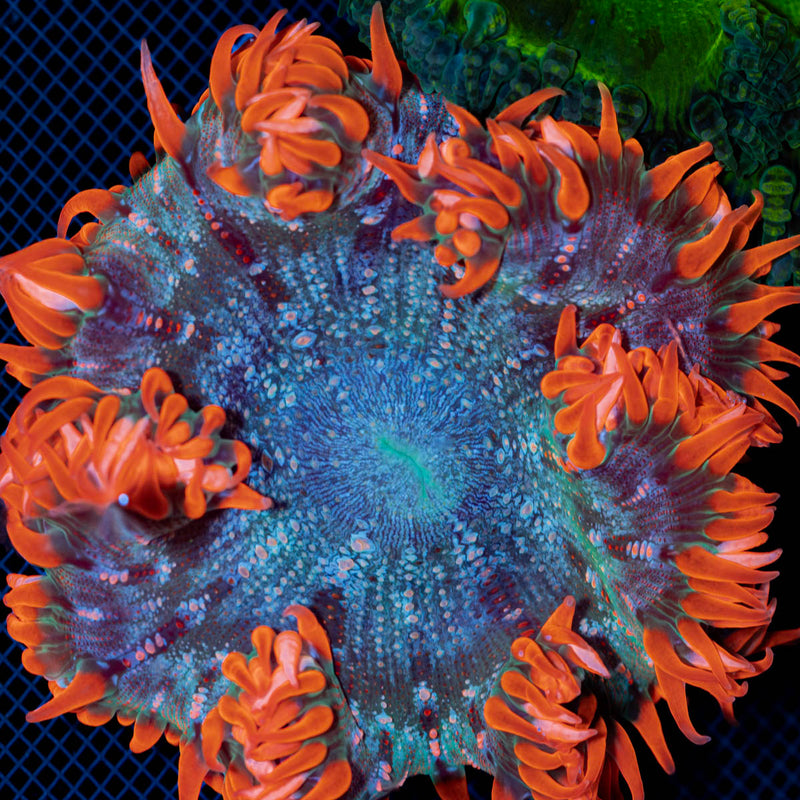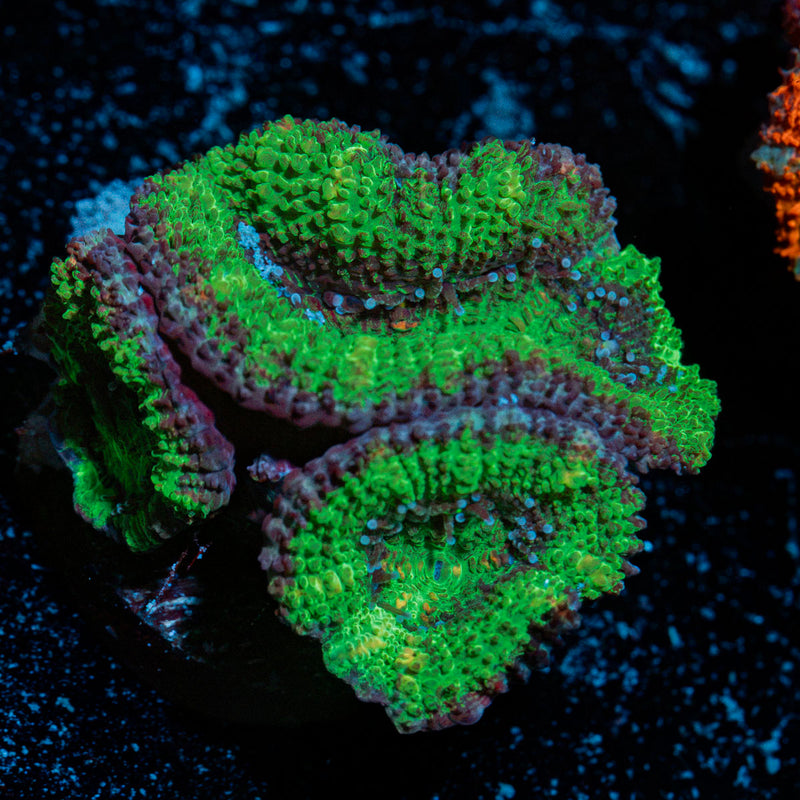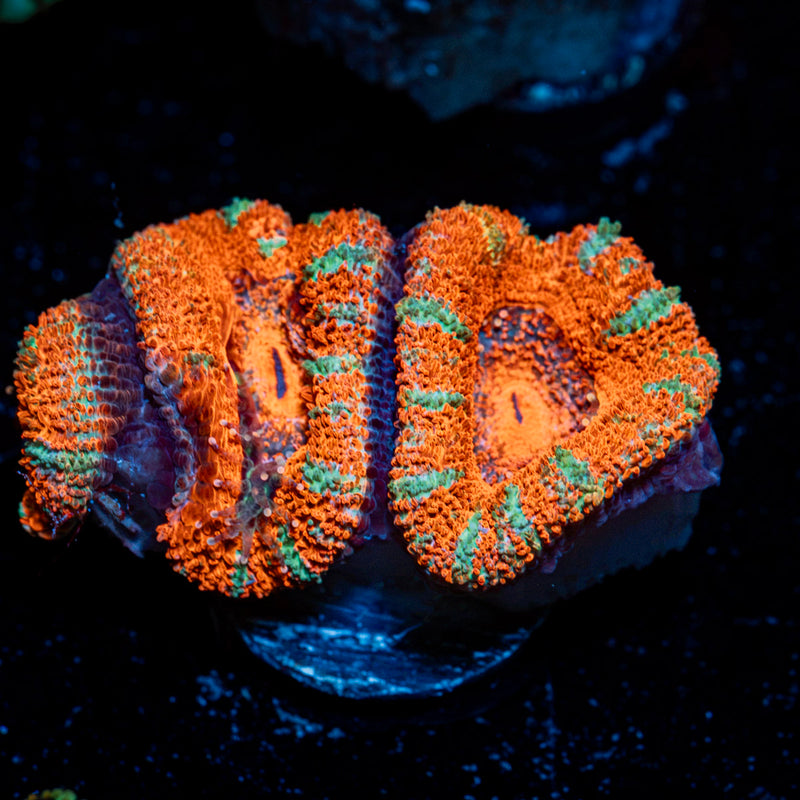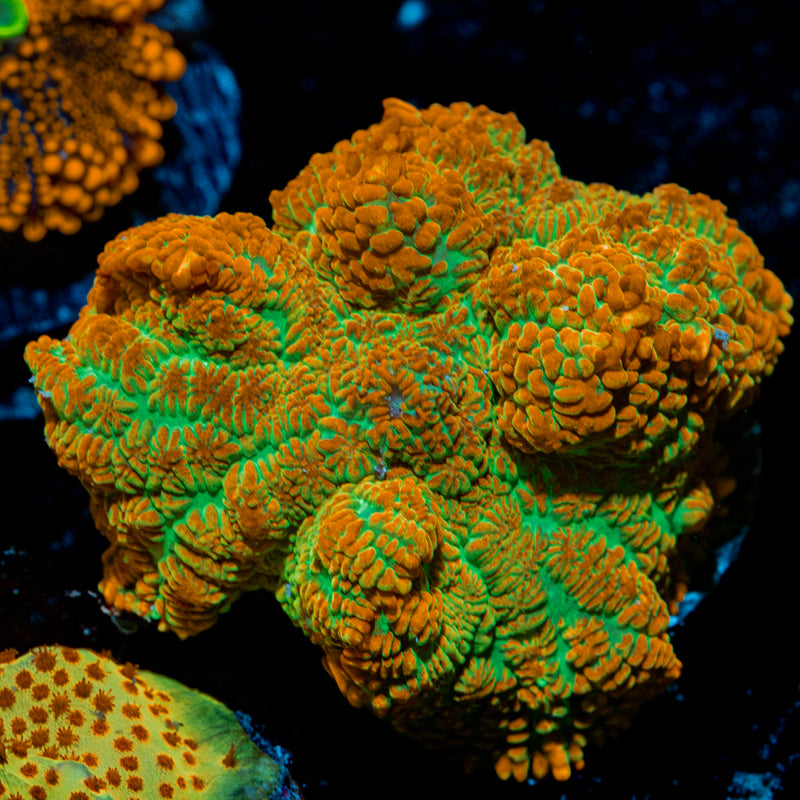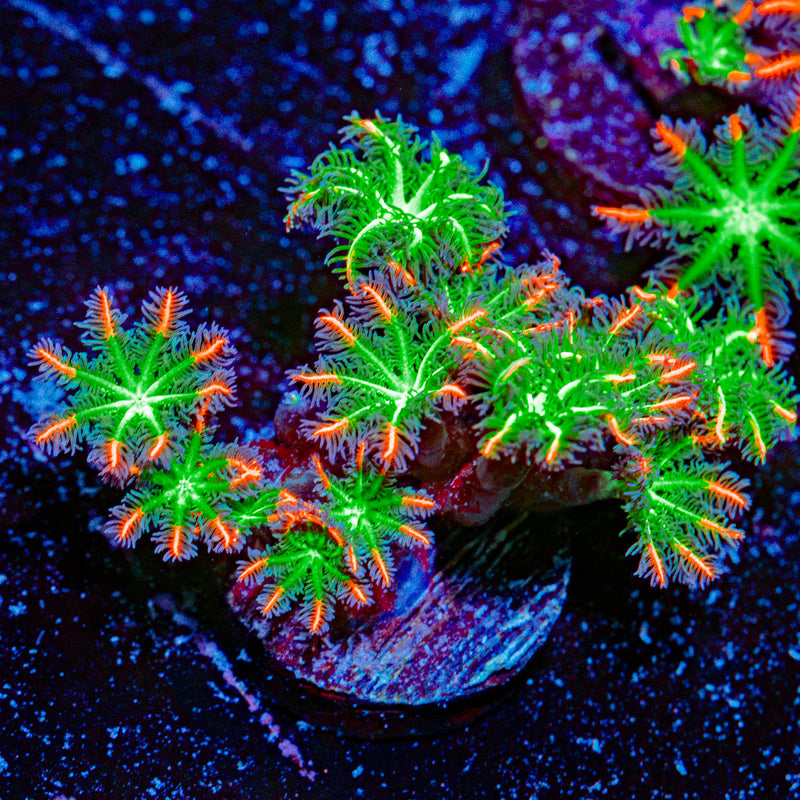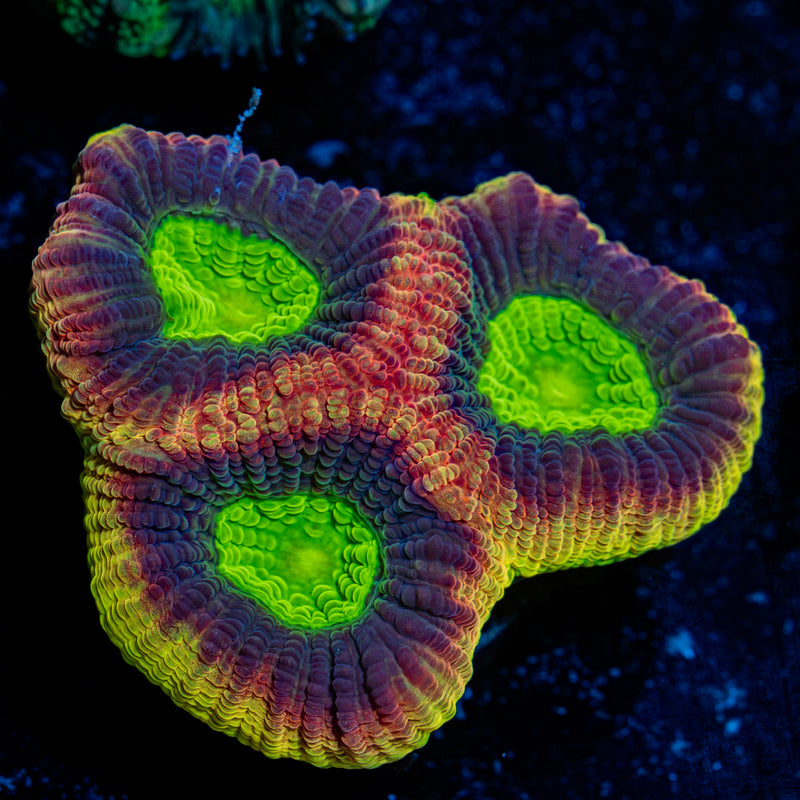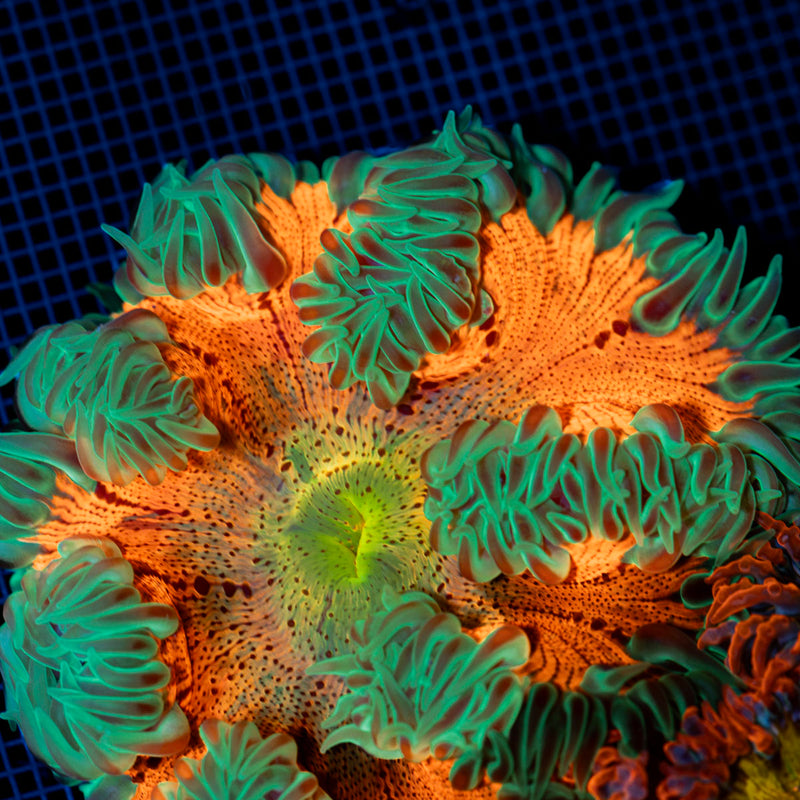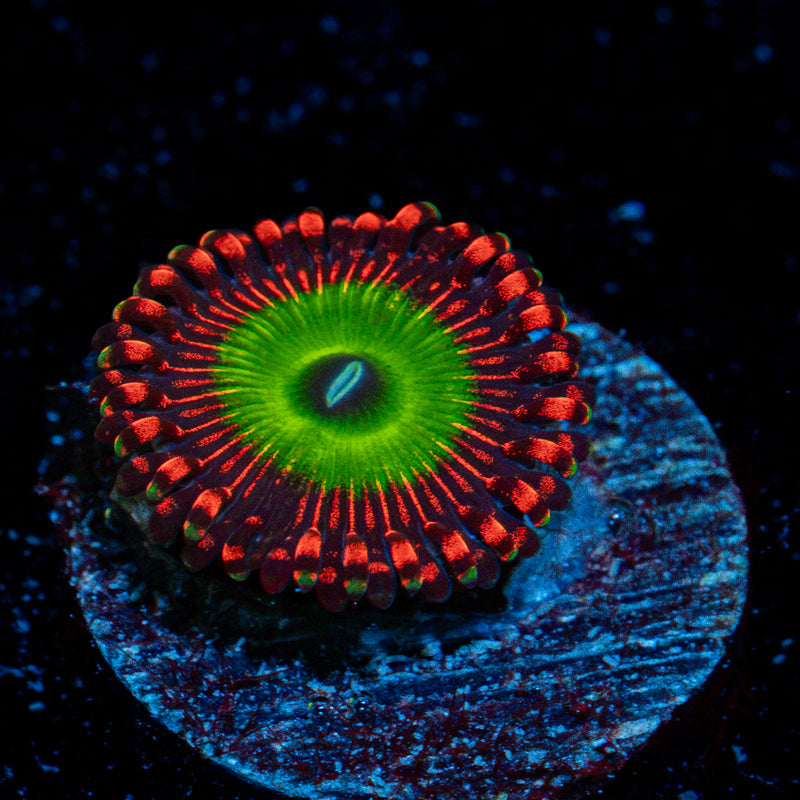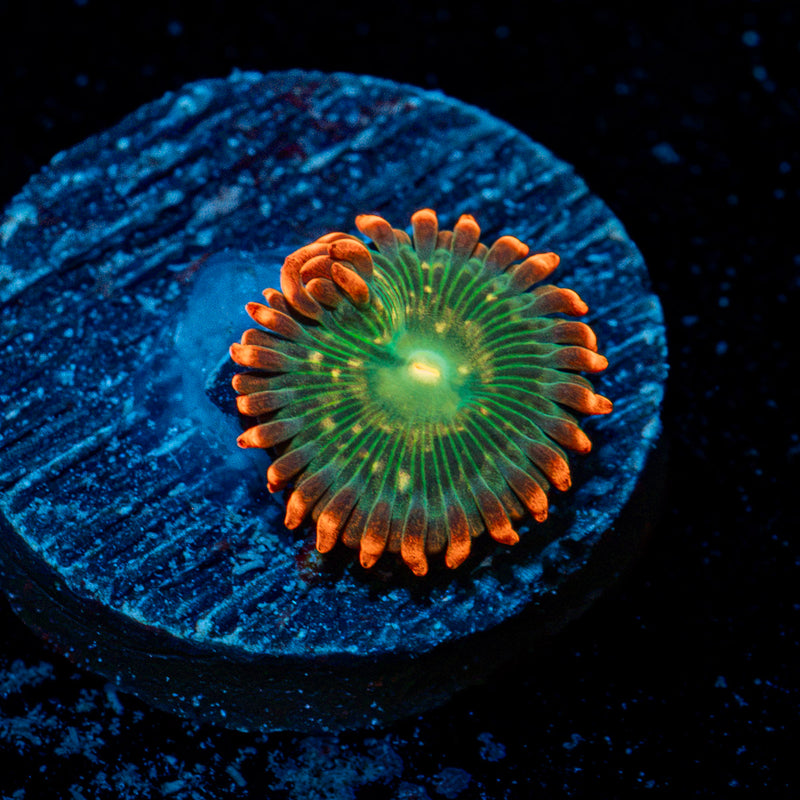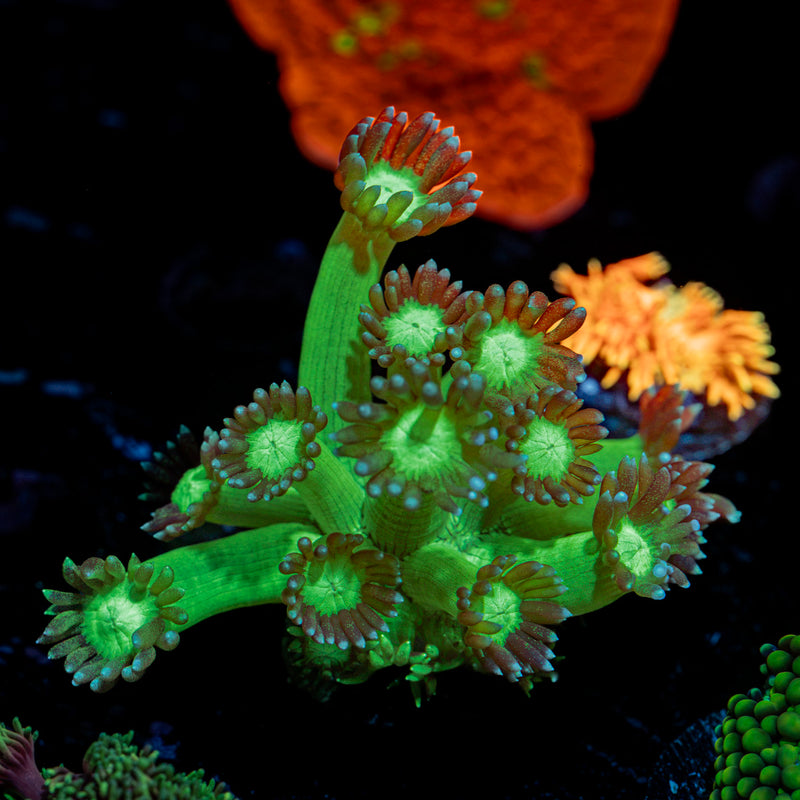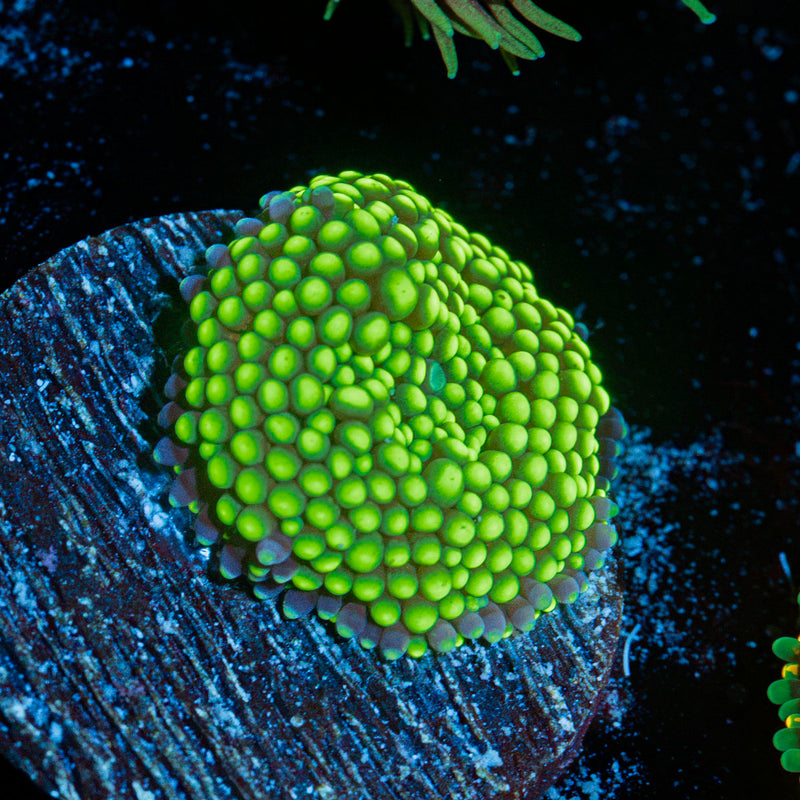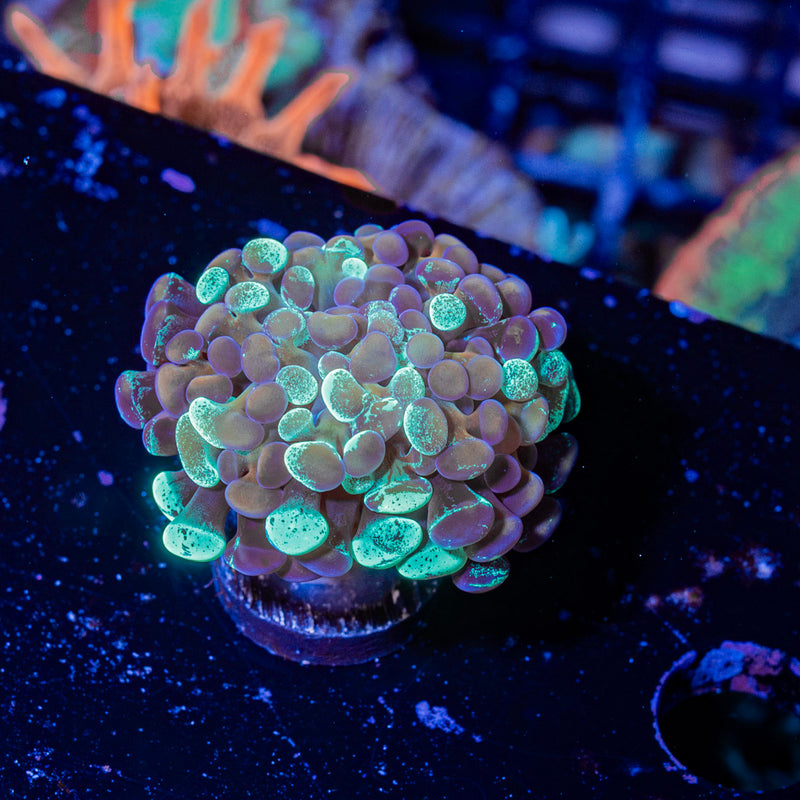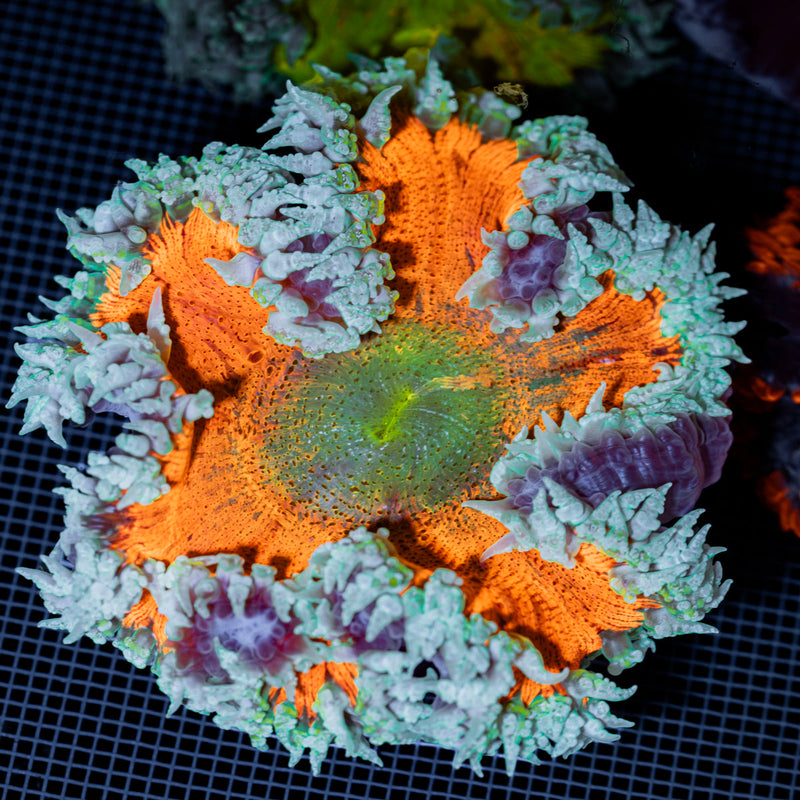
A torch coral and a hammer coral can both transform an open patch of rockwork into a moving, colorful focal point. In the torch coral vs hammer coral decision, though, their shared Euphyllia-family appeal can hide meaningful differences in tentacle reach, flow preference, tank placement, and the amount of personal space each coral demands.
Both can be rewarding choices for a beginner-friendly reef when the tank is stable and placement is intentional. The right pick comes down less to which coral is "better" and more to the look you want, the room available in your aquascape, and how much flow your particular reef provides.
Torch Coral vs Hammer Coral at a Glance
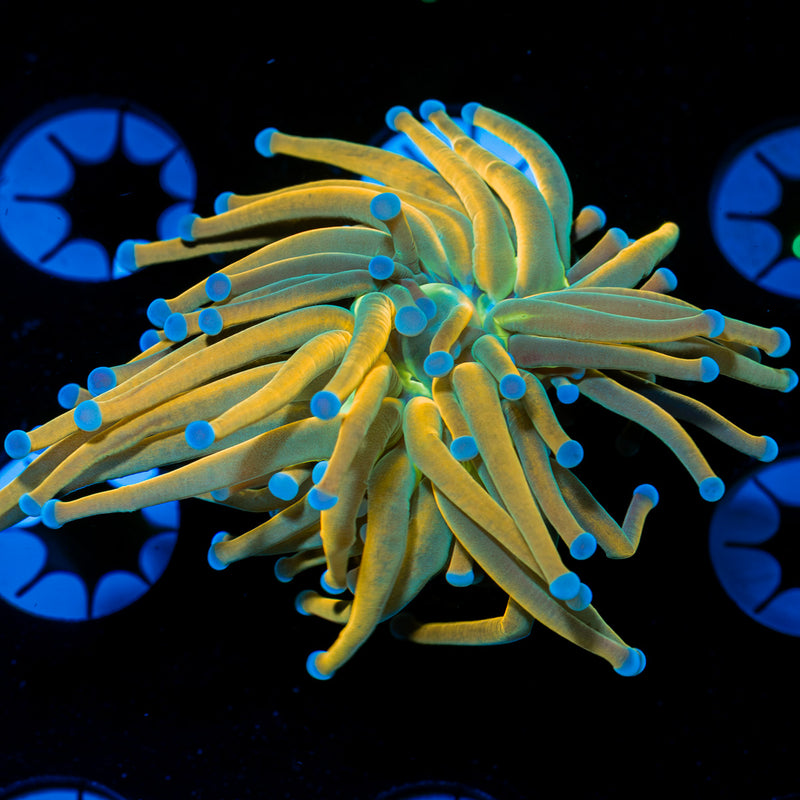
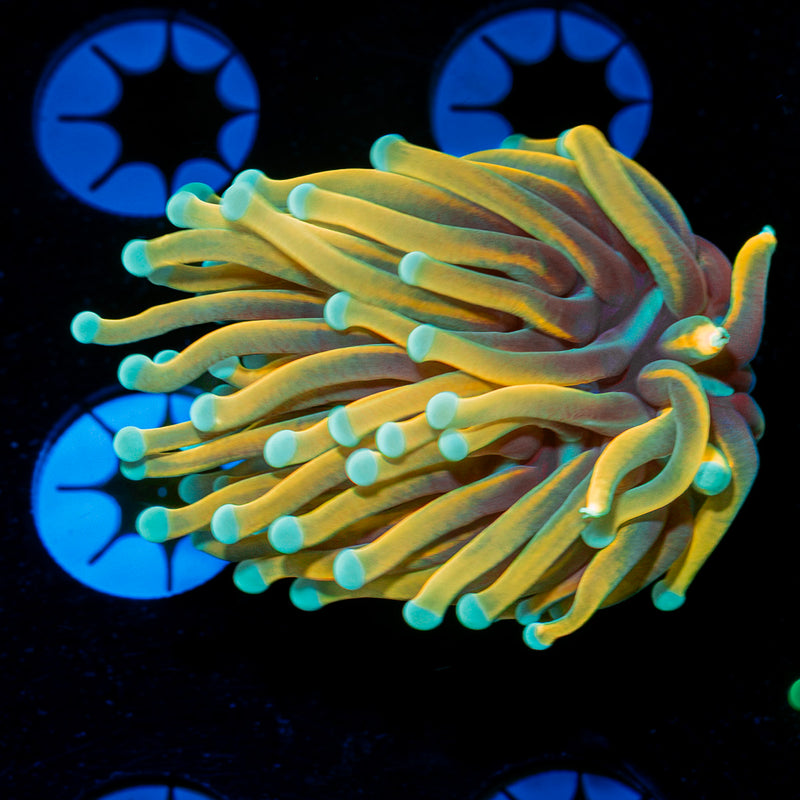
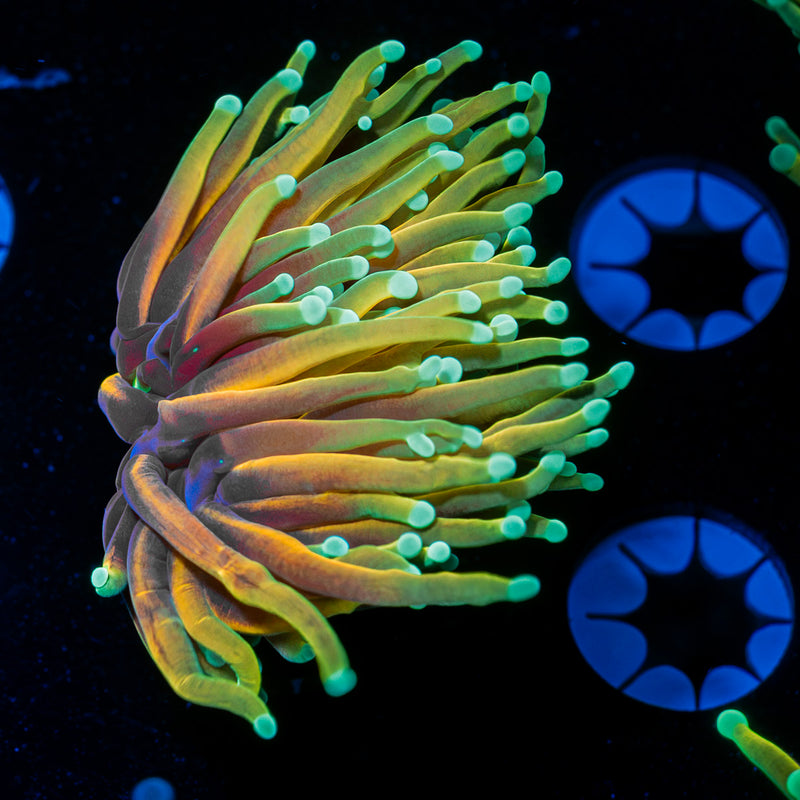
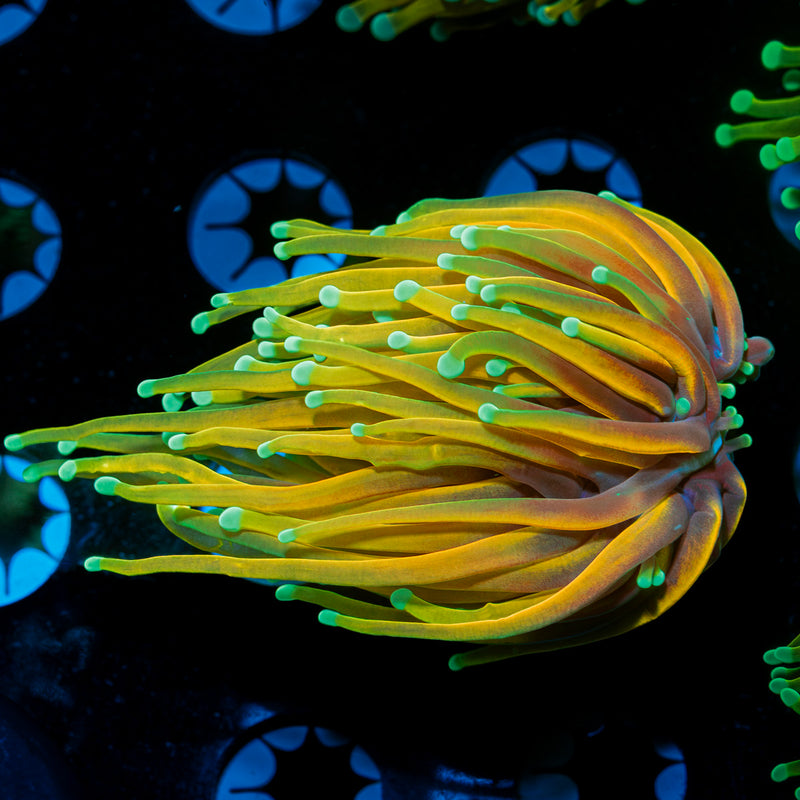
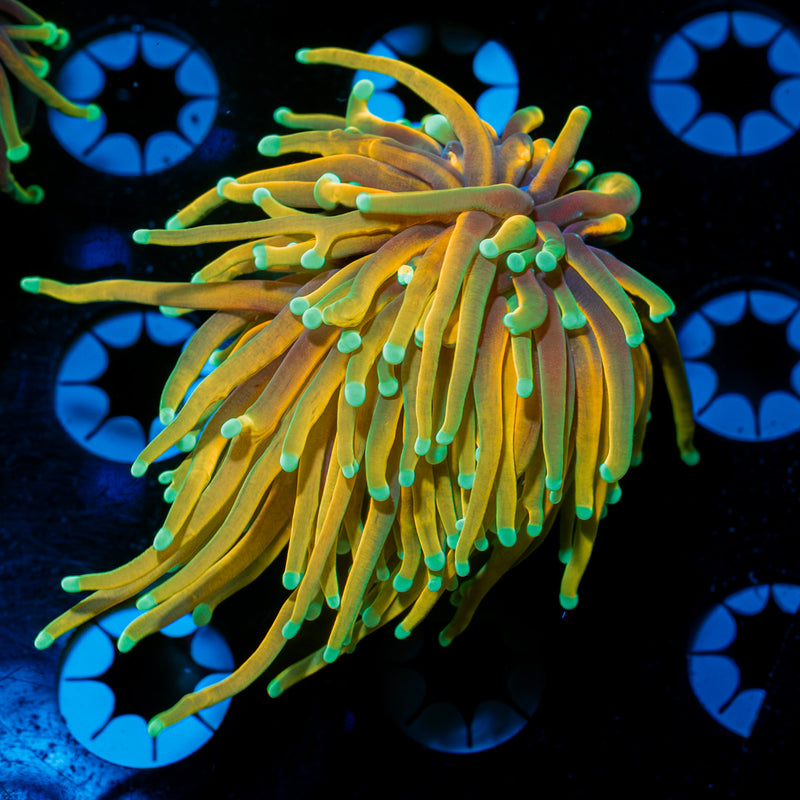
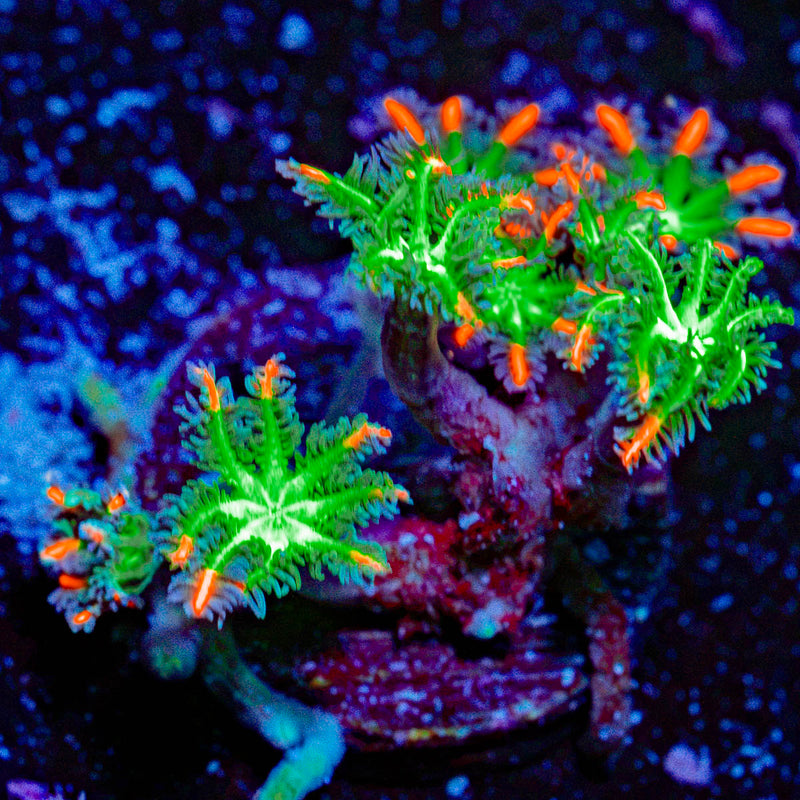
Torch corals are known for long, individual tentacles that sway dramatically in the current. Their tips may be bright green, gold, pink, blue, purple, or fluorescent yellow, depending on the specimen. A healthy torch has a flowing, high-motion appearance that makes it feel like a living jewel even when viewed from across the room.
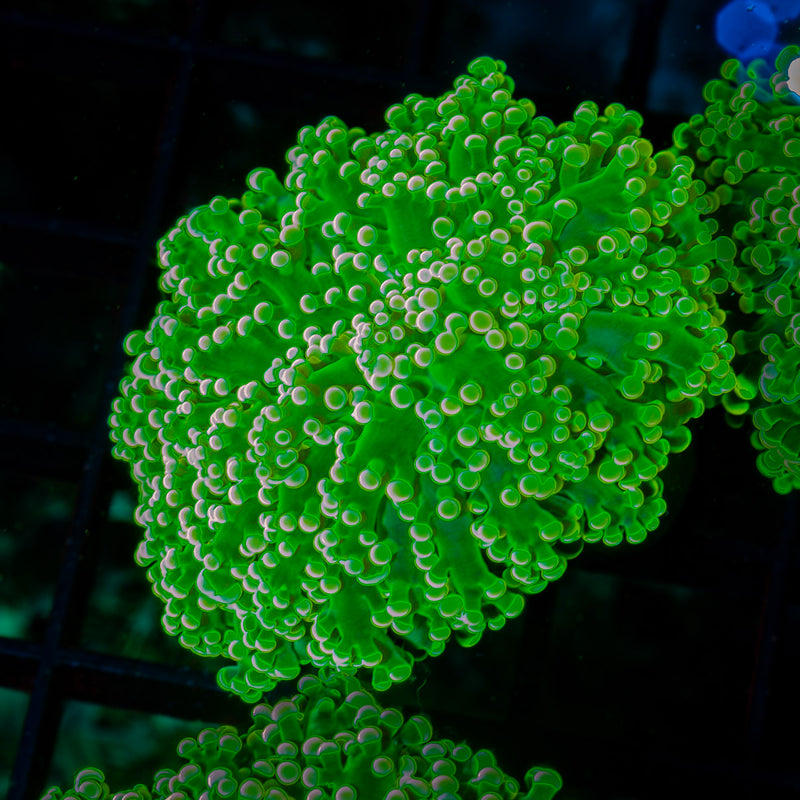
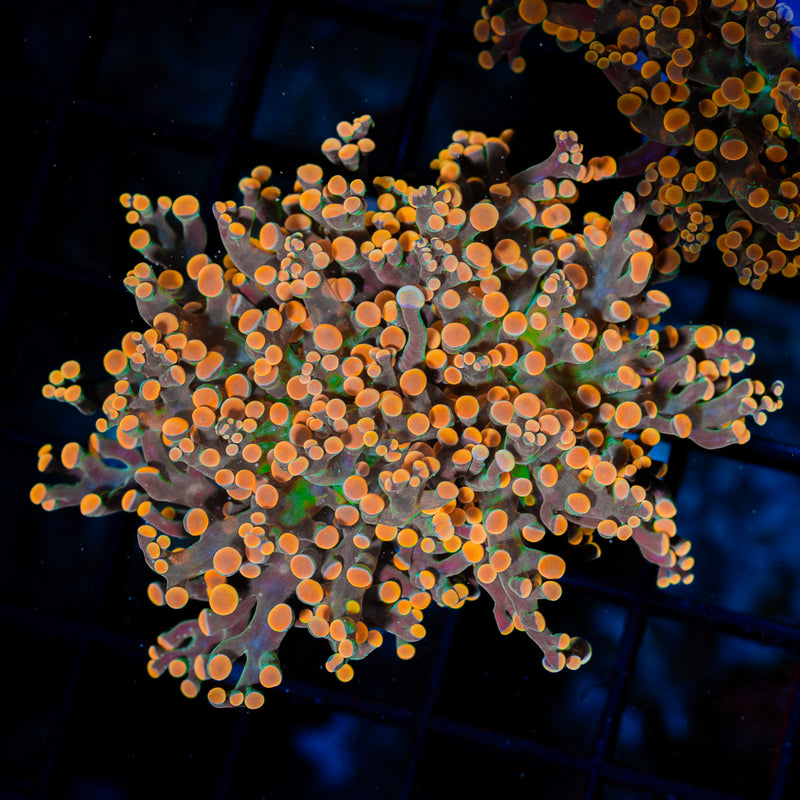
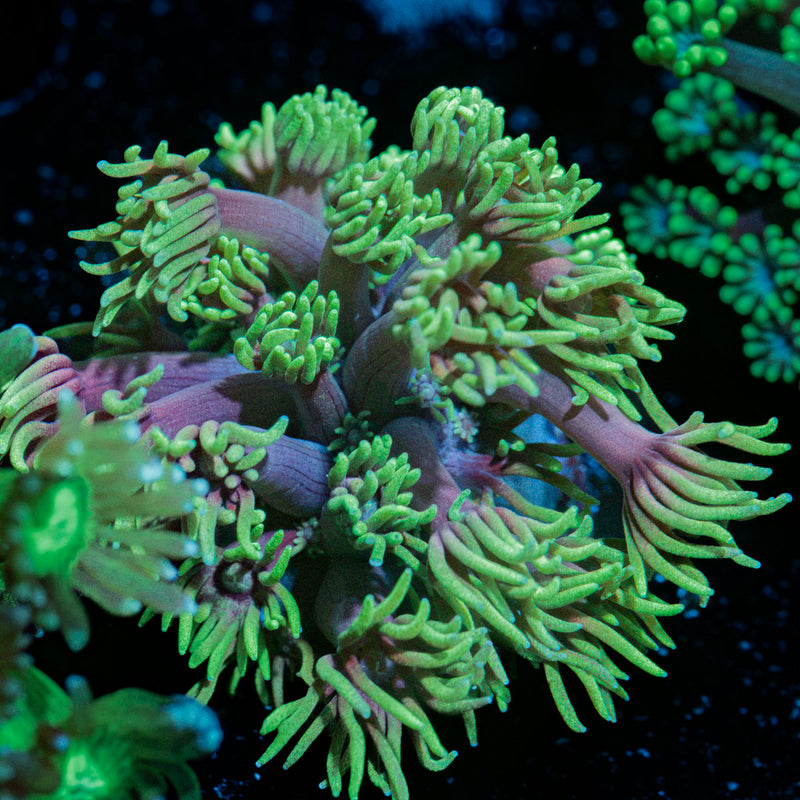
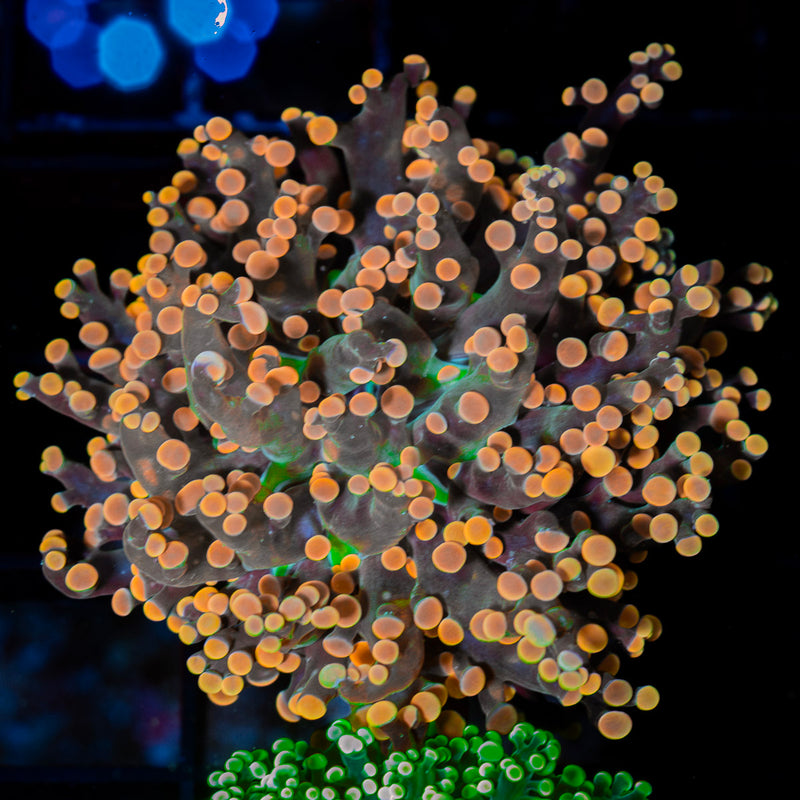
Hammer corals have shorter, thicker tentacles with tips shaped like anchors, hammers, or small crescents. They often create a fuller, softer-looking colony, especially in wall-form hammers with broad connected tissue. Branching hammers develop separate heads on distinct skeleton branches, giving aquarists more flexibility for fragging and arranging.
In practical terms, torches usually make the stronger single showpiece, while hammers are often easier to use as part of a larger Euphyllia garden. That is not a hard rule. An exceptional hammer can be a stunning centerpiece, and a carefully chosen torch can look perfect in a mixed LPS display.
Appearance: Flowing Tentacles or Full, Sculptural Heads?
Choose a torch if you want height, movement, and a cleaner silhouette. Its tentacles extend well beyond the coral's skeleton, so it adds visual energy without necessarily taking up a large amount of rockwork. Gold-tipped, green-tipped, and multicolor torches can stand out beautifully against darker rock and purple coralline algae.
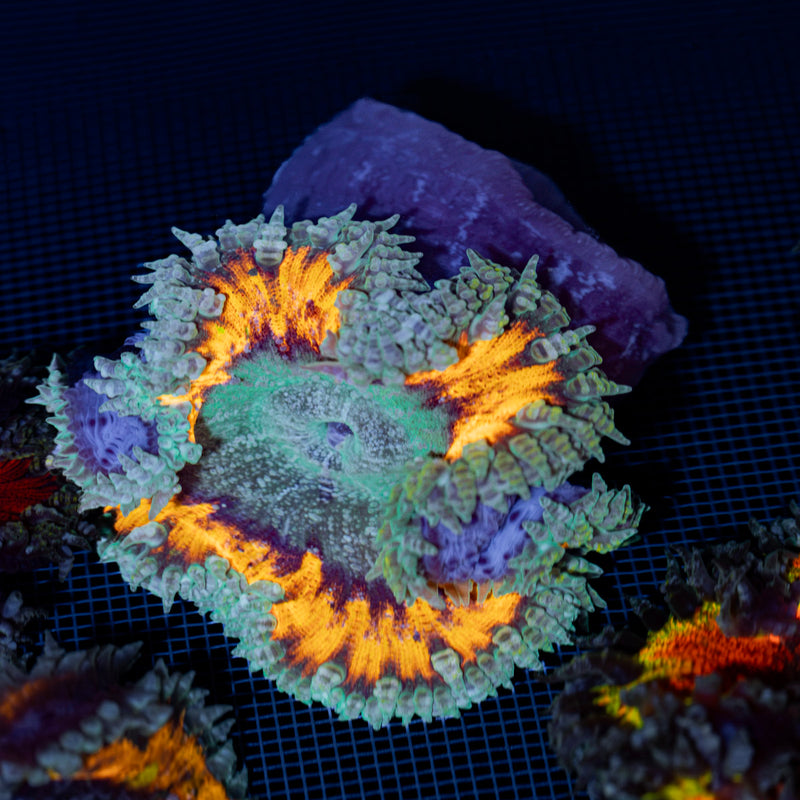
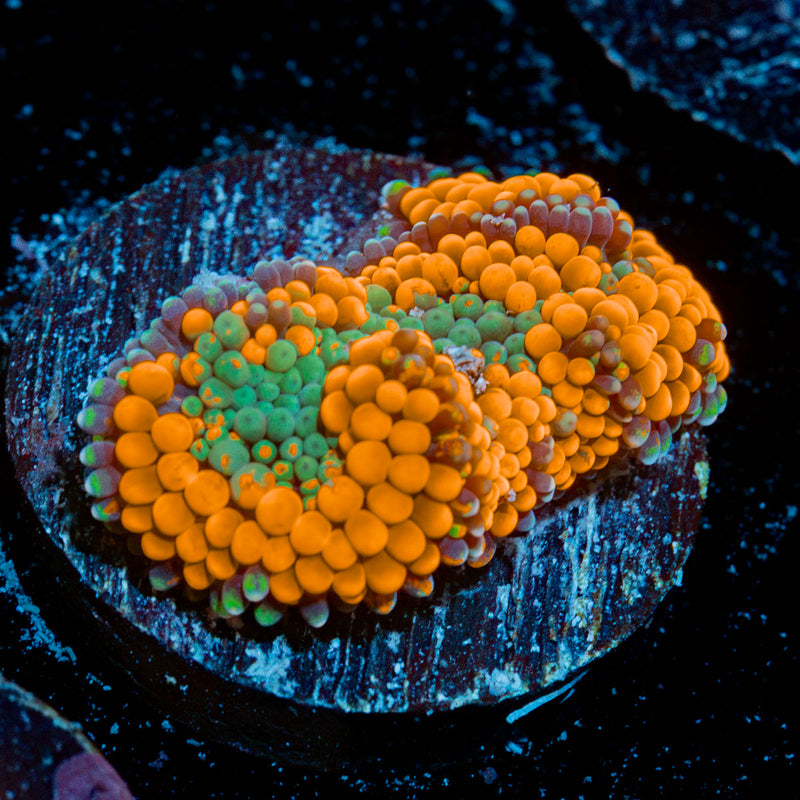
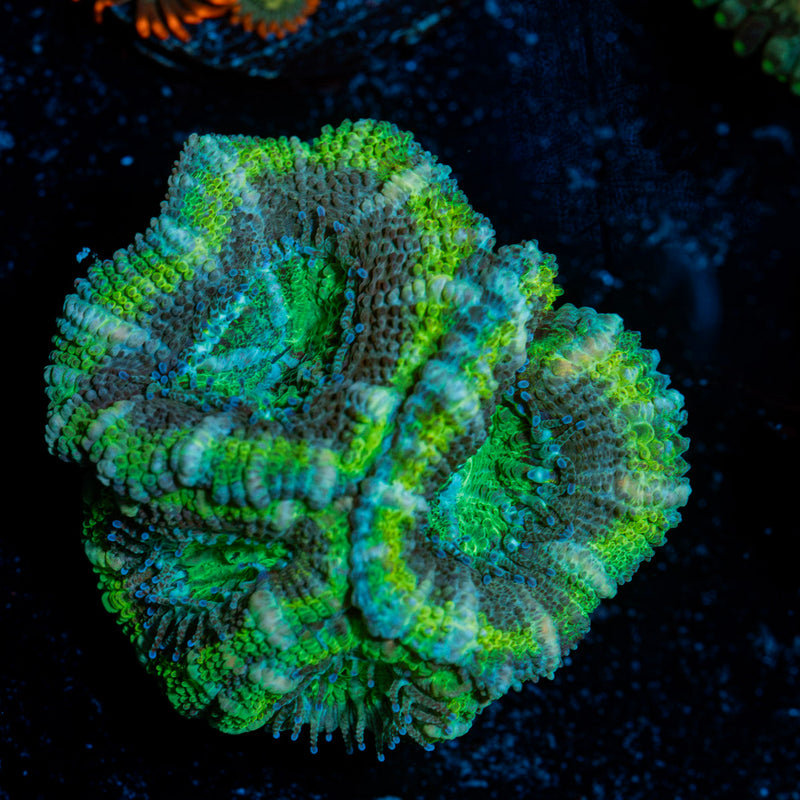
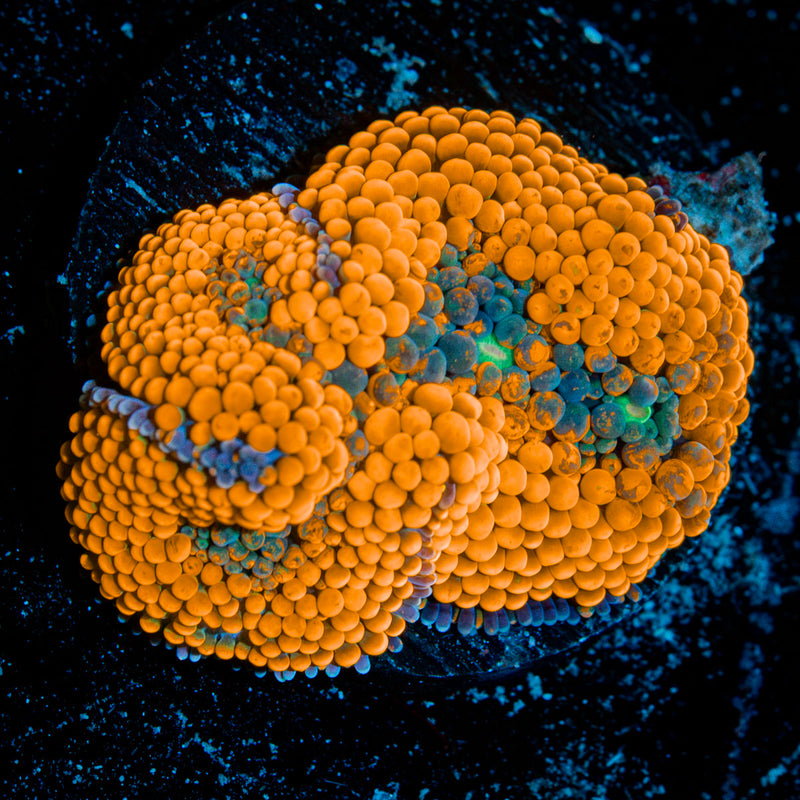
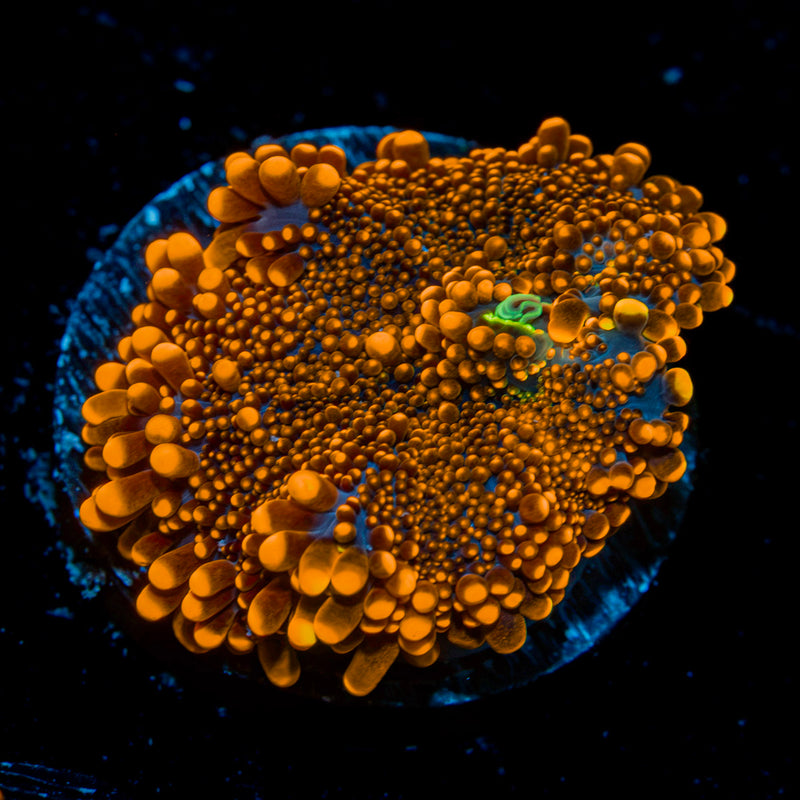
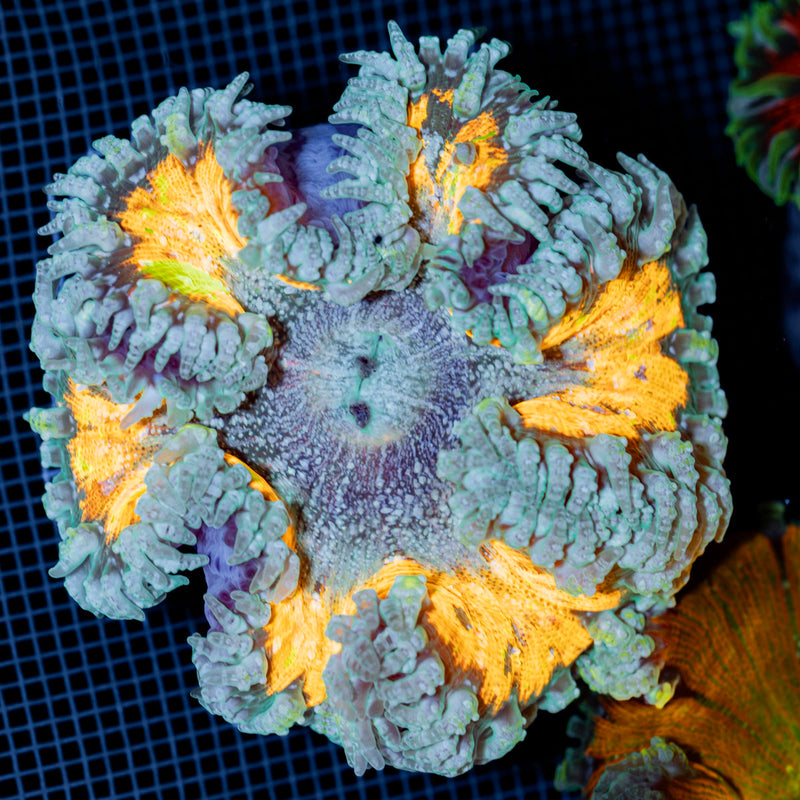
Choose a hammer if you prefer a lush, layered look. Hammer tentacles generally appear denser and more sculptural, creating texture that complements rounder corals such as acans, chalices, or mushrooms. Branching hammers can grow into impressive clusters over time, while wall hammers offer a continuous, sweeping line of flesh and tentacles.
Color should be judged specimen by specimen, not just by coral type. Lighting, health, and genetics all affect how a coral presents in a reef tank. WYSIWYG selection is especially valuable with premium Euphyllia because it lets you choose the exact color pattern, polyp shape, and head count that fits your vision.
Care Requirements: Similar Foundation, Different Sensitivities
Torch corals and hammer corals thrive under broadly similar reef conditions: stable salinity, consistent temperature, moderate lighting, and moderate water movement. Neither is a set-it-and-forget-it coral. Their fleshy tissue responds quickly when water chemistry swings or when flow is too harsh.
A reasonable starting range for many established systems is 75-79°F, salinity around 1.025-1.026 specific gravity, alkalinity roughly 8-9 dKH, and low but measurable nutrients. Stability matters more than chasing a perfect number. Avoid making sudden adjustments to alkalinity, salinity, or lighting when introducing either coral.
Lighting
Most torches and hammers do well in low-to-moderate PAR, commonly around 75-150 PAR as a starting point. They can adapt to brighter conditions gradually, but abrupt exposure to intense LED lighting may cause retraction, fading, or tissue stress.
Place a new frag lower in the aquarium or in a partially shaded area first, then observe it for several days. A coral that is inflated, open, and extending naturally is usually comfortable. A coral that stays tightly withdrawn, pales, or develops receding tissue needs attention before it becomes a larger problem.
Water Flow
This is where the distinction becomes more noticeable. Torches typically enjoy enough indirect, variable flow to keep their long tentacles dancing without blasting them in one direction. The movement should look relaxed and rhythmic, not like the coral is being pinned sideways by a powerhead.
Hammers also appreciate moderate, indirect flow, but their broader tissue can be easily irritated by a constant hard stream. Too little flow allows detritus to settle between heads or along the skeleton. Too much can prevent full extension and may damage tissue where it meets sharp skeletal edges.
A wavemaker aimed across the tank rather than directly at the coral is often a better starting point for both. Watch the coral, not just the equipment. Polyp behavior is the best indicator of whether flow is truly working.
Temperament and Spacing Matter More Than Most Shoppers Expect
Torches have a well-earned reputation for being more aggressive than hammers. Their sweeper tentacles can extend beyond their normal daytime reach, particularly at night, and can sting nearby corals. A torch that looks comfortably separated during the day may still reach a neighbor after lights out.
Give torches generous clearance from other corals, especially delicate SPS, mushrooms, zoanthids, and unfamiliar LPS varieties. A few inches is a sensible starting point, but larger specimens and higher-flow tanks may require more room. Never assume a small frag will remain small once it settles in and begins growing.
Hammers are usually considered somewhat more manageable, but they are not harmless. They can sting corals placed too close, and wall hammers can be vulnerable to damage when neighboring corals touch their fleshy tissue. Keep them from crowding one another and leave room for expansion.
Many hobbyists successfully keep hammers, frogspawn, and torches in the same general Euphyllia garden. Compatibility is never guaranteed, however. Different corals, and even different individual colonies, can react unpredictably. If you mix them, introduce one coral at a time, provide space, and inspect for nighttime contact.
Growth Form Changes Your Long-Term Plan
A branching torch or branching hammer grows by producing additional heads on individual branches. This makes it easier to see where future growth is headed and can make fragging more straightforward for experienced aquarists. It also gives each head a little more separation, which can reduce the visual crowding that develops in mature colonies.
Wall hammers grow as a connected structure. They can become breathtaking, broad colonies, but they are less forgiving of accidental breaks or tissue damage. If one area is injured, the concern is not limited to a single isolated branch. For this reason, wall hammers deserve a protected location with steady flow and room on all sides.
For a smaller tank, a single branching hammer is often an approachable way to enjoy Euphyllia movement without committing a large footprint immediately. For a tank with plenty of open space, a carefully placed torch can create a dramatic vertical accent that draws the eye upward.
Feeding and Everyday Maintenance
Both corals receive much of their energy from their symbiotic zooxanthellae under appropriate lighting, but occasional feeding can support growth and color. Fine coral foods, amino acids, and small meaty foods can all be useful when used thoughtfully. Target feeding is optional, not mandatory, and overfeeding can create nutrient problems that affect the entire reef.
Keep maintenance simple and consistent. Prevent detritus from settling around the base, maintain dependable parameters, and inspect each coral for signs of stress. Brown jelly-like material, rapid tissue recession, persistent closed polyps, or exposed skeleton call for quick action. Check flow first, remove any obvious irritants, and consider isolating a declining coral if disease is suspected.
Acclimation also deserves patience. Match temperature carefully, avoid exposing fleshy tissue to air when possible, and start the coral in gentler light. A premium aquacultured frag may be hardy and well adapted to aquarium life, but it still needs time to adjust to your water and lighting.
Which Coral Should You Choose?
Pick a torch coral when you want maximum movement, a bold centerpiece, and have room to respect its sting. It is a particularly exciting choice for hobbyists who enjoy watching their reef change character as flow patterns shift throughout the day.
Pick a hammer coral when you want a fuller colony look, gentler visual texture, and a coral that can blend beautifully into a mixed LPS aquascape. A branching hammer is often an excellent entry point for reef keepers ready to add their first Euphyllia.
If your reef is already crowded, resist the temptation to fill every open inch with another beautiful frag. Leave the coral you choose enough room to open completely, sway naturally, and grow into the vibrant showpiece it is meant to become.